
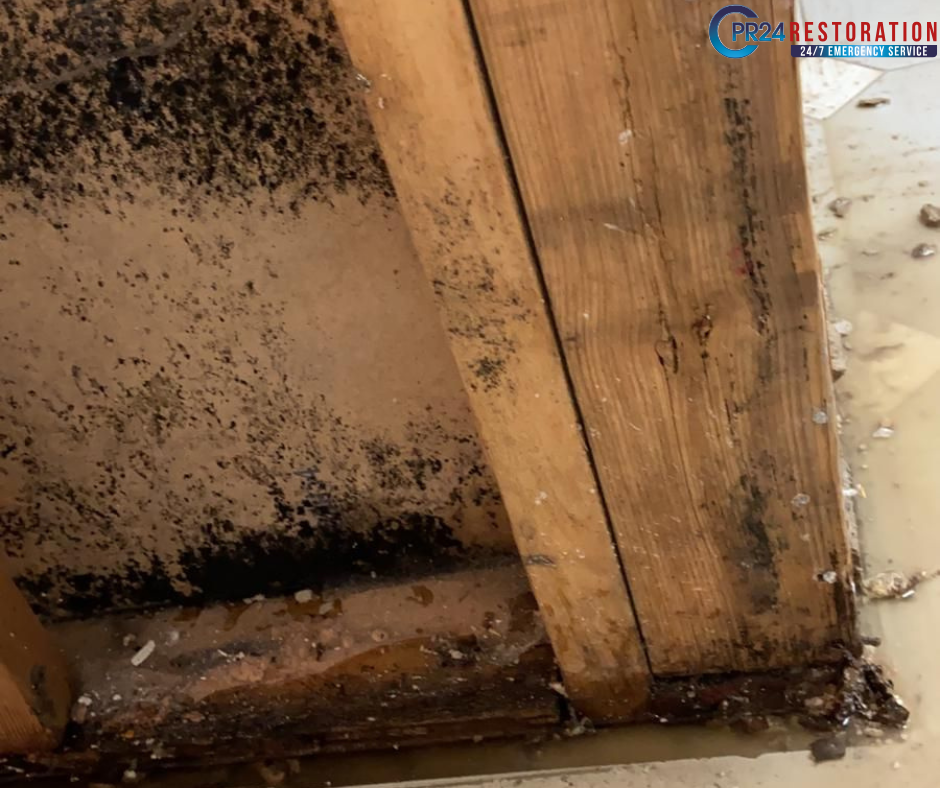
A dark patch on drywall after a leak does not just look bad – it tells you moisture has been sitting long enough for growth to take hold. When people ask what kills mold and mold spores, they usually want one product, one spray, one fast fix. The reality is more technical. Some products can kill mold on contact. Fewer can deal with spores effectively. None of them solve the root problem if the material is still damp.
That distinction matters in homes, condos, offices, and rental properties across the GTA, where hidden moisture behind walls, under flooring, or in basements can turn a small visible patch into a larger indoor air quality issue. If you want the mold problem gone, not just faded, you need to know what actually works, what only appears to work, and when removal is more important than disinfection.
What kills mold and mold spores in real conditions
Mold is a living fungus. Spores are its reproductive particles, light enough to travel through the air and settle on new surfaces. Under the right conditions – mainly moisture, organic material, and limited airflow – those spores can begin growing again.
So what kills mold and mold spores? In practical property restoration terms, a few categories can help: hydrogen peroxide-based products, certain EPA-registered fungicidal disinfectants, and strong oxidizers used correctly. On hard, non-porous surfaces, these can kill active mold growth and reduce viable spores. The catch is that dead mold can still trigger irritation, and spores can remain trapped in porous materials even after treatment.
That is why professional remediation does not rely on spraying alone. Killing growth is only one part of the job. Physical removal, moisture control, and source correction are what stop it from returning.
The products that work – and their limits
Hydrogen peroxide is one of the more reliable options for small areas on non-porous or semi-porous surfaces. It can penetrate better than some household cleaners, and it is often effective against surface growth. It also leaves less residue than bleach. For a homeowner dealing with a small amount of mold on tile, sealed concrete, or a hard bathroom surface, it can be useful.
Bleach is the product most people reach for first, but it is often misunderstood. Bleach can kill mold on hard, non-porous surfaces. It does not perform well on porous materials like drywall, wood framing, ceiling tile, or carpet backing because the water portion can soak in while the active ingredient stays closer to the surface. That means the visible stain may lighten while growth remains deeper in the material. In some cases, added moisture can make the situation worse.
Vinegar is popular because it is accessible and less harsh than bleach. It can help with some minor surface mold issues, but it is not a complete answer for established contamination. It is better thought of as a light household cleaning option, not a remediation strategy.
Commercial fungicides and antimicrobial solutions can be effective when chosen for the specific material and contamination level. In restoration work, product selection depends on where the mold is growing, how extensive it is, whether the area has already been water-damaged, and whether occupants have sensitivities or health concerns.
Why killing mold is not the same as removing it
This is where many cleanup attempts fail. Even if a product kills mold, the dead particles and spores are still present. Once disturbed, they can become airborne and spread through the property. In occupied buildings, that can affect indoor air quality and create a larger cleanup problem.
On porous materials, visible mold growth usually means the material has been compromised. Drywall, insulation, particleboard, carpet underlay, and some wood trim often need removal, not surface treatment. The reason is simple: once mold roots into a porous substrate, surface cleaning may not reach the full extent of growth.
For property managers and commercial operators, this matters even more. Trying to save low-cost porous material can create ongoing complaints, repeat callouts, and greater liability later. Controlled removal with containment is often the safer and faster path.
What kills mold spores in the air?
Airborne spores are harder to deal with than surface growth because they move. Spraying the room is not a reliable solution. In active remediation, airborne spores are managed through containment, negative air pressure, HEPA filtration, and safe removal of contaminated materials.
HEPA air scrubbers do not “kill” spores in the way a chemical might kill surface growth, but they are highly effective at capturing them from the air. That is often more important. Once spores are physically removed from circulation, the chance of them settling and colonizing new damp areas drops.
Some specialized treatments may be used as part of a broader remediation plan, but there is no shortcut around source removal and drying. If the property still has elevated humidity, hidden moisture, or wet building materials, new spores will keep finding conditions they need.
The moisture problem is the real driver
Mold is a moisture problem before it becomes a cleaning problem. Roof leaks, plumbing failures, basement seepage, poor bathroom ventilation, condensation around windows, and flood damage are common triggers. In Toronto-area properties, seasonal humidity swings, older basements, and concealed leaks in condo walls can all feed mold growth.
If the material stays damp, mold comes back. That is true whether you cleaned with bleach, peroxide, vinegar, or a professional antimicrobial. Effective remediation starts with identifying the water source, stopping it, drying the affected area to the proper standard, and then deciding what can be cleaned versus what must be removed.
This is why emergency response speed matters. A fast water damage response can prevent mold from developing in the first place. Once water intrusion is left for 24 to 48 hours, the risk climbs quickly.
When DIY can work – and when it should stop
There are limited situations where a homeowner can handle a small issue safely. If the mold is minor, on a hard non-porous surface, clearly tied to a simple moisture source like bathroom condensation, and there is no sign of spread behind walls or into adjacent materials, surface cleaning may be reasonable.
But several red flags mean the job should stop and shift to professional remediation. If the affected area is larger than a small patch, if there was previous flooding, if the mold keeps returning, if there is a musty smell with no visible source, or if vulnerable occupants are present, the risk changes. The same applies when contamination appears in HVAC areas, attics, basements, crawl spaces, or commercial settings.
At that point, the issue is not just what kills mold and mold spores. It is how to contain them, remove damaged material safely, dry the structure properly, and confirm the environment is stable afterward.
What professional mold remediation does differently
Professional remediation is built around control. The first step is inspection, including moisture mapping and identifying the source. Then the work area is isolated to stop cross-contamination. Air filtration is set up where needed, contaminated materials are removed under controlled conditions, and salvageable structural surfaces are cleaned using methods suited to the substrate.
After removal and cleaning, the area is dried and monitored. In some cases, post-remediation verification or air quality testing may be recommended, especially in larger losses, tenant-occupied buildings, or properties with ongoing health complaints.
That process is more involved than household cleaning because the goal is not cosmetic improvement. The goal is to return the property to a safe, stable condition and reduce the chance of recurring growth.
Common mistakes that make mold worse
The biggest mistake is treating staining as the whole problem. Another is painting over mold without removing it. That may hide the discolouration temporarily, but it does nothing to address contamination in the material.
Using fans without containment can also spread spores into unaffected rooms. So can dry brushing, sanding, or tearing into suspect drywall without proper controls. And relying on scent-based sprays or fogging alone creates a false sense of completion.
In restoration, results come from a sequence: stop moisture, contain the area, remove what cannot be saved, clean what can, dry fully, and repair properly.
The best answer depends on the surface
On tile, metal, glass, and other hard surfaces, the right disinfectant or peroxide-based cleaner may kill mold effectively.
For drywall, insulation, carpeting, ceiling materials, and unfinished wood, removal is often the correct answer.
In damp basements, concrete can often be cleaned successfully, but only if the underlying moisture issue—seepage, condensation, or humidity—is corrected as well.
That is the part many property owners do not hear often enough. Mold treatment is never one-size-fits-all. Surface type, moisture history, contamination extent, and occupant risk all change the right response.
If you are dealing with mold after a leak, flood, or hidden moisture event, speed matters more than most cleaning products. The sooner the source is addressed, the more of the property can usually be saved. And if the growth has moved beyond a small surface issue, getting a certified team involved early can prevent a much larger remediation and repair bill later.
A good rule is simple: if you can smell mold, if it keeps returning, or water damage caused it, do not focus only on what kills it. Focus on what will actually remove it and keep it from coming back.