
Water on a finished basement floor can move behind walls, under flooring, and into insulation long before the visible puddle is gone. The best emergency water cleanup companies do more than arrive with pumps. They control the source, assess contamination, remove water safely, dry the structure to a measurable standard, and document the work before hidden moisture turns into mould, odours, or costly repairs.
For homeowners, condo owners, property managers, and business operators, the first call matters. A fast response can limit damage, but speed without a disciplined restoration process can leave a property looking dry while moisture remains trapped where it does the most harm.
Why the first hour changes the cleanup outcome
A burst pipe, overflowing appliance, roof leak, flood, or sewer backup is not the same type of emergency. Clean water from a supply line may be recoverable if addressed quickly. Water from a sewer backup or toilet overflow can carry harmful contaminants and requires a more controlled cleanup, disposal, and sanitization process.
Time also affects the materials in your property. Drywall absorbs water rapidly. Engineered flooring can swell or separate. Wet insulation loses its effectiveness and can support microbial growth. The right restoration team makes early decisions based on the water source, how long the water has been present, which materials are affected, and whether moisture has moved into concealed spaces.
How to compare the best emergency water cleanup companies
Do not rely on a generic promise of 24/7 service. Ask what happens after the dispatcher answers, who will attend the site, and how the company will verify that your property is dry. These eight checks separate a proper emergency restoration provider from a basic water-removal service.
1. Confirm a real emergency response process
Emergency availability should mean more than an answering service. A qualified provider should be able to explain its expected arrival window, what the crew brings, and the first actions it will take on site. Those actions typically include stopping or isolating the source where possible, protecting occupants, documenting damage, extracting standing water, and beginning moisture assessment.
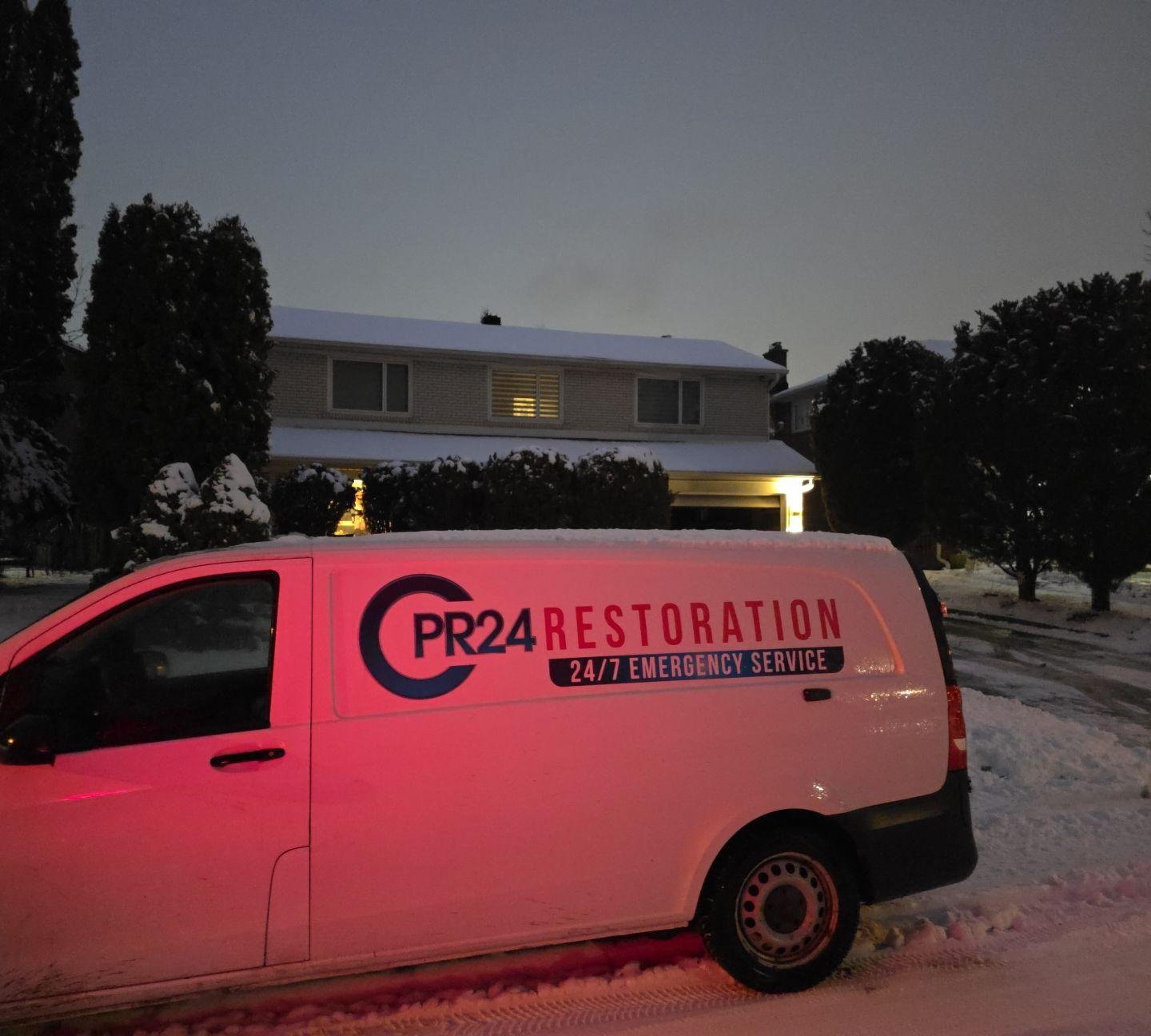
Response time depends on traffic, weather, crew availability, and your location. Still, the company should give a clear, realistic expectation rather than vague reassurance. For Toronto and GTA properties, CPR24 Restoration offers 24/7 emergency service and aims to be on site within 45 minutes, helping limit the time water has to spread through finishes and building materials.
2. Look for certified restoration expertise
Water damage restoration is a technical service, not simply a cleaning job. Ask whether technicians hold IICRC certification and whether they follow recognized procedures for water damage, structural drying, and microbial remediation. Certification does not replace experience, but it signals that the team understands the science behind moisture movement, drying equipment, contamination categories, and documentation.
This matters most when damage is concealed. A crew that only removes visible water may miss damp framing, insulation, subflooring, or wall cavities. A trained restoration technician knows when non-invasive readings are enough and when more detailed testing or selective removal is necessary.
3. Expect moisture mapping, not guesswork
A carpet can feel dry at the surface while its pad and subfloor remain wet. Walls may look unaffected while moisture has wicked upward behind baseboards. The best emergency water cleanup companies use moisture meters, thermal imaging where appropriate, and documented readings to identify the full affected area.
Ask how the company establishes a drying goal. Good drying work compares wet materials to an appropriate dry standard, then monitors progress during equipment checks. This protects against premature equipment removal and gives you evidence that the restoration was managed properly.
4. Make sure extraction comes before drying
Dehumidifiers and air movers are essential, but they are not a substitute for removing bulk water. Effective extraction reduces the amount of moisture that must be dried from the building and can shorten the restoration timeline. On carpeted areas, this may involve professional extraction tools designed to pull water from the carpet and pad.
The trade-off is that some materials cannot be saved safely or economically. Saturated particleboard cabinetry, wet insulation, delaminated flooring, and contaminated porous materials may need removal. A trustworthy contractor explains why a material can be dried, cleaned, or must be discarded instead of making a blanket promise to save everything.
5. Treat sewer backups and contaminated water differently
Not every floodwater event is safe to handle the same way. Sewer backups, toilet overflows involving waste, and outdoor floodwater may contain bacteria, viruses, and other contaminants. These situations require proper personal protective equipment, controlled demolition where porous materials are affected, specialized cleaning, and sanitization.
Be cautious of anyone who treats sewage cleanup as ordinary mopping and drying. The goal is not merely to remove the odour. It is to address affected materials and surfaces in a way that reduces health risk for residents, tenants, staff, and visitors. If vulnerable people occupy the property, such as children, seniors, or those with respiratory conditions, communicate that fact to the restoration crew immediately.
6. Ask for a clear drying and monitoring plan
After extraction, a professional crew should place equipment based on the scope of damage, not by dropping a few fans into the room. Air movers help evaporate moisture from surfaces, while dehumidifiers remove that moisture from the air. Depending on the loss, the team may also use containment, specialty drying systems, or cavity drying methods.
The company should schedule monitoring visits, record moisture readings, adjust equipment, and explain likely drying duration. More equipment is not always better. Excessive or poorly placed airflow can create unnecessary noise, inconvenience occupants, or damage lightweight materials. The correct setup depends on the structure and the measured conditions.
7. Check whether the provider can complete repairs
Emergency cleanup is only the first phase. Once drying is complete, many properties need drywall replacement, insulation, flooring repairs, painting, trim work, or waterproofing improvements. Using separate contractors for every stage can add delays and create confusion about who is responsible for the final result.
A full-service restoration company can coordinate cleanup and reconstruction under one scope of work. That does not mean every repair should begin immediately. Materials must reach the required drying target first, and insurers may need documentation before certain work proceeds. What matters is having a clear handoff from mitigation to repair, with the damage record available throughout.
8. Review documentation, insurance support, and reputation
Water losses can become insurance claims, particularly after extensive flooding, burst pipes, or sewage incidents. Ask whether the company provides photographs, moisture readings, equipment logs, itemized scopes, and invoices that clearly describe the work completed. Accurate records can make discussions with an adjuster more straightforward.
Also review recent customer feedback with a critical eye. Look for comments about arrival times, communication, cleanliness, drying results, and how the company handled unexpected findings. A few short reviews are less useful than consistent feedback describing the actual restoration experience. Strong reviews should support, not replace, proof of credentials and a detailed site assessment.
Questions to ask before authorizing work
Before approving a cleanup crew, ask whether the water source has been classified, how they will test for hidden moisture, what materials may need removal, and how often they will monitor the drying process. Ask who will communicate with your insurer, whether emergency work and reconstruction are quoted separately, and what documentation you will receive.
You should also ask what you can do before the crew arrives. If it is safe, shut off the water source, move valuables away from wet areas, and keep people and pets away from contaminated water. Do not use household vacuums on standing water, enter rooms with electrical hazards, or attempt to remove sewage-contaminated materials without proper protection.
A reputable provider will answer these questions directly. It will not pressure you to approve unexplained demolition, promise an exact final cost before inspecting the damage, or dismiss the need for moisture testing because the floor looks dry.
When water enters your property, act quickly but choose carefully. The right team should leave you with a controlled site, documented drying, a safe plan for affected materials, and a practical path back to normal use of your home or business.