
A few centimetres of water across a basement floor can soak drywall, wick into framing, damage flooring, and create mould conditions long after the visible puddle is gone. Water damage restoration in Oakville is not simply about removing water. It is a time-sensitive process of stopping the source, protecting occupants, drying the structure, and repairing what cannot be safely saved.
Whether the cause is a burst pipe, a failed appliance hose, heavy rainfall, a foundation leak, or a sewer backup, the first hours shape the outcome. Fast professional intervention can reduce demolition, limit business interruption, and help prevent hidden moisture from turning into a much larger property problem.
What to Do in the First Hour After Water Damage
Safety comes first. If water is near electrical outlets, panels, appliances, or wiring, avoid entering the affected area until it is safe to do so. Shut off the water supply if a plumbing leak is active and you can reach the shutoff without entering a hazardous space. For a sewer backup or any water with visible contamination, keep people and pets away completely.
Move dry, valuable items from the affected area if it can be done safely. Do not use a household vacuum on standing water, and do not assume fans alone will dry a flooded basement or room. They may move humid air without addressing water trapped beneath flooring, inside walls, or behind baseboards.
Document the damage with photos and video before cleanup begins. Capture the source, affected rooms, damaged contents, and the water line on walls or furniture. This record can support an insurance claim, but documentation should never delay emergency extraction and drying.
Why Fast Water Damage Restoration in Oakville Matters
Water follows paths that are easy to miss. It can travel beneath laminate flooring, through subfloor materials, into insulation, under cabinets, and along wall cavities. Even a clean-water pipe leak can become a mould risk if materials remain wet long enough.
The urgency also depends on the type of water involved. Clean water from a supply line generally presents a lower contamination risk at the outset. Water from washing machines, dishwashers, toilets, or exterior runoff may contain contaminants and requires more controlled cleanup. Sewer water is highly contaminated and calls for professional containment, removal of affected porous materials, sanitization, and careful verification before the area is rebuilt.
Oakville properties can face different water intrusion patterns. Older basements may be vulnerable at foundation walls or floor drains, while newer homes and condos can experience sudden damage from appliance connections, plumbing failures, or water migrating from a neighbouring unit. The correct response depends on the source, the affected materials, and how long moisture has been present.
A Professional Restoration Process Protects More Than Surfaces
A proper restoration project begins with inspection and moisture mapping. Technicians use specialized meters and thermal imaging where appropriate to identify moisture behind finished surfaces and beneath flooring. The goal is to define the real extent of damage before deciding what can be dried and what must be removed.
Extraction and Controlled Demolition
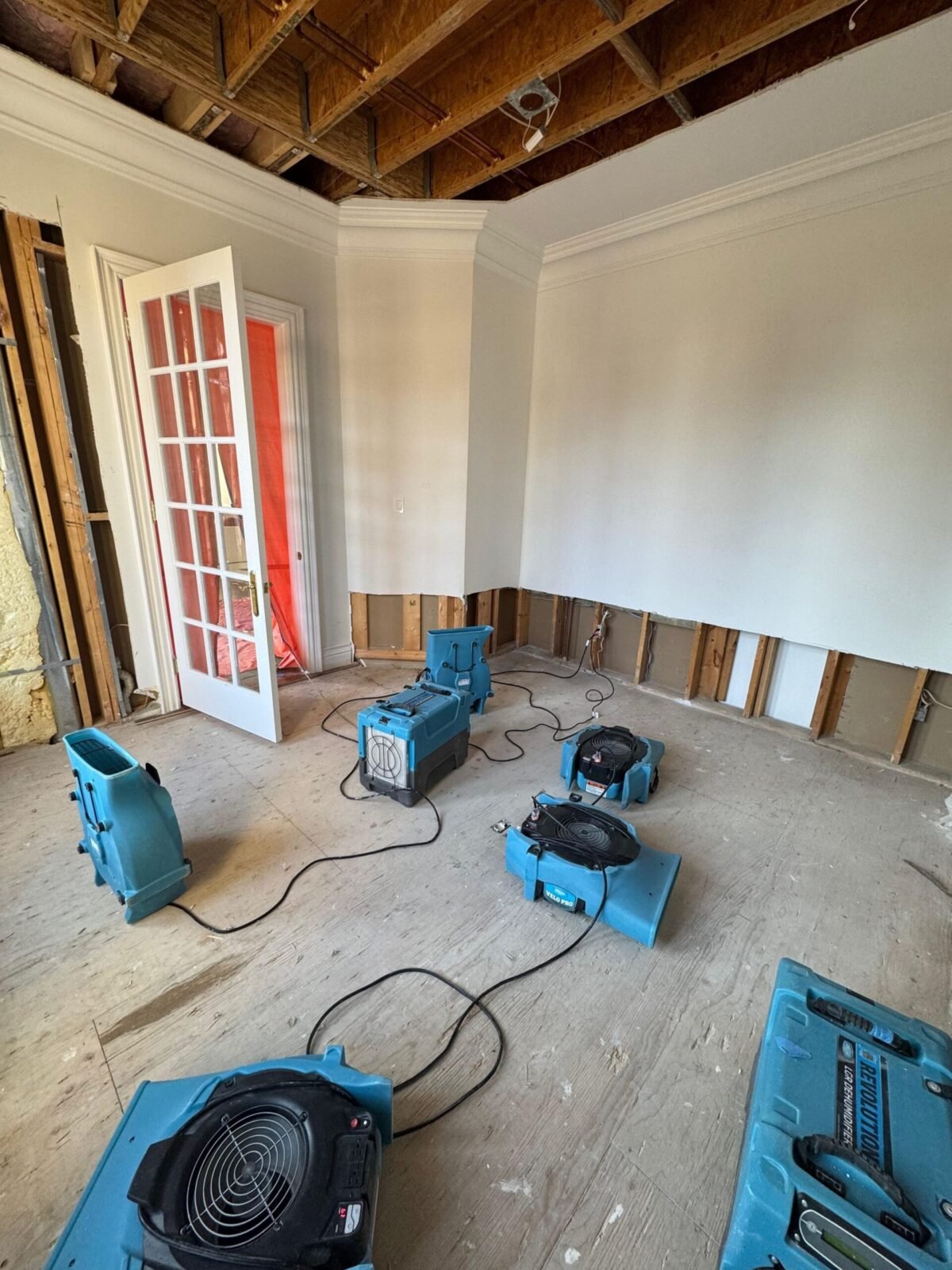
Standing water is extracted using commercial equipment. When water has saturated carpeting, insulation, drywall, engineered flooring, or other porous materials, some controlled removal may be necessary. This is not unnecessary demolition. It can be the safest way to access trapped moisture, remove contaminated materials, and expose structural components for drying.
The trade-off is clear: removing materials can increase the immediate scope of work, but leaving unsalvageable materials in place may lead to odours, deterioration, and mould growth that is more expensive to address later. A restoration team should explain why each removal decision is being made.
Structural Drying and Moisture Monitoring
Drying is more precise than placing a few fans in a room. Professional air movers, dehumidifiers, and, when required, specialized floor-drying equipment create controlled conditions that pull moisture from building materials. Air movement, humidity, temperature, and material moisture levels are monitored throughout the process.
Drying time varies. A small, contained clean-water leak may be stabilized in a few days. A flooded basement, a multi-room loss, or a sewage incident can take longer because containment, cleaning, material removal, and safe drying all need to happen in the right sequence. The visible area may look dry before the structure reaches an acceptable moisture level, which is why moisture verification matters.
Cleaning, Sanitizing, and Odour Control
Water damage often leaves more than moisture behind. Contaminants, soil, bacteria, and odours may remain on hard surfaces or inside affected materials. The required cleaning method depends on the water category and the materials involved. Sewer backup cleanup requires a substantially higher level of containment and disinfection than a clean-water pipe leak.
Odours should be investigated, not masked. A persistent musty smell can indicate hidden dampness, wet insulation, or microbial growth behind a wall or beneath flooring. Addressing the source is the only dependable way to prevent the problem from returning.
When Mould Becomes Part of the Restoration Plan
Mould can begin growing when moisture remains available, particularly in enclosed spaces with poor airflow. Basements, bathrooms, laundry rooms, attics, and wall cavities are common problem areas because water can remain hidden there.
Not every water loss requires extensive mould remediation. If the source is stopped quickly and structural materials are dried thoroughly, mould may never develop. But if damage was undiscovered for days or weeks, or if there is visible growth and a persistent odour, the restoration plan may need to include containment and remediation.
A qualified team will assess the affected area, isolate it where necessary, remove compromised materials, clean appropriate surfaces, and correct the moisture condition that allowed growth. Simply painting over staining or applying a surface spray does not solve moisture inside a wall or under a floor.
Insurance, Condos, and Commercial Properties
Insurance coverage depends on the policy, the cause of loss, endorsements, deductibles, and whether reasonable steps were taken to prevent further damage. A sudden burst pipe may be handled differently from ongoing seepage or a backup caused by a known maintenance issue. Contact your insurer promptly, keep records, and retain photos, invoices, and damaged materials if requested.
Condo water losses often require coordination. A leak from an upper unit can affect multiple suites, common areas, and building systems. Unit owners should notify property management early, while property managers need clear documentation of moisture findings, emergency work, and the scope of repairs. Quick action protects residents and reduces the chance that damage spreads beyond the original unit.
For commercial properties, the priority is often restoring safe operations while protecting inventory, equipment, records, and tenant areas. The response may need to be phased so that unaffected sections remain accessible. It depends on the nature of the business and whether water has affected electrical systems, food storage, customer areas, or critical equipment.
Choosing an Emergency Restoration Team
Look for a restoration provider that can respond around the clock, assess the full extent of moisture, and manage the work from extraction through reconstruction. Certification matters because drying, contamination control, and mould work require more than general cleaning experience.
Ask how the team will document moisture levels, whether they handle contaminated water losses, and who will complete repairs after drying. Managing emergency cleanup and reconstruction through one accountable provider can reduce delays and prevent the handoff problems that occur when several contractors work from incomplete information.
CPR24 Restoration provides 24/7 emergency response for Oakville homes, condos, and commercial properties, with IICRC-certified technicians equipped to handle extraction, drying, sanitization, mould remediation, and post-damage repairs.
If water has entered your property, do not wait for staining, warping, or a musty smell to tell you the damage is serious. Stop the source where safe, protect the area, document what happened, and arrange a professional inspection while the best opportunity to limit the loss is still available.