
A sewer backup is not ordinary water damage. If you are asking, is sewage water dangerous indoors, the direct answer is yes. Water that enters a basement, bathroom, utility room, or commercial space from a sewer line or drain can contain harmful microorganisms and contaminants. It can also soak into finishes and spread beyond the visible flood area within hours.
The safest response is to keep people and pets away, stop the source if it is safe to do so, and arrange professional contaminated-water cleanup immediately. Fast extraction and proper sanitization protect the building, but more importantly, they reduce exposure for everyone inside.
Why sewage water indoors is a health concern
Sewage-affected water is generally treated as Category 3 water, often called black water, in the restoration industry. This category can include raw sewage, wastewater from toilets, water from a sewer backup, or floodwater that has travelled through contaminated areas. It may carry bacteria, viruses, parasites, fungi, chemicals, and organic waste.
Exposure does not always mean someone will become ill, but the risk is real. Illness can occur when contaminated water touches the mouth, eyes, broken skin, food-preparation surfaces, or items that children and pets handle. Common symptoms after exposure can include stomach upset, vomiting, diarrhea, fever, or skin irritation. Anyone who develops symptoms after a sewage incident should contact a healthcare professional, especially young children, older adults, pregnant people, and people with weakened immune systems.
The risk is not limited to the water itself. Once sewage water dries, contaminated residue can remain on floors, baseboards, furniture, tools, and personal belongings. Moisture left behind may also support mould growth, creating a separate indoor air quality and property damage problem.
Is sewage water dangerous indoors after it has dried?
Yes. A dry floor is not proof that the area is clean or safe. Sewage residue can remain in porous materials such as carpet, underpad, drywall, insulation, particleboard, upholstered furniture, and unfinished wood. These materials can absorb contaminants below the surface, where household cleaning products cannot reliably reach.
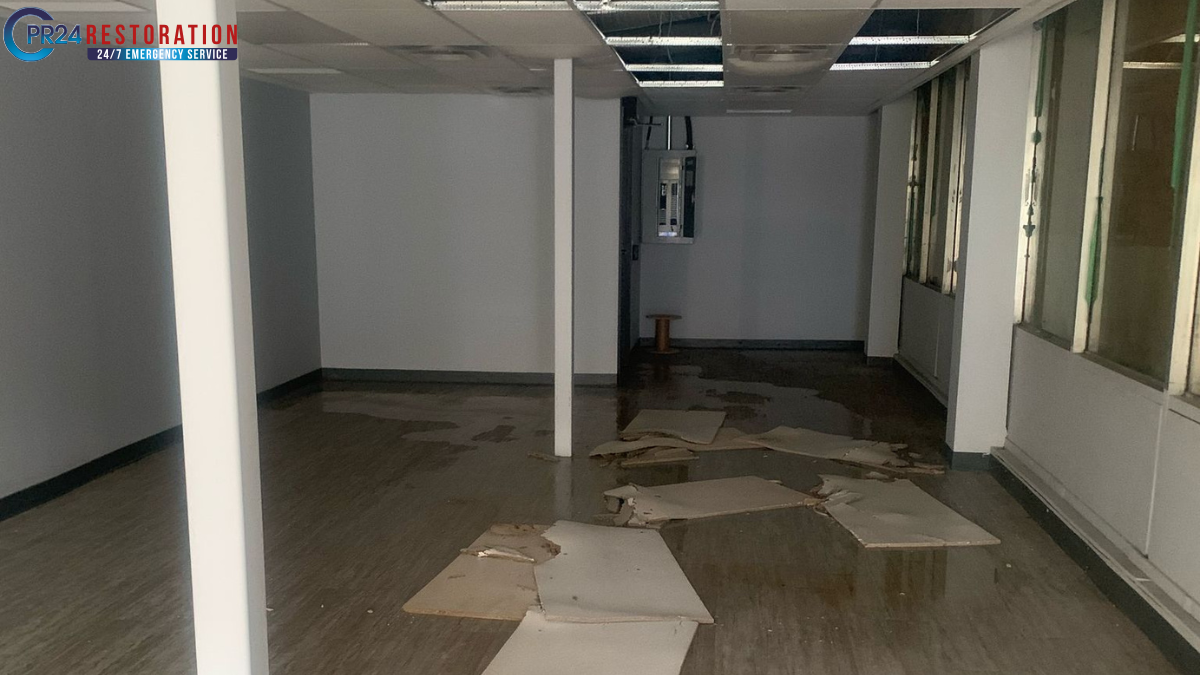
There is a difference between a small, contained toilet overflow caught immediately and a sewer backup that has spread across a finished basement. A minor incident may affect only a hard, non-porous floor surface. A larger backup can travel under flooring, wick into drywall, enter wall cavities, and contaminate stored belongings. The more time the water remains, the more materials may need specialized cleaning or removal.
Odour is another warning sign, but it is not a complete test. A basement can smell normal after the initial cleanup while hidden moisture and contamination remain behind finished walls or beneath flooring. Restoration professionals use moisture detection equipment, targeted material removal, cleaning protocols, and verification steps to address what cannot be seen from the doorway.
What to do immediately after a sewer backup
Your first job is to prevent exposure and avoid making the damage worse. Do not walk through contaminated water unless absolutely necessary, and do not allow children or pets into the affected area. If sewage is near electrical outlets, appliances, a furnace, or the electrical panel, stay clear and contact an electrician or emergency professional as needed. Never enter standing water where an electrical hazard may be present.
Take these actions as soon as it is safe:
- Stop using toilets, sinks, showers, dishwashers, and washing machines. Continued water use can add volume to a blocked or overwhelmed sewer line.
- If safe, turn off the water supply to a leaking fixture or appliance. Do not attempt to clear a sewer blockage yourself if wastewater is backing up.
- Keep the affected area isolated. Close doors, block access, and avoid running fans that could move contaminated particles into unaffected rooms.
- Move only clean, unaffected valuables from nearby areas. Do not carry contaminated items through the home or business.
- Document the damage with photos or video from a safe distance before cleanup begins. This can help with insurance reporting and restoration planning.
Avoid vacuuming sewage water with a household wet/dry vacuum, mopping it into a floor drain, or using a shop fan to dry carpets. These approaches can spread contaminants, damage equipment, and create a false sense of completion. Bleach alone is also not a complete remediation plan, particularly on porous materials or when contamination has travelled beneath the surface.
Materials that may need to be removed
The right restoration approach depends on the source, how long the water was present, how far it travelled, and the materials affected. Non-porous surfaces such as sealed tile, metal, glass, and some plastics can often be cleaned and disinfected when they are structurally sound. Porous materials are much harder to restore safely after significant sewage contact.
Carpet and underpad exposed to sewage are commonly removed because they absorb wastewater deeply. Drywall may need to be cut above the visible water line to expose wet insulation and framing. Laminate flooring, engineered wood, baseboards, particleboard furniture, cardboard boxes, and fabric-covered items may also require disposal if they were saturated or cannot be effectively cleaned.
This can feel wasteful during an already stressful emergency. However, saving materials that remain contaminated can lead to recurring odours, mould growth, insurance complications, and future health concerns. The goal is not simply to make the room look dry. It is to return it to a clean, safe, and properly rebuilt condition.
Professional sewage cleanup follows a controlled process
A qualified restoration team begins by identifying the affected area and establishing containment to prevent cross-contamination. Technicians wear appropriate personal protective equipment and use commercial extraction equipment designed for contaminated water. They then remove unsalvageable materials, clean hard surfaces, apply suitable disinfecting treatments, and dry the structure using monitored equipment.
Drying matters even after cleaning. Moisture can remain in concrete, framing, subfloors, and wall cavities. Professional moisture readings help determine whether materials are actually dry rather than merely dry to the touch. If mould is present or likely to develop, the restoration plan may include additional remediation procedures.
For homes and commercial properties in Toronto and the GTA, CPR24 Restoration can coordinate the full response, from emergency extraction and contaminated-material removal through drying, sanitization, mould remediation when required, and reconstruction. This helps avoid the gaps that can occur when cleanup and repairs are handled as separate jobs.
Protecting the rest of the property
Sewage damage is often concentrated in a basement or ground-floor washroom, but contamination can spread in less obvious ways. Footwear, cleaning tools, storage bins, and pets can carry wastewater into clean areas. HVAC systems deserve particular attention if contaminated water reached ducts, mechanical rooms, or air-handling equipment.
Keep a clear separation between affected and unaffected spaces until the cleanup team confirms the area is safe. Wash hands thoroughly after any contact with the area, and launder clothing worn during an emergency response separately from other laundry. Food, medicines, cosmetics, and infant items exposed to sewage should generally be discarded unless they were sealed in waterproof, undamaged containers that can be thoroughly cleaned.
If tenants, employees, or customers may have entered the affected area, notify them promptly and restrict access. Property managers and business operators should document the incident, the response steps taken, and the dates when restoration work was completed. Clear records support responsible building management and can be useful for insurers.
When a small overflow still needs expert help
Not every toilet overflow requires a full-scale demolition, but it should never be dismissed automatically. If the water was clean, contained, and addressed immediately, the cleanup may be straightforward. If it came from a sewer backup, contained visible waste, travelled beyond the bathroom, soaked flooring, or sat for more than a short period, professional assessment is the safer call.
The source matters as much as the volume. A few litres of sewer water on carpet can be more concerning than a much larger amount of clean water on sealed tile. When there is uncertainty about what the water contained or where it travelled, treat it as contaminated until a trained technician evaluates it.
Do not wait for the odour to get worse or for mould to appear. Isolate the space, protect the people who use it, and get the affected materials assessed before hidden damage turns a manageable sewer backup into a larger restoration project.