

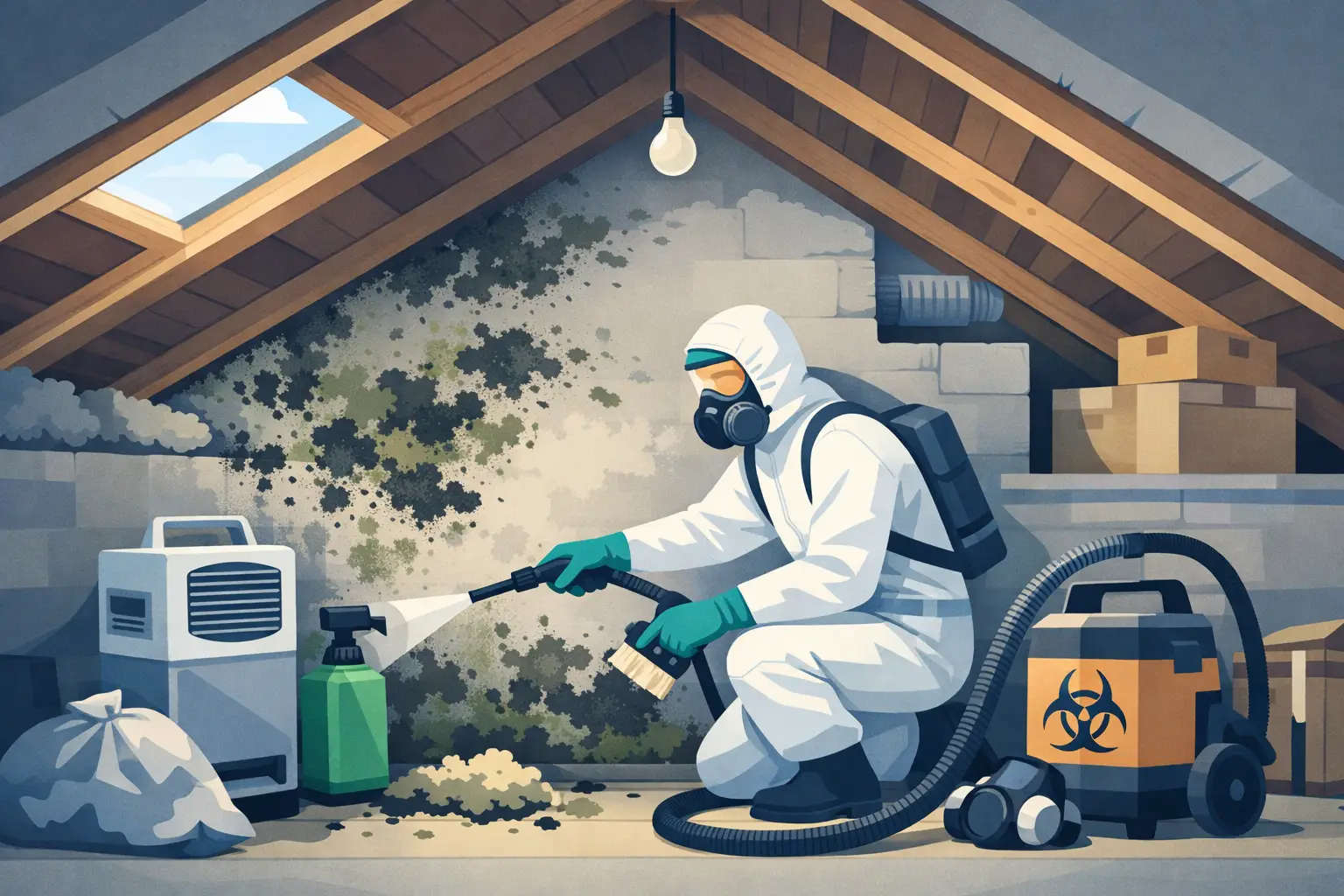
One dark patch on attic sheathing can turn into a much bigger problem than most property owners expect. This guide to attic mold removal is built for homeowners, condo owners, and property managers who need clear direction fast – what causes attic mold, when it is safe to address, and when professional remediation is the right call.
Attic mold is rarely just a surface issue. In most cases, it points to moisture moving where it should not, whether that comes from roof leaks, poor ventilation, bathroom exhaust fans venting into the attic, or warm indoor air condensing on cold roof decking during a Toronto winter. If the source is not corrected, cleaning alone will not hold.
Why attic mold needs a fast response
Attics are easy to ignore because they are out of sight, but mold growth there can spread across wood sheathing, rafters, insulation, and stored contents before anyone notices. That creates three immediate risks. First, it can compromise indoor air quality as spores move into the living space. Second, it can damage building materials over time. Third, it can complicate a future sale, insurance claim, or tenant complaint once staining and contamination become visible.
For commercial properties and multi-unit buildings, the stakes are even higher. Delays can affect occupant safety, maintenance budgets, and documentation requirements. Acting early is usually far less disruptive and less expensive than waiting until the mold is widespread.
Common signs you may need attic mold removal
Some attics show obvious black, green, or white spotting on wood surfaces. Others are less clear. A musty odour on the upper floor, damp insulation, rusty nail heads, or frost buildup in winter can all point to excess attic moisture and likely mold activity.
Discolouration does not always mean active mold, and not every stain requires full remediation. Old staining from a past issue may remain even after the source has been fixed. That is why inspection matters. The right response depends on whether the material is dry, whether growth is active, how far it has spread, and what is feeding it.
What causes attic mold in the first place
The cause is almost always moisture, but the pathway matters. Roof leaks are the most obvious source, especially around valleys, flashing, skylights, and penetrations. In other cases, the roof is intact and the real issue is airflow and temperature imbalance.
A common example is an exhaust fan from a bathroom or laundry room terminating in the attic instead of outside. That sends warm, humid air directly into a cold space, where it condenses on framing and roof sheathing. Poor soffit and roof vent performance can make that worse. Blocked vents, compressed insulation near the eaves, or inadequate intake and exhaust ventilation can trap humidity for long periods.
Air leakage from the occupied space below is another major driver. Gaps around pot lights, attic hatches, plumbing stacks, and wiring penetrations allow warm air to rise into the attic. In winter, that moisture condenses quickly. In older homes across Toronto and the GTA, this is a frequent contributor to recurring attic mold.
A practical guide to attic mold removal
The first step in any guide to attic mold removal is not scrubbing. It is containment of the cause. If water is still entering from a roof defect, if insulation is wet, or if humid air is still venting into the attic, cleanup should wait until the source is identified and controlled. Otherwise, you risk spreading spores while doing nothing to stop regrowth.
Next comes assessment. Small, isolated growth on a limited non-porous or semi-porous surface may look manageable, but attic conditions make DIY work riskier than many people assume. Tight access, low visibility, unstable footing, exposed nails, electrical hazards, and airborne spore exposure all change the equation. Once contamination extends across multiple sections of sheathing or into insulation and framing cavities, professional remediation is usually the safer path.
Proper attic mold removal typically involves controlled access, containment where needed, HEPA air filtration, removal of contaminated porous materials if they cannot be effectively cleaned, treatment of affected structural surfaces, and verification that the moisture source has been corrected. Depending on severity, insulation may also need replacement if it has absorbed moisture or become contaminated.
The goal is not to bleach a stain until it looks better. The goal is to remove or remediate contamination safely and return the attic to a dry, stable condition.
When DIY is a bad idea
There is a difference between a minor maintenance issue and a remediation job. If the mold covers a broad area, keeps coming back, appears after a leak, or has reached insulation and stored materials, do not treat it like a weekend project. Disturbing mold without proper controls can spread spores through the home or building.
Bleach is also widely misunderstood. It may lighten visible staining on some surfaces, but it does not reliably solve attic mold problems, especially on porous wood. Strong odours and aggressive chemical use can add another hazard in a confined space. A better standard is source control, safe removal, and drying backed by proper equipment and trained technicians.
For anyone with asthma, respiratory sensitivity, or immune concerns, even a smaller attic issue may be enough reason to avoid direct cleanup. Property managers should be equally cautious. Once tenant health concerns or liability questions enter the picture, documentation and certified remediation become much more important.
What professional remediation should include
A credible remediation process starts with inspection, not guesswork. Technicians should determine where moisture is entering, how far contamination extends, and whether adjacent materials are affected. In some cases, air quality or surface testing may help confirm the scope, though testing is not always necessary to justify action when visible growth is present.
Containment measures depend on the layout and severity. In a straightforward attic-only case, the work area may be isolated to prevent spore migration into living areas. HEPA filtration helps capture disturbed particles. Contaminated insulation is removed if needed, surfaces are cleaned or treated using remediation-appropriate methods, and damaged materials are documented for repair or replacement.
Just as important is the correction phase. That may include repairing roof leaks, redirecting exhaust ducts to the exterior, air sealing attic bypasses, improving ventilation, and replacing insulation to restore thermal performance. Full-service restoration matters here because attic mold often overlaps with roofing, drying, insulation, and reconstruction needs.
How long attic mold removal takes
It depends on the size of the attic, the extent of growth, whether insulation is involved, and how quickly the moisture issue can be fixed. A limited remediation may be completed in a day. A more extensive job involving removal, drying, repairs, and insulation replacement can take longer.
Speed still matters. The longer mold remains active, the more likely it is to spread and the more likely secondary damage becomes. If there has been a recent leak or visible condensation problem, early intervention gives you better options.
Prevention after the cleanup
The best prevention plan is simple in theory and technical in practice – keep the attic dry, vented, and separated from indoor humidity. Roof maintenance should be routine, especially after heavy storms, ice dam events, or visible ceiling staining. Exhaust fans must discharge outdoors, never into the attic. Air leaks from the floors below should be sealed, particularly around light fixtures, penetrations, and access hatches.
Insulation levels also matter. An underinsulated attic can create cold surface conditions that encourage condensation. At the same time, insulation should not block soffit airflow. Good prevention is a balance between air sealing, ventilation, and thermal control.
For property owners managing older buildings or multiple units, periodic attic inspections are worth scheduling before winter and after major weather events. That is often when hidden moisture problems show themselves.
Cost questions and what affects them
Attic mold removal costs vary based on area affected, type of material contaminated, ease of access, whether insulation must be removed, and what repairs are needed afterward. A small isolated area is one thing. Widespread growth tied to roof leakage or long-term ventilation failure is another.
The cheapest quote is not always the lowest real cost. If a contractor cleans visible staining but leaves wet insulation, venting defects, or roof leakage in place, the problem can return quickly. The better measure is whether the scope includes both remediation and correction of the underlying cause.
For owners dealing with an urgent issue in Toronto or surrounding GTA communities, response time can also make a real difference. Fast inspection and moisture control can reduce the amount of material that ultimately needs to be removed.
When to call for help immediately
If you see extensive growth, notice a strong musty smell on the top floor, find wet insulation, or suspect a roof leak, act now. The same applies if you have tenants, vulnerable occupants, or a pending property transaction that requires clear documentation of the issue and the fix.
A qualified restoration team can inspect the attic, identify the moisture source, contain contamination, and complete the remediation and repair work in a coordinated way. That is the standard CPR24 Restoration brings to attic mold problems – quick response, certified process, and end-to-end recovery when speed and control matter most.
A dry attic rarely gets much attention, which is exactly how it should be. If yours is showing signs of mold, treat it as an early warning, not a cosmetic flaw, and deal with it before hidden moisture turns a manageable repair into a larger restoration job.