
A burst pipe behind a wall, a flooded basement, or a sewer backup creates two urgent problems at once: water must be stopped and removed, and the property must be put back together. Understanding water mitigation vs restoration helps property owners make faster decisions, communicate clearly with insurers, and avoid leaving hidden damage behind.
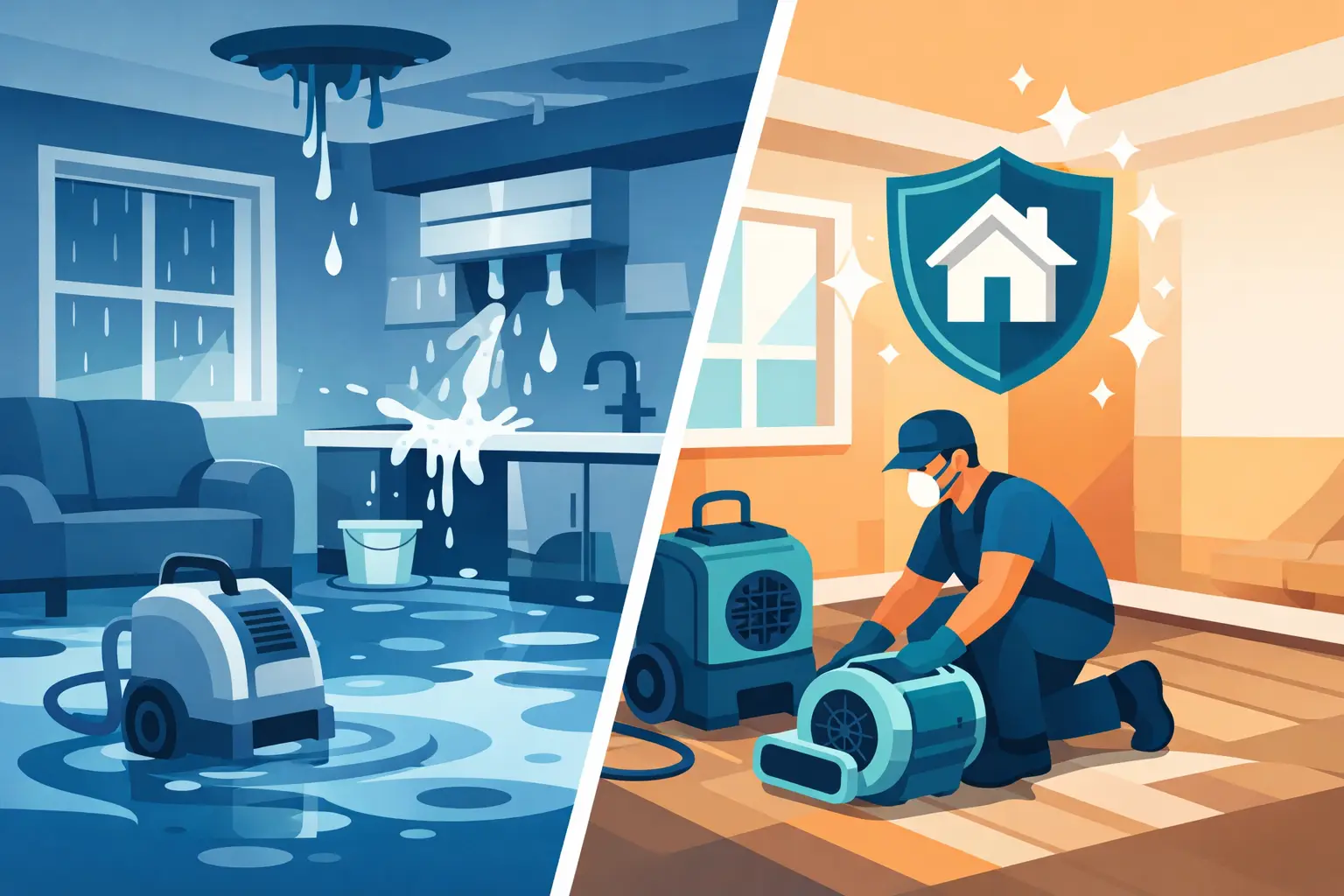
They are connected services, but they are not the same job. Mitigation controls the immediate loss. Restoration repairs the damage and returns the space to its pre-loss condition. In most cases, mitigation comes first because rebuilding a structure that is still wet only traps moisture, increases mould risk, and creates more expense later.
Water Mitigation vs Restoration: The Core Difference
Water mitigation is the emergency response phase. Its purpose is to prevent a water loss from spreading and becoming more severe. The work begins with identifying the source, stopping the water where possible, assessing the affected materials, extracting standing water, and drying the structure.
Restoration is the repair and reconstruction phase. Once moisture readings confirm that the affected area is dry and safe to rebuild, restoration addresses the physical damage left behind. This may include replacing drywall, insulation, flooring, trim, cabinetry, plaster, and other materials that could not be saved.
A useful way to think about the difference is this: mitigation stabilizes the property; restoration makes it functional and finished again. One protects what can be saved. The other repairs what was lost.
For a minor clean-water leak caught quickly, mitigation may be limited to extraction, drying, and a small drywall repair. For a major basement flood or sewage backup, the process can involve contaminated-material removal, disinfection, mould prevention, structural drying, and extensive reconstruction. The scope depends on the water source, how long materials were wet, and how far moisture travelled.
What Happens During Water Mitigation
The first hours after water intrusion matter. Water can move beneath flooring, wick up drywall, soak insulation, enter wall cavities, and compromise subfloors without leaving obvious surface signs. A room that appears dry after a quick mop-up may still contain elevated moisture behind finishes.
A professional mitigation team starts with inspection and moisture detection. Technicians use specialized meters and thermal imaging where appropriate to locate wet materials and map the affected area. This prevents drying decisions from being based on appearance alone.
The immediate priority is source control. With a burst pipe, that may mean shutting off the water supply and arranging plumbing repairs. With roof leakage, the opening must be temporarily secured. In a sewer backup, occupants should avoid contact with the affected water, as it may contain bacteria, viruses, and other contaminants.
Extraction follows. Powerful pumps and extraction equipment remove standing water from floors, carpets, and other surfaces. The faster water is removed, the better the chance of saving materials and reducing swelling, staining, and structural deterioration.
Drying is more involved than placing fans in a room. Restoration professionals set air movers, dehumidifiers, and, when necessary, specialized drying equipment to control humidity and pull moisture from building materials. They monitor moisture levels throughout the process, adjusting equipment until readings indicate that drying goals have been met.
Mitigation may also include the controlled removal of unsalvageable materials. Wet insulation, swollen particleboard, contaminated carpeting, and saturated drywall often cannot be safely or effectively restored. Removing only what is necessary helps expose wet framing, improve airflow, and prepare the property for later repairs.
What Happens During Water Restoration
Restoration starts after the emergency has been controlled and the building is properly dry. This phase focuses on returning the affected area to a safe, usable condition that matches the surrounding property as closely as possible.
The work can be relatively simple, such as patching a section of drywall and repainting a ceiling after a small plumbing leak. It can also be substantial. A flooded basement may require new insulation and drywall, flooring replacement, baseboard installation, painting, repairs to cabinetry, and waterproofing improvements where the source of water requires it.
Restoration is not merely cosmetic. Proper reconstruction closes wall assemblies correctly, reinstalls insulation, repairs damaged substrates, and ensures the space is ready for normal occupancy. If mitigation uncovered mould growth or contamination, remediation must be completed before reconstruction begins.
This distinction matters when reviewing estimates. A mitigation estimate commonly covers emergency extraction, drying equipment, monitoring, demolition, cleaning, and disinfection. A restoration estimate generally covers repairs and replacement materials. Depending on the loss and insurance policy, these phases may be documented separately even when one company manages the full project.
Why You Should Not Skip the Mitigation Phase
It can be tempting to focus on visible repairs right away, especially when a tenant needs access to a unit or a business needs to reopen. But repairing over wet materials creates a hidden problem rather than solving it.
Moisture left in wall cavities or under flooring can support mould growth, produce persistent odours, weaken drywall and wood products, and cause finishes to fail. New paint may blister. Fresh flooring may cup or separate. New drywall can become a future mould source if the framing behind it remains wet.
The trade-off is time. Thorough drying can delay reconstruction by several days, particularly after widespread flooding. That delay is usually far less costly than tearing out newly installed finishes because the moisture problem was never fully addressed.
For commercial properties, mitigation also supports business continuity. Fast extraction and controlled drying can reduce the amount of inventory, furnishings, equipment, and building materials that need replacement. The goal is not to rush blindly. It is to move quickly with measurements, containment, and documented drying progress guiding each decision.
Water Category Changes the Scope of Work
Not all water losses are equal. The type of water affects what can be cleaned, what must be removed, and what safety controls are required.
Clean water usually comes from a sanitary source, such as a supply line leak or overflowing sink. If addressed quickly, many materials may be recoverable. Grey water may contain contaminants from appliances, showers, or similar sources and requires more cautious cleaning and disposal decisions.
Black water is the highest concern. Sewage backups, toilet overflows involving waste, and floodwater can contain harmful contaminants. Porous materials exposed to black water, including carpeting, padding, insulation, and drywall, often require removal. Disinfection, protective equipment, and controlled containment are essential to protect occupants and workers.
Water can also become more contaminated the longer it remains in a building. A clean-water leak that sits for days may no longer be treated as a simple clean-water event. This is another reason immediate professional assessment is valuable.
When Mitigation and Restoration Overlap
Although the phases are distinct, they often overlap in planning. During mitigation, technicians document affected materials, take photos, record moisture readings, and identify repairs likely to be needed. This information helps property owners and insurers understand the full scope before reconstruction begins.
An end-to-end provider can coordinate the handoff from emergency cleanup to repairs without forcing the owner to find separate contractors while managing an insurance claim and a disrupted home or workplace. That does not mean every material should automatically be replaced. The right approach is based on contamination, moisture data, material condition, and the possibility of safely restoring the item.
For condo owners and property managers, coordination is especially important. A leak in one suite can affect ceilings, walls, electrical components, and finishes in units below. Mitigation may need to begin immediately while responsibility, access, and repair approvals are being sorted out.
What Property Owners Should Do First
If water is actively entering the property, protect people before possessions. Avoid standing water near electrical outlets or appliances, shut off the water supply if it is safe to do so, and keep children, tenants, and pets away from contaminated areas. Do not enter a sewage-affected basement without appropriate protection.
Take a few photos or videos for documentation if conditions allow, then arrange emergency mitigation. Avoid running household fans over sewage-contaminated water, lifting wet carpeting without protection, or sealing up a damp room. These actions can spread contamination or trap moisture where it is harder to detect.
For Toronto and GTA property owners, a 24/7 response can make the difference between targeted drying and a larger demolition and repair project. CPR24 Restoration uses trained technicians and professional drying equipment to manage the emergency phase, document conditions, and carry repairs through to completion when needed.
The right next step after a water loss is rarely to start rebuilding immediately. Stop the source, remove the water, verify the structure is dry, and then restore the property properly. That sequence protects the building, the people using it, and the value of every repair that follows.