

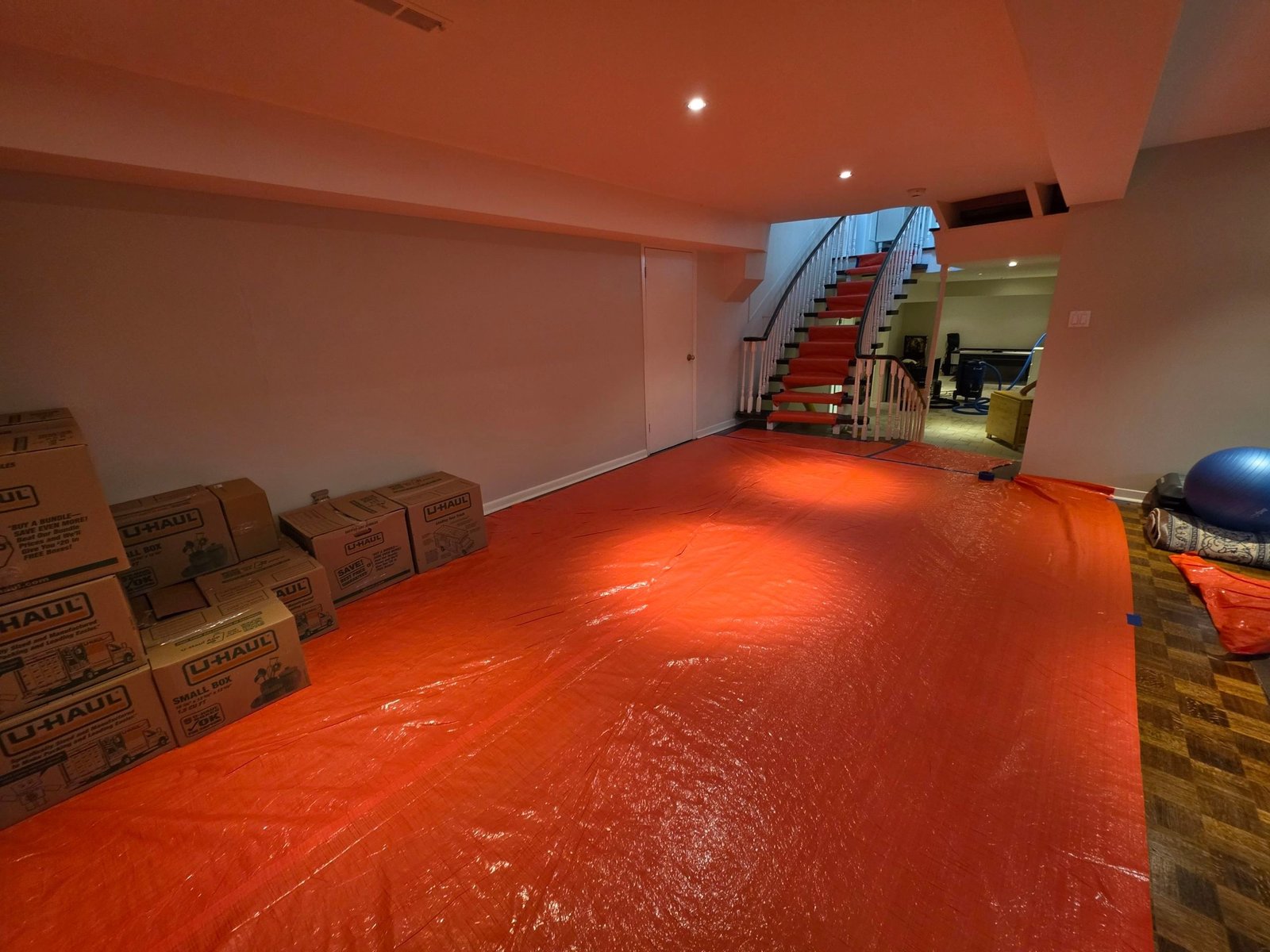
Basement flooding can turn a familiar storage space into a dangerous emergency within minutes. We understand the urge to rush in and save your belongings, but standing water can conceal electrical, gas, sewage, and structural hazards.
If your basement is flooding, first protect people and pets. Identify the source only if it is safe, and document the basement’s water damage. Then contact your insurer and a qualified professional to repair the basement flooding. Dry affected materials within 24 to 48 hours, if possible, to help limit mold growth. Let’s walk through what to do during a basement flood.
Step 1: Check Whether Your Flooded Basement Is Safe
We assess the area before we touch the water, move belongings, or try to identify the cause of basement flooding. Standing water can carry electricity from wet outlets, appliances, cords, or wiring. It can also contain sewage, chemicals, sharp objects, and germs. A few minutes spent checking the conditions can tell us whether it is safe to enter or whether we need qualified help.
Keep people and pets out of standing water
We keep children, pets, and other household members away from the basement and block access to the stairs. A closed door, stair gate, or clear instruction can stop someone from stepping into the water without understanding the risk.
We stay out if the water is deep, moving, or rising fast. Do not enter the water to rescue stored items, retrieve a pump, or inspect an appliance. Water can hide damaged flooring, loose objects, and electrical hazards.
We think over the source from a dry location. Water from a visible burst supply pipe may be fairly clean, but water entering through a floor drain, toilet, or laundry fixture may contain sewage. If we cannot identify the source, we treat the water as contaminated until a qualified professional assesses it.
If we have already touched floodwater, we wear rubber boots, gloves, safety glasses, protective overalls, and a face mask before we return to the affected area. We wash well after touching floodwater or belongings exposed to it. Clean-looking water does not mean it is safe to handle during basement flooding.
Have power shut off without entering the water
We check for outlets, extension cords, baseboard heaters, appliances, the electrical panel, and gas-fired equipment near the waterline before entering. We stay out of the basement if water has reached any of these items.
We turn off the power only if we can reach the main breaker panel from a completely dry area. This step reduces the risk of electrical shock while we assess the basement’s water damage. We do not walk through water, stand on wet flooring, or touch wet equipment to reach the panel.
If the panel is in the flooded area or we cannot tell whether electricity is present, we contact the electric utility or a licensed electrician to shut off the power. Keep extension cords out of the water. Flooded appliances and electrical equipment need inspection before reuse.
Leave the home if you smell gas
A rotten-egg odour, hissing sound, or concern about a gas leak requires immediate action. We leave the home and contact the gas utility or emergency services from outside.
We do not turn lights or switches on or off, use a phone indoors, smoke, light a match, or use anything that could create a spark as we leave. Floodwater can extinguish a pilot light, and gas appliances exposed to water need professional inspection before use.
Get expert help for sewage or signs of structural damage
Sewage backup changes what we should do if the basement floods. We stop using toilets, sinks, washing machines, dishwashers, and other drains because extra water can worsen the backup. We arrange qualified cleanup instead of handling sewage-contaminated water ourselves. Children, pregnant people, and people with respiratory problems should not handle affected water or materials.
We leave the area and call qualified help if walls, ceilings, floors, or the foundation show cracks, sagging, changes, or other damage. Flooding can weaken building materials in some conditions. Deep water, water that is still entering the basement, or an unknown source also requires a professional assessment before we begin basement flood repair.
Step 2: Find and Stop the Water Source if Safe
Once we control the immediate hazards, we identify the water’s path from a dry, well-lit location. The pattern matters because a pressurized pipe needs a shutoff, while wastewater, rain entry, and groundwater require different responses. This check helps us prevent further basement water damage without disturbing the source.
Shut off the main water valve for a burst pipe
If a visible supply pipe bursts or a major plumbing leak causes basement flooding, we close the main water valve if we can reach it without entering the affected area. The valve usually sits near the point where the supply pipe enters the home. Homes in cooler climates often have it indoors, such as in the basement. Homes in warmer areas may have it outside or in an underground box.
We first check whether a nearby fixture shutoff can isolate the leak. If it cannot, we shut off the main supply. A wheel-style gate valve closes after several clockwise turns. A lever-style ball valve closes when its handle sits perpendicular to the pipe. After closing the valve, we open a faucet to relieve pressure in the lines. We also follow the water heater manual and turn off power to an electric water heater while its water supply is off. A plumber or water provider should handle a seized or leaking valve because forcing it with a pipe wrench can break it.
Stop using drains and toilets during a sewer backup
Water that rises through a floor drain, toilet, tub, or utility sink may indicate a sewer backup. We immediately stop all activities that send water into the drainage system, including toilet flushing, tap use, showers, laundry, and dishwashers. This reduces the risk of more wastewater returning through low fixtures.
Heavy rain or rapid snowmelt can overload municipal sewers. Clogged pipes, aging lines, or a damaged backwater valve can also cause backups. If the basement floor drain bubbles or overflows after a storm, we report the suspected public sewer issue to municipal public works. A licensed plumber can then inspect the home’s connection.
We leave toilet removal and drain plugging to qualified plumbers unless the setup was planned in advance. Removing a basement toilet can expose a corroded drain opening, while an active backup may create pressure in the line. We do not use household plumbing until the blockage or municipal surcharge is resolved.
Check for rainwater entry or sump pump failure from a safe location
After rainfall, we inspect the property from the ground for water entering through a window well, over a foundation wall, through a wall or floor crack, along the floor-wall joint, or from a driveway that slopes toward the house. We also check the gutters, downspouts, and water around the foundation. These observations help us determine how to stop basement flooding.
We watch the sump pit to see whether the water level rises and whether the pump starts and lowers it. A pump that runs without lowering the water may have a blocked discharge, damaged parts, or a failed check valve.
Step 3: Document the Damage and Call for Help
After stopping or containing the water source, we create a clear record before cleanup changes the basement’s condition. This documentation supports basement flooding insurance claims, contractor discussions, and municipal reports.
Take photos and list damaged belongings before cleanup
We photograph the waterline, apparent entry point, and damage to floors, walls, furniture, appliances, and stored belongings. We also take wide photos of each affected area and close-up photos of individual items.
Next, we prepare an itemized list that includes each item’s name, condition, estimated age, purchase price if known, and any available receipt, warranty, manual, or prior photo. Detailed notes give our insurer a clearer account of the basement water damage. We keep damaged items until the insurer advises otherwise unless they create a health hazard.
Ask your insurer about basement flooding coverage and claim steps
We call our insurer promptly and explain the water source, affected rooms, and actions already taken. Most insurers provide 24-hour claims service, and claims specialists or adjusters review the loss, documentation, and next steps.
Coverage depends on the water source and the policy. Sudden internal water escape, such as a burst pipe, is often covered under a standard policy. Sewer backup, sump pump failure, and overland water often require optional coverage. We ask about the deductible, cleanup authorization, contractor requirements, and additional living expenses if the home is unliveable.
Policyholders may legally have up to two years after the incident date to report a claim, but prompt reporting helps us start the process while evidence remains available. If our insurer requests a proof-of-loss form, we return it by the stated deadline, typically within 30 days.
Contact a plumber or water damage restoration company
For a plumbing-related basement flood, we contact a licensed plumber to find and repair the failed pipe, drain, or connection. We explain where the water appeared, whether it is still entering, and what we observed before turning off the supply.
Our insurer can explain its cleanup procedures and may provide contractor contacts. If materials or belongings need cleaning, extraction, or drying beyond what we can handle, we arrange qualified basement flooding repair services and keep a written record of their findings and work.
Report suspected public sewer problems to your municipality
If water entered through drains or several nearby properties appear affected, we contact our municipality through its local service line, often 311. We report the suspected sewer backup and ask whether a municipal inspection is necessary.
Municipal crews may determine whether the blockage is on private or public property. An inspection may include clearing a blockage and reviewing the sewer service with a camera. We keep all service reports, videos, and written findings because they may support later discussions about responsibility or reimbursement.
Keep receipts for emergency work and repairs
We save receipts and invoices from plumbers and cleanup providers, along with records for replacement items and emergency work. We also keep records of temporary accommodation and added living costs if basement flooding makes the home unliveable. These documents provide our insurer and municipality with a complete expense record.
Step 4: Remove Water, Clean and Dry the Basement
Limit DIY cleanup to small spills from a known clean source
Small spills from a known clean source, such as a contained pipe leak, can be removed with pails, mops, a squeegee, or a wet/dry vacuum. Move dry belongings that are available out first, then remove the water before it seeps deeper into the flooring or walls.
Keep DIY cleanup to shallow water that has stopped entering and is clearly free of sewage or outdoor floodwater. Rubber boots, gloves, goggles, and an N95 mask offer practical protection during cleanup.
Have professionals pump out deep or contaminated water
Deep or rising water, sewage backups, and water from an unknown source require a water-damage restoration company. Professionals can extract large volumes of water and measure moisture inside building materials.
Exterior groundwater may remain high, so professionals should pump the water out in stages instead of all at once. Removing about 20 percent of standing water each day can reduce pressure changes around the foundation.
Sort belongings into items to save and discard
Separate belongings into washable hard items, materials that may dry quickly, and absorbent items that need removal. Carpet padding, drywall, insulation, particleboard furniture, mattresses, pillows, stuffed toys, and upholstered furnishings can become saturated with floodwater and often need disposal.
Bag contaminated materials according to local disposal rules. Hard surfaces and solid wood items may be saved if they can be cleaned and dried completely.
Clean hard surfaces without mixing cleaning products
Remove mud and debris after extraction. Wash floors, walls, and sealed hard surfaces with unscented detergent and water. Clean up to 60 cm above the flood line because water can wick upward into nearby surfaces.
Use one disinfectant exactly as its label directs if disinfection is needed. Never combine bleach with ammonia, vinegar, or another cleaner. To name just one example, a bleach disinfectant may work on sealed concrete, tile, and sealed wood, while porous or unsealed materials need a different approach.
Dry wet materials within 24 to 48 hours if possible
Fast drying limits water damage in basement materials and reduces conditions that support mold. Building materials and furnishings are less likely to grow mold if they dry within 48 hours. Remove wet carpeting and padding, open windows if outdoor air is dry, and continue drying until all surfaces and materials are fully dry.
Use dehumidifiers and check hidden moisture; avoid fans around visible mold
A dehumidifier removes moisture from the air and is more useful than a fan alone in a damp basement. Empty the reservoir often or connect its hose to a drain where one is available. Choose a dehumidifier sized for the basement that can run continuously while materials dry.
Check behind baseboards, beneath flooring, inside wall cavities, and around stored items for trapped moisture. Visible mold requires controlled cleanup instead of fans because moving air can spread dust and spores through the basement.
Step 5: Repair the Damage and Prevent Basement Flooding
Confirm materials are dry before rebuilding
We test framing, subfloors, and concrete with a moisture meter before rebuilding. Wood must reach a moisture content of 15% or less before installing new wall coverings or flooring. A plastic sheet taped to the wall or floor for several days can show whether moisture is moving through concrete. This step keeps finishes from trapping water damage in basement materials.
Have flooded wiring and appliances inspected before reuse
A licensed electrician must inspect flooded wiring, panels, outlets, and hard-wired appliances before restoring power. Wet portable appliances need a technician’s assessment. Submerged controls may require replacement after corrosion. Flooded gas appliances need licensed service.
Fix drainage, grading and foundation problems
Basement flood repairs should start outside. Clear gutters and window wells, extend downspouts, and regrade the soil at least 15 cm over the first meter away from the foundation. You can seal cracks and pipe gaps, but recurring seepage or structural cracks require a licensed assessment for drainage or waterproofing.
Maintain your sump pump and think over backup power and a backwater valve
A sump pump moves water away from the foundation. Test it each year and replace it after 10 years. Battery or generator backup power, along with a serviced backwater valve, can help prevent basement flooding during rain.
Contact CPR24 Restoration for Water Damage Services!
Basement flooding means we just need to make quick, careful decisions. We protect people and pets first, avoid electrical and sewage hazards, and stop the water source only if it is safe. Then we document the damage, contact our insurer and qualified professionals, and begin cleanup promptly so the area can dry.
We should not rebuild until professionals inspect affected materials, wiring, and appliances. Regular sump pump tests and better drainage help, while clean gutters and suitable backup systems can reduce future risks. This approach can turn a stressful flood response into a safer recovery and protect our home over the long term.
FAQs
Q1. What should I do first if my basement floods?
Keep people and pets out of standing water. Have electricity shut off from a dry location or by a professional. Stop the water source only if safe, photograph the damage, and contact your insurer and qualified cleanup help.
Q2. How can I find where water is entering my basement?
From a safe, dry location, look for leaking pipes, overflowing drains, foundation cracks, wet window wells, or water along the floor-wall joint. After rain, check gutters, downspouts, and whether the sump pump is working.
Q3. What can I use to remove water from my basement?
For a small, shallow spill from a known clean source, use mops, pails, a squeegee, or a wet/dry vacuum once electrical hazards are controlled. Leave deep, rising, sewage-contaminated, or unknown-source water to professionals.
Q4. How do I dry out a basement after flooding?
Remove standing water and soaked materials, then use dehumidifiers to dry the space. Aim to dry affected materials within 24–48 hours if possible. Check for hidden moisture, and avoid directing fans at visible mold.
Q5. How can I prepare my basement for future flooding?
Clear gutters and window wells, direct downspouts away from the foundation, and correct drainage problems. Test your sump pump yearly, consider backup power and a backwater valve, and have recurring leaks or structural cracks assessed.