
A soaked basement at 2 a.m. is not a cleaning job. It is a time-sensitive restoration event. The emergency water extraction process starts the moment water enters the property, because every hour of delay gives moisture more time to spread into flooring, drywall, insulation, cabinetry, and structural cavities.
For homeowners, condo owners, property managers, and commercial operators, the real risk is not just the visible water. It is what happens after – swelling materials, electrical hazards, bacterial growth, odours, mould, and damage that keeps expanding behind finished surfaces. A proper response is fast, controlled, and technical.
What the emergency water extraction process actually includes
The emergency water extraction process is the coordinated removal of standing water, hidden moisture, and contamination, followed by controlled drying and repair planning. It is not limited to pumping water out and setting up a few fans.
In a professional restoration setting, extraction is only one stage. The process usually includes an on-site assessment, hazard control, water removal, moisture mapping, drying, dehumidification, sanitization, and verification that materials have reached safe moisture levels. If the source was contaminated water, such as a sewer backup, the cleaning and disinfection stage becomes even more critical.
That distinction matters because many property owners assume the emergency ends once the floor looks dry. In practice, surface dryness can be misleading. Moisture often remains trapped under laminate, inside wall cavities, beneath baseboards, and in concrete or wood assemblies.
First priority: stop the source and secure the area
Before extraction begins, the source of the intrusion has to be addressed. That may mean shutting off a burst pipe, isolating a plumbing failure, dealing with an overflowing appliance, or arranging immediate containment after stormwater entry. If the source is still active, removal efforts become a losing battle.
Safety comes next. Water and electricity are an obvious concern, but contamination is just as serious. Grey water from appliances may contain chemicals or residue. Black water from sewage backups or flood events can carry bacteria and harmful pathogens. In those cases, technicians treat the site as a controlled remediation environment, not a simple cleanup.
A fast-response team will also look at slip hazards, ceiling integrity, affected contents, and whether water has migrated into shared walls, corridors, neighbouring units, or building systems. In condos and commercial buildings, that wider spread can change the scope quickly.
Inspection and moisture mapping
The first technical stage is a detailed inspection. Professionals identify the water category, the extent of migration, and the materials affected. They use moisture meters, thermal imaging, and direct readings to determine where water has travelled beyond what is visible.
This is where experience matters. Water does not stay put. It follows gravity, seeps under flooring, wicks up drywall, and settles in low points. A minor kitchen overflow can affect cabinetry, subfloors, and the ceiling below. A flooded basement may involve insulation, framing, stored contents, and mechanical rooms.
Moisture mapping helps set the drying plan. Without it, crews may remove too little water, place equipment in the wrong areas, or miss materials that need to be removed because they cannot be dried safely.
Water removal is more than pumping out standing water
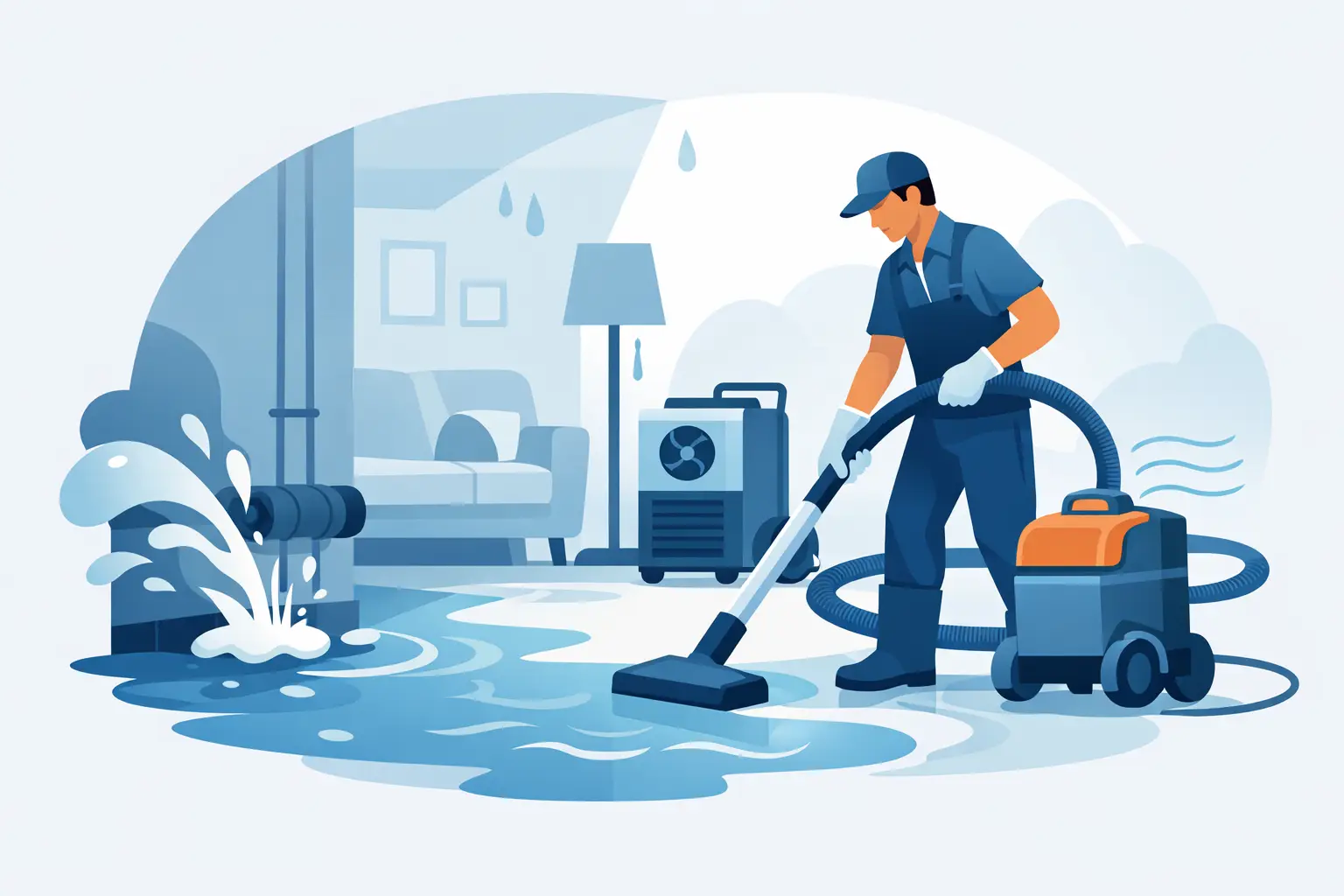
Once the site is stabilized, the extraction phase begins. Depending on the volume of water, crews may use submersible pumps, truck-mounted extraction units, portable extractors, and specialty tools for carpets and hard surfaces.
Standing water is the priority because it causes the fastest damage and keeps feeding secondary absorption. The goal is aggressive removal in the shortest possible time. In emergency conditions, speed directly affects how much of the structure can be saved.
Still, extraction methods depend on the property. Carpeted office space, hardwood flooring, finished basements, and commercial units all respond differently. Hardwood may require careful extraction and controlled drying to reduce cupping or buckling. Finished walls may need selective opening if moisture has moved behind them. In some cases, removing water is straightforward. Saving the surrounding materials is the harder part.
Why contaminated water changes the process
Not all water losses are equal. Clean water from a supply line is one situation. Sewer backup, toilet overflow with waste, or storm-driven intrusion is another.
When contamination is involved, the emergency water extraction process includes strict removal, disposal, cleaning, and sanitization protocols. Porous materials such as insulation, certain flooring, upholstered contents, and drywall may need to be removed if they cannot be decontaminated. The decision depends on the water category, exposure time, and material condition.
This is one of the biggest trade-offs in restoration. Property owners often want to preserve everything possible, which is understandable. But keeping contaminated materials for the sake of short-term savings can create a bigger health and liability problem later.
Drying begins after extraction, not instead of it
Once standing water is removed, structural drying starts. This stage uses air movers, dehumidifiers, and controlled airflow to pull moisture out of building materials and the air.
Drying is where many DIY efforts fail. Household fans may move air, but they rarely create the balanced drying environment needed for wet drywall, framing, subfloors, concrete, or insulation. Professional drying plans are based on material type, room size, humidity, temperature, and moisture readings taken throughout the job.
The process is monitored, not guessed. Technicians return to check progress, reposition equipment, and confirm that drying targets are being met. If hidden pockets of moisture remain, the site is at risk for odours, microbial growth, and long-term material breakdown.
Controlled demolition when materials cannot be saved
A proper restoration company does not tear out materials automatically, but it also does not leave unsalvageable assemblies in place. If drywall has wicked water well above a recoverable line, if insulation is saturated, or if cabinetry has delaminated, selective demolition may be necessary.
This part of the process often causes stress because it feels like the damage is getting worse. In reality, strategic removal is often what prevents a larger loss. Opening affected areas allows hidden moisture to escape, supports proper sanitization, and prepares the structure for drying and reconstruction.
In older properties across Toronto and the GTA, there is another consideration: construction type. Dense plaster walls, layered flooring systems, and finished basement assemblies can trap moisture differently than newer materials. The right approach depends on what the building is made of, not just how much water is visible.
Cleaning, sanitizing, and odour control
After extraction and during drying, affected surfaces need to be cleaned and treated. This step removes residue, reduces microbial risk, and addresses odours before they set into the structure.
Sanitization is especially important after sewage incidents, stagnant water exposure, or any event where moisture has remained in place long enough for bacterial growth. Depending on the loss, crews may use antimicrobial treatments, HEPA-filtered air scrubbers, and odour control measures designed for enclosed interior spaces.
This stage also supports business continuity in commercial settings. A retail unit, office, clinic, or multi-tenant property may not only need to be dry – it needs to be safe, presentable, and suitable for re-entry as quickly as conditions allow.
Documentation matters more than most owners expect
A professional emergency response includes documentation throughout the job. That means recording moisture readings, affected areas, removed materials, equipment placement, and daily drying progress.
For insurance-supported claims, this record helps show the timeline of damage, the mitigation steps taken, and why certain materials were removed or restored. For property managers and commercial operators, it also helps demonstrate due diligence around tenant safety and loss control.
When an emergency team combines extraction, drying, remediation, and repair planning under one roof, the handoff is cleaner and delays are reduced. That is one reason many GTA property owners prefer full-service providers such as CPR24 Restoration when response time and coordination matter.
What property owners should do right away
If water enters your property, act fast. Shut off the source if you can do it safely. Keep people away from affected electrical areas. Move vulnerable contents out of danger if possible, but do not wade through contaminated water or start removing materials without understanding the scope.
Most of all, do not mistake a partially dry surface for a resolved loss. Water damage spreads quietly, and the most expensive problems often start where no one looked in the first few hours.
The right emergency response is not just about getting water out. It is about taking control early enough to protect the structure, limit contamination, and keep a short-term incident from becoming a long-term restoration project.