

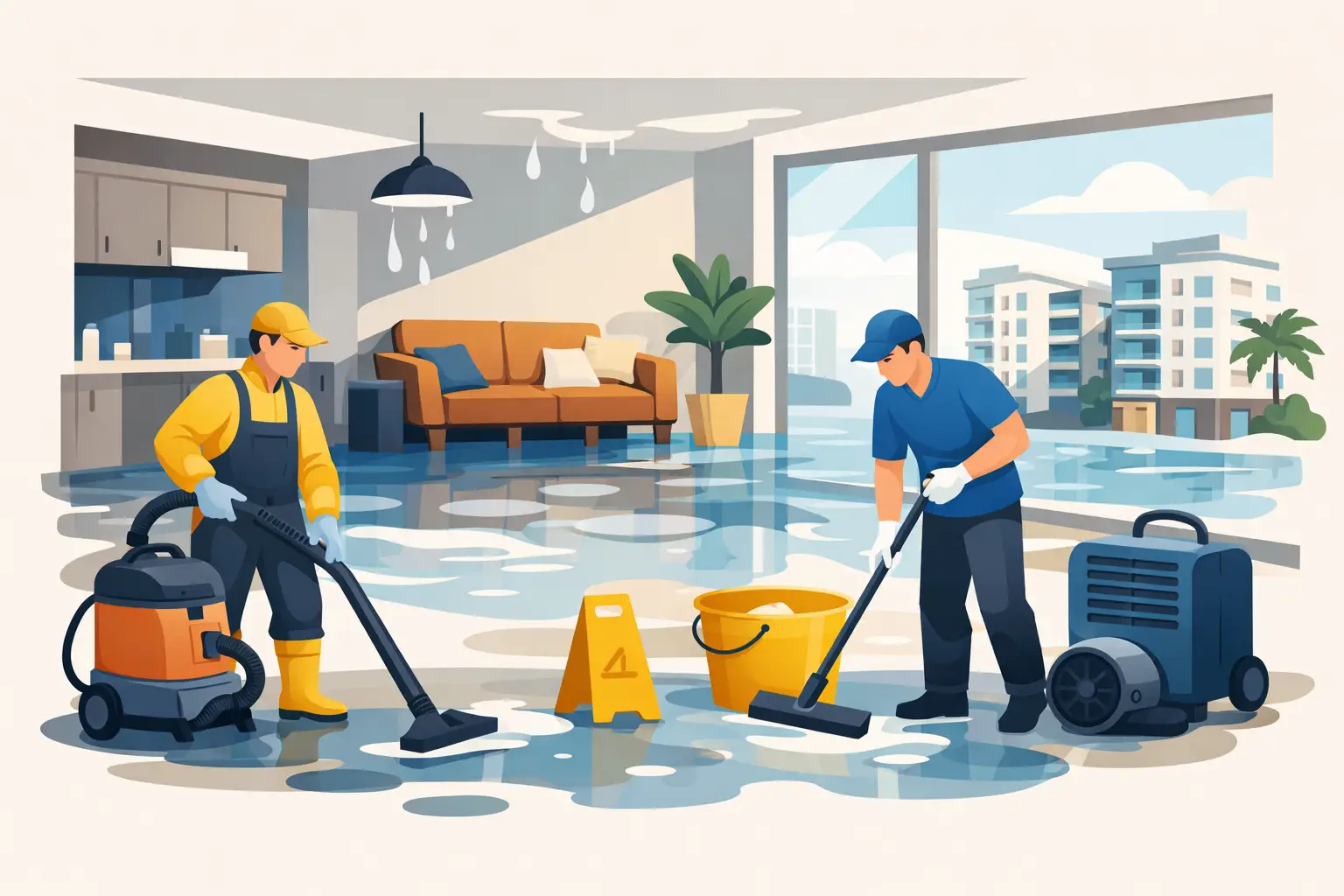
A flooded condo is rarely contained to one room or one unit. Water can move beneath engineered flooring, through wall cavities, along plumbing chases and into the suite below before anyone sees a stain. Effective flood cleanup for condos requires immediate action, clear communication with the condo corporation and a restoration plan that addresses both visible water and concealed moisture.
For condo owners and property managers across Toronto and the GTA, the first decisions made after a flood can determine whether the loss remains manageable or becomes a larger mould, structural and insurance problem. The goal is not simply to remove water. It is to stop the source, protect occupants, document the damage and dry every affected building material to an acceptable moisture level.
Why Condo Flooding Requires a Different Response
A detached home gives the owner more control over the building, but a condominium has shared systems, neighbouring suites and common elements. A leaking dishwasher may damage an owner’s kitchen flooring, the ceiling below, a corridor wall and an electrical area that belongs to the corporation. A burst riser pipe can affect several floors at once.
That means responsibility, access and repair approvals may involve the unit owner, property manager, board, insurer and restoration contractor. The exact division of responsibility depends on the condominium declaration, bylaws, insurance policy and cause of loss. Do not delay emergency mitigation while those questions are being sorted out. Water continues to migrate, and drying delays can turn salvageable drywall, flooring and cabinetry into demolition work.
The source also matters. Clean water from a supply line is handled differently from wastewater from a sewer backup or water that has entered from outside. Sewage-contaminated water can contain harmful pathogens. It requires controlled cleanup, removal of porous contaminated materials where necessary and proper sanitization. Occupants should stay away from the affected area until it has been assessed.
Flood Cleanup for Condos: The First Hours Matter
The safest first step is to stop the water if it can be done without risk. Shut off the local fixture valve or the unit’s water supply where appropriate. If water is near outlets, appliances, electrical panels or light fixtures, do not enter standing water or attempt electrical work. Contact building management and emergency restoration professionals immediately.
Owners should notify the property manager as soon as possible, even when the damage appears limited to the suite. Management may need to inspect common plumbing, notify a neighbouring unit, arrange access to mechanical areas or activate the corporation’s emergency procedures. If the leak is coming from above, timely access to the upper suite can prevent a much larger loss.
Document conditions before moving belongings when it is safe to do so. Take photos and video of the water source, affected rooms, damaged contents, ceiling stains and any water entering from another area. Keep notes of when the incident was discovered, who was notified and what steps were taken. This record can help support an insurance claim and clarify the timeline for the corporation and property manager.
Avoid using household fans to push air through a contaminated area or an enclosed wet wall cavity. Fans may spread odours, spores or contaminants without actually drying the materials that matter. A professional drying plan uses moisture readings, controlled air movement, dehumidification and containment when required.
What Professional Condo Water Restoration Includes
A proper response begins with inspection, not assumptions. IICRC-certified technicians identify the water category, locate migration paths and measure moisture in flooring, walls, ceilings, insulation and cabinetry. Thermal imaging can help identify possible hidden moisture, but moisture meters are used to confirm the actual condition of materials.
Extraction comes next. Removing standing water quickly reduces the load on the drying system and can improve the chance of saving finishes. Depending on the affected area, technicians may use portable extractors, weighted extraction tools for carpet or specialized equipment for hard-surface flooring. Wet contents are moved, elevated or packed out when necessary to protect them and allow access to the building materials beneath.
Drying is a controlled process, not a matter of placing a few fans in the room. Air movers and commercial dehumidifiers are positioned based on material type, room conditions and the extent of water migration. In some cases, baseboards, toe-kicks, sections of drywall or ceiling material need to be removed so trapped moisture can be accessed. This can feel disruptive, but selective demolition is often the most efficient way to avoid mould growth and preserve unaffected areas.
Technicians should monitor the space daily or as conditions require. Moisture readings show whether walls, subfloors and framing are actually drying. Equipment stays in place until affected materials reach documented drying targets, not until the room merely feels dry to the touch.
Common Condo Areas Where Moisture Hides
Condo finishes can conceal water exceptionally well. Laminate and engineered wood flooring may look intact while moisture is trapped underneath. Kitchen cabinets can retain water behind kick plates and inside particleboard bases. Bathroom leaks can travel under tile or into an adjacent bedroom wall. A ceiling stain may indicate a small leak, but it may also signal saturation above the visible mark.
Particular attention is needed around plumbing walls, laundry closets, HVAC fan coils, dishwasher connections, refrigerator water lines and windows. In high-rise buildings, water can follow vertical service shafts and affect suites several levels below the original source. The area with the most visible damage is not always the area with the most serious moisture problem.
Coordinating Owners, Managers and Insurance
Clear coordination protects the building and reduces unnecessary delay. The property manager should receive the initial incident details, photos and contractor findings. Unit owners should contact their insurer promptly and ask about emergency mitigation coverage, contents coverage and any requirements for documentation.
Do not discard damaged materials or contents before they are documented unless they present an immediate safety or contamination concern. At the same time, waiting for an adjuster before beginning water extraction or drying is usually a costly mistake. Insurers generally expect reasonable steps to prevent further damage.
A detailed restoration file is valuable in condo losses. It should record the source of water where known, affected rooms, moisture readings, equipment placement, photographs, removal decisions and drying results. This creates a clear technical record for the owner, corporation, insurer and repair team.
Repairs should begin only after the affected structure is dry and any contamination concerns have been addressed. Reconstruction may include drywall replacement, plaster repair, painting, flooring installation, cabinet repairs or waterproofing work. Matching finishes can be difficult in a condo, especially where flooring runs continuously through several rooms. This is one reason accurate scope documentation at the start is so important.
When Mould Remediation May Be Needed
Mould can begin growing when moisture remains in building materials for too long. It is more likely after slow leaks, delayed reporting, water trapped under flooring or inadequate drying behind walls and cabinets. A musty odour, recurring staining, warped finishes or visible growth are reasons to arrange a professional assessment.
Not every water loss becomes a mould remediation project. Fast extraction and verified drying can often prevent it. However, covering a wet area with new drywall, paint or flooring without confirming moisture levels creates a risk that the problem will return later, often at greater cost.
Where mould is present, the affected area may require containment, controlled removal of damaged porous materials, HEPA cleaning and clearance-focused drying. The appropriate scope depends on the size of the affected area, the materials involved and whether occupants may have been exposed to contaminated water.
Protect the Suite Before the Next Incident
Once repairs are complete, identify why the flood happened. Replace worn supply hoses, inspect appliance connections, report recurring window leaks and have slow drains investigated before they back up. Owners who travel frequently may benefit from leak sensors near laundry equipment, dishwashers, refrigerators and bathroom vanities.
For property managers, recurring incidents in the same stack, mechanical area or exterior wall deserve more than a one-time patch. Trend tracking can reveal failing common plumbing, drainage issues or building-envelope concerns before they affect additional suites.
When water enters a condo, speed matters, but so does verification. CPR24 Restoration responds 24/7 with certified technicians, professional extraction and documented drying to help owners and managers move from emergency conditions to safe, repair-ready spaces. The most useful next step is simple: report the incident early, preserve the evidence and make sure every affected area is properly assessed before repairs begin.