

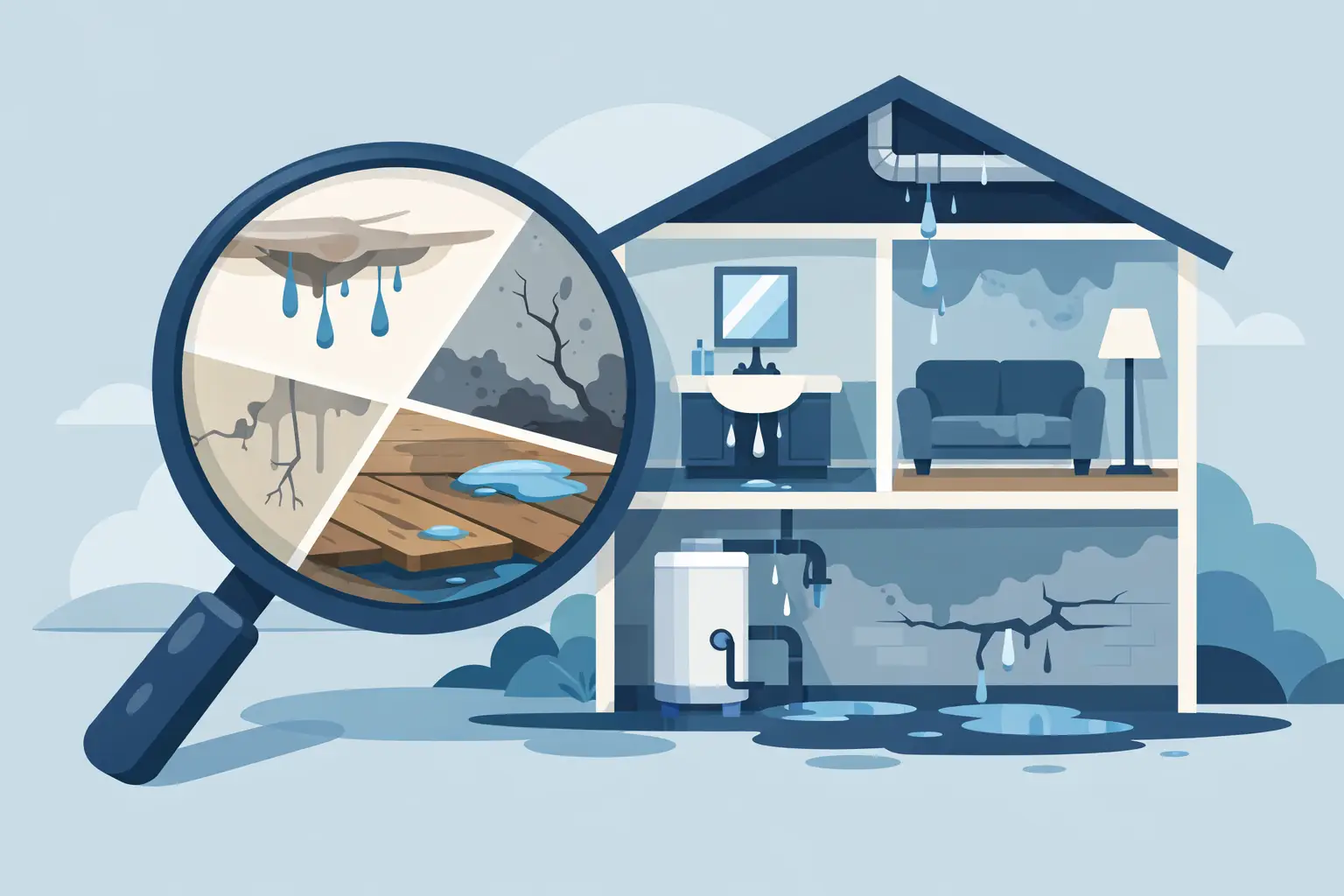
A water leak rarely announces itself with a dramatic ceiling collapse. More often, it works behind a wall, below flooring, or inside an attic while materials slowly absorb moisture. Knowing how to spot hidden water damage can help Toronto and GTA property owners act before a small plumbing issue becomes mould growth, structural deterioration, or an insurance claim with a much higher repair cost.
The warning signs are often subtle, but they are not random. A new odour, a persistent stain, a floor that feels different underfoot, or an unexplained increase in water use deserves attention. The right response is to find the source, stop further water intrusion, and dry affected materials properly – not simply cover the visible symptom.
How to Spot Hidden Water Damage Before It Spreads
Watch for changes in paint, drywall, and ceilings
Water travels along framing, pipes, and gravity paths. The visible mark may appear several feet away from the actual leak. Look closely for yellow or brown rings on ceilings, bubbling paint, peeling wallpaper, swollen baseboards, and drywall that feels soft or slightly bowed.
A stain that grows after rain may point to a roof, flashing, window, or exterior wall issue. A stain that appears after someone showers, runs the dishwasher, or uses an upstairs bathroom is more likely connected to plumbing or a drain line. Do not assume an old-looking stain is inactive. Press gently around it, without breaking the surface. Coolness, softness, or fresh discolouration can indicate ongoing moisture.
Trust a persistent musty smell
A musty odour is one of the most common signs that moisture has been trapped out of sight. Basements, crawlspaces, laundry rooms, utility closets, and under-sink cabinets are frequent problem areas because they have plumbing connections and limited airflow.
The smell does not automatically mean there is visible mould. It can develop when damp drywall, insulation, wood, carpet backing, or stored contents remain wet long enough for microbial growth to begin. Fragrance sprays and dehumidifiers may mask the smell temporarily, but they do not remove the source. If the odour returns when the room is closed or after humid weather, arrange a professional moisture inspection.
Check floors for movement, lifting, or soft spots
Water damage changes the way flooring feels. Hardwood can cup, crown, buckle, or develop gaps. Laminate often swells at the seams and may feel raised at the edges. Vinyl flooring can loosen, while tile floors may sound hollow when tapped if moisture has affected the subfloor or adhesive.
In bathrooms, kitchens, basements, and near exterior doors, walk slowly in socks or bare feet to notice temperature changes and soft areas. A spongy spot around a toilet may result from a failed wax ring. A warm or damp patch on a slab floor can sometimes signal a plumbing leak below the surface. Flooring damage can also stem from humidity or installation issues, so the material alone does not confirm a leak. Moisture readings and source investigation provide the answer.
Inspect cabinets, appliances, and concealed plumbing
Many leaks begin where people rarely look. Open the cabinet beneath every sink and check the back corners, supply valves, drain connections, and cabinet floor. Warped particleboard, rusty fasteners, black spotting, or a stale smell are all reasons to investigate further.
Pull out or inspect around appliances where practical, especially dishwashers, refrigerators with water lines, washing machines, and hot water tanks. A slow dishwasher leak can wet subflooring for months before it reaches a visible area. For washing machines, look for cracked hoses, loose connections, and moisture behind the unit. If an appliance has leaked, do not run it again until the water source and affected area have been assessed.
Pay attention to your water bill and water meter
An unexplained increase in your water bill can reveal a hidden plumbing leak before visible damage develops. Compare the bill with the same period last year, accounting for guests, irrigation, or changes in occupancy. If the jump is significant and there is no clear explanation, check the meter.
Turn off taps, appliances that use water, and other intentional water sources. Then watch the water meter. If the leak indicator continues moving or the reading changes, water may be escaping somewhere on the property. This test cannot identify the exact location, and some fixtures can leak intermittently, but it is a useful reason to call a licensed plumber or restoration professional.
Areas That Need Extra Attention
Basements are a major concern in the GTA, particularly after heavy rainfall, rapid snowmelt, sewer backups, or foundation drainage problems. Check along exterior walls, behind finished basement walls, around floor drains, and where utilities enter the home. White powdery residue on concrete, called efflorescence, can indicate that moisture has moved through the foundation. It does not prove an active flood, but it should not be ignored when paired with dampness or a musty smell.
Attics also hide significant water damage. Roof leaks may wet insulation and roof sheathing long before they stain the ceiling below. Look for darkened wood, damp or compressed insulation, rusty nails, and mould-like staining. Condensation from poor ventilation can create similar symptoms, especially during a cold Ontario winter. The repair approach depends on the source: a roof leak requires exterior repair, while condensation may require ventilation and air-sealing improvements as well as drying and cleanup.
Condo owners should also look beyond their suite. Water can migrate between units through slab openings, plumbing chases, and shared walls. If a ceiling stain or damp wall appears, notify property management promptly. Documentation of when you noticed the issue, photos, and any changes in the affected area can help coordinate the response and insurance process.
Why Surface Drying Is Not Enough
A towel, fan, or household dehumidifier can help with a minor, clean spill caught immediately. They are not a reliable solution when water has entered wall cavities, insulation, subflooring, or ceiling assemblies. These materials can retain moisture even when the surface feels dry.
This is where hidden water damage becomes expensive. Trapped moisture can weaken drywall, warp wood, corrode metal components, and support mould growth. If the water came from a sewer backup, toilet overflow, or other contaminated source, the concern is more serious. Porous materials may need controlled removal and sanitization rather than drying alone.
Professional restoration work begins by identifying the water source and measuring the extent of moisture with specialized equipment. Depending on the conditions, the process can include water extraction, controlled drying, removal of unsalvageable materials, antimicrobial cleaning, mould remediation, and reconstruction. The goal is not to make the room look dry. It is to return affected materials to an acceptable moisture condition and prevent secondary damage.
When to Call for Immediate Help
Act quickly if you see water actively entering the property, a ceiling is sagging, sewage is present, flooring is rapidly lifting, or you suspect water has reached electrical components. Keep people away from affected areas, avoid using electrical devices nearby, and shut off the water supply if it is safe to do so. For a burst pipe or major leak, contact a plumber to stop the source and a restoration team to address the damage.
You should also arrange an inspection when a musty odour persists, stains keep returning, mould is visible, or materials remain damp beyond 24 to 48 hours. Waiting can turn a contained repair into demolition across multiple rooms. CPR24 Restoration provides 24/7 emergency response across Toronto and the GTA, with certified technicians who can assess concealed moisture and manage cleanup through repair.
A hidden leak does not become less harmful because it is out of sight. If something in your property smells, feels, or looks different, treat that change as useful evidence and address it while the damage is still limited.