

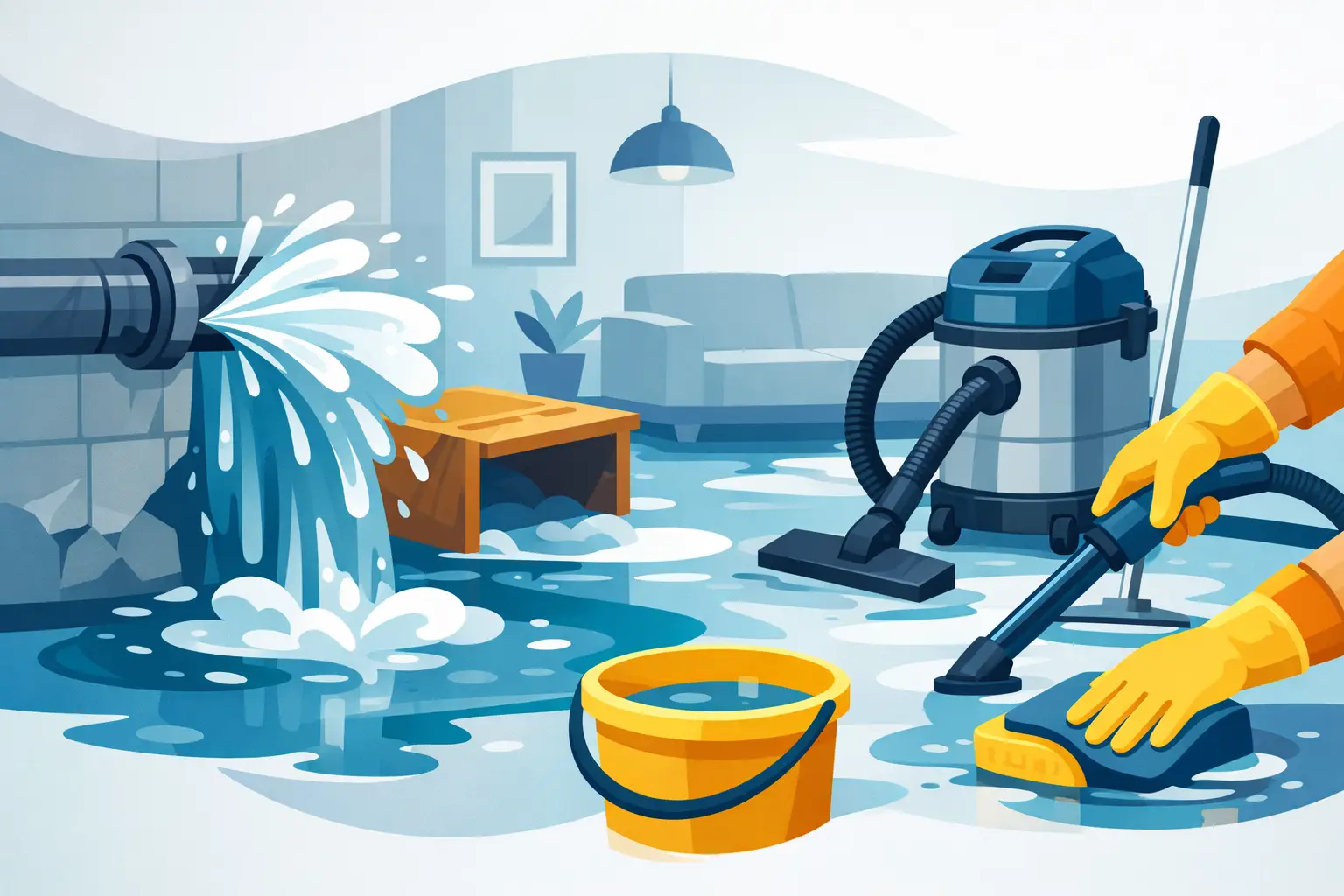
A burst pipe rarely gives you a convenient warning. One minute everything is normal, and the next you are dealing with soaked flooring, dripping ceilings, swelling drywall, and water moving into places it should never reach. Burst pipe water cleanup is not just about removing visible water. It is about stopping the spread, protecting the structure, and drying the property properly before hidden moisture turns into a second emergency.
The first few hours matter most. Water from a broken supply line can move quickly through walls, subfloors, insulation, and electrical cavities. The longer it sits, the more likely you are to face warped materials, odours, microbial growth, and expensive reconstruction that could have been reduced with faster action.
What to do first during burst pipe water cleanup
Start by shutting off the water supply if it is safe to do so. If the affected area is near electrical outlets, light fixtures, appliances, or your panel, treat it as a safety issue first. Do not step into standing water where electricity may be present. If needed, shut off power to the affected zone only if you can do it safely.
Once the flow has stopped, move valuables, documents, electronics, and loose contents away from the wet area. If water is actively dripping through a ceiling, stay out from under it. Wet drywall and insulation can become heavy fast, and ceiling collapse is a real risk.
After that, document the damage. Take clear photos and videos of the source, the affected rooms, and damaged contents before cleanup begins. This helps with insurance and creates a record of how far the water travelled.
If the burst happened in winter, there is another layer to the problem. Frozen pipes often split in more than one place. You may shut off one visible leak and still have a second failure waiting to show up when pressure returns. That is one reason professional inspection matters.
Why burst pipe water cleanup is more than mopping and fans
A small kitchen supply line leak and a major pipe break in a finished basement do not require the same response. That said, both can leave behind trapped moisture that is easy to miss. Water follows gravity, but it also wicks sideways into drywall, trim, cabinetry, and flooring materials.
Homeowners often start with towels, a wet vac, and a few fans. That is a reasonable first move for surface water, but it does not confirm what is happening behind the walls or under the floor. Laminate may look dry and still have moisture trapped beneath it. Hardwood can cup days later. Insulation can stay wet long after the surface feels fine.
Proper burst pipe water cleanup usually includes moisture mapping, extraction, controlled demolition where needed, structural drying, humidity control, sanitation, and post-drying verification. If one of those steps is skipped, the property can look recovered while moisture remains active inside the assembly.
What professionals look for right away
A trained restoration crew does not just ask where the pipe burst. They assess how far the water migrated, what materials were affected, and whether the category of water changed during exposure. Clean water from a supply line is less hazardous at the start, but once it passes through building materials and sits for too long, the risk profile changes.
The inspection phase is where many costly mistakes are avoided. Technicians use moisture meters, thermal imaging, and hygrometers to identify wet zones that are not obvious to the eye. That matters in condos, commercial units, and multi-level homes where water can move into neighbouring spaces, elevator shafts, wall cavities, and common areas.
In Toronto and the GTA, winter burst pipes often happen after a deep freeze, but they also show up during thaw periods when older plumbing systems are stressed. In commercial buildings, the damage can extend beyond repairs into tenant interruption and lost operating time. That is why response speed matters as much as cleanup quality.
The actual cleanup and drying process
The first operational step is water extraction. The goal is to remove as much liquid water as possible before evaporation drives moisture deeper into materials. Depending on the volume, this may involve portable extractors, truck-mounted systems, or specialty equipment for carpet, underpad, and hard surfaces.
Once standing water is removed, the drying plan begins. Air movers increase evaporation at the material surface, while dehumidifiers pull moisture from the air so drying can continue efficiently. This is not a set-it-and-forget-it process. Equipment needs to be placed based on material type, room layout, and measured moisture conditions.
Some materials can be dried in place. Others cannot. Baseboards may need removal to open wall cavities. Saturated insulation often has to be discarded. Swollen particleboard cabinets may not recover. Hardwood flooring can sometimes be saved if drying starts early and is monitored closely, but delays reduce the odds.
Sanitization is also part of the job, especially if water has affected concealed areas, porous materials, or spaces with poor airflow. The purpose is not to mask odours. It is to reduce contamination risk and support a safe recovery environment.
Common mistakes that make the damage worse
One of the biggest mistakes is waiting to see if things dry on their own. Water damage rarely improves with delay. It spreads, settles, and creates conditions for mould growth, especially in basements, behind trim, and inside insulated walls.
Another mistake is assuming one room is the only affected area. A burst pipe on an upper floor can feed water into light fixtures, wall chases, and ceiling spaces below. By the time staining appears, the moisture path may already be extensive.
Turning up the heat without controlled dehumidification is another problem. Warm air can increase evaporation, but if that moisture is not removed from the air, it simply relocates. That can make windows sweat, feed hidden dampness, and slow proper drying.
There is also the repair-first mistake. Replacing drywall, repainting, or laying new flooring before moisture levels return to dry standard is a setup for failure. Finishes should never go back until the structure has been verified dry.
When materials can be saved and when they cannot
This depends on the source of water, how long materials stayed wet, and what those materials are made of. Non-porous and semi-porous surfaces often respond well to extraction and drying if the response is fast. Porous materials are less forgiving.
Drywall can sometimes be saved if only the lower section was affected briefly and drying can be directed into the cavity. If it is heavily saturated, crumbling, or contaminated, removal is usually the better call. Carpet is another it-depends case. Clean-water exposure with immediate extraction may allow restoration, but wet underpad often needs replacement.
Cabinetry, trim, and wood finishes are judged by swelling, delamination, structural condition, and moisture retention. The right decision is not always the cheapest short-term option. It is the option that prevents rework and secondary damage later.
Insurance, records, and timing
If you plan to make a claim, notify your insurer early and keep records from the beginning. Photos, emergency invoices, moisture reports, and an inventory of damaged contents can all help move the process forward.
What insurers want to see is that reasonable steps were taken to prevent further damage. That means shutting off the source, arranging emergency mitigation, and not letting wet materials sit for days. It does not mean you need to know the full scope yourself. It means acting quickly and documenting what happened.
A full-service restoration company can also help bridge the gap between emergency drying and final repairs. That matters because burst pipe losses often do not end with extraction. They can require drywall replacement, painting, flooring work, insulation replacement, and in some cases mould remediation if the response was delayed.
Why speed changes the outcome
Fast response does two things at once. It limits how far water spreads, and it improves the odds of saving materials that would otherwise be torn out. That can reduce downtime, lower reconstruction costs, and shorten the overall recovery timeline.
For property managers and business operators, delay can also create liability issues. Wet common areas, slipping hazards, ceiling failures, and indoor air concerns can affect tenants, staff, and daily operations. In those cases, burst pipe water cleanup is not only a maintenance issue. It is a risk management issue.
At CPR24 Restoration, emergency crews are built for exactly this kind of situation – rapid assessment, extraction, drying, sanitization, and repairs under one response model. That kind of continuity helps when the goal is to stabilize the property fast and avoid handoff delays between contractors.
If a pipe bursts, do not judge the damage by what you can see from the doorway. Water is usually further ahead than the stain, the puddle, or the warped board. The smartest move is to act early, dry the structure properly, and give the property the best chance of a clean recovery.