

A small leak at 10 p.m. can turn into warped floors, swollen drywall, and mould growth by the next afternoon. That is usually the point where property owners start asking, how does secondary water damage happen, and why did the situation get worse so quickly?
The short answer is delay. The longer water sits, wicks, seeps, evaporates, and spreads, the more damage it causes beyond the original source. What starts as a burst pipe under a sink, a roof leak, or a flooded basement does not stay contained for long. Water moves into porous materials, behind finishes, under flooring, and into the air. Once that process starts, damage expands from the obvious wet area to the hidden parts of the property.
What secondary water damage actually means
Primary water damage is the direct result of the initial event. If a supply line bursts and soaks the floor in one room, that immediate soaking is the primary damage. Secondary water damage is everything that follows when moisture is not removed fast enough or thoroughly enough.
That includes swelling wood, crumbling drywall, delaminated flooring, odours, corrosion, staining, mould growth, and damage to nearby rooms or assemblies that were not directly hit by the first leak. In commercial settings, it can also mean interrupted operations, damaged inventory, and indoor air quality issues that affect staff or tenants.
This is why timing matters so much. The source event may last minutes. The secondary effects can continue for days or weeks if moisture remains trapped.
How does secondary water damage happen after a leak or flood?
Secondary water damage happens when moisture migrates from the original wet area into surrounding materials and stays there long enough to break them down. Water does not need a large opening to spread. It follows gravity, capillary action, temperature differences, and air movement.
Drywall absorbs water quickly and can wick moisture upward from the floor. Wood framing holds moisture internally, even when the surface feels dry. Laminate and engineered flooring can trap water underneath while the top layer looks intact for a short time. Insulation can stay wet and lose its effectiveness. In finished basements, moisture often spreads behind baseboards, into wall cavities, and beneath subfloors before the full extent is visible.
Humidity adds another layer. When standing water or wet materials are left untreated, moisture evaporates into the air. That elevated indoor humidity then condenses on cooler surfaces or feeds mould growth in areas that were not part of the original incident. So the damage is not only from direct contact with water. It also comes from the damp environment that follows.
Why the damage spreads faster than most people expect
Most property owners judge a water loss by what they can see. That is where problems start. Visible water is only one part of the issue.
Moisture moves behind walls, under cabinets, inside insulation, and below flooring transitions. It can travel along framing, pipe penetrations, and concrete slabs. In condos and multi-unit buildings, water can move vertically into lower levels or laterally into neighbouring spaces. In older Toronto properties, plaster, wood lath, and layered finishes can hold moisture longer than people expect, which slows natural drying and increases the risk of concealed deterioration.
There is also a timing issue. Materials react at different rates. Drywall may soften quickly, while subfloor swelling or microbial growth becomes more obvious later. That delay gives a false sense of control. By the time buckling appears or odours develop, the moisture problem has usually been active for some time.
The most common forms of secondary water damage
One of the first signs is material breakdown. Drywall loses structural strength, baseboards swell, trim separates, and paint blisters. Wood flooring cups or crowns. Doors may stop closing properly because frames have shifted. In basements, carpet underpad and lower wall sections often remain wet long after the surface appears dry.
Mould is another major secondary effect. It does not require a dramatic flood. It only needs moisture, an organic food source, and time. Drywall paper, wood, dust, and insulation can all support growth. Once mould starts, the issue shifts from water cleanup alone to contamination control and remediation.
Electrical and mechanical systems are also at risk. Corrosion can affect wiring, outlets, panels, HVAC components, and appliance connections. Even when systems continue to operate, hidden moisture can shorten service life or create safety concerns that need proper inspection.
Then there is odour. Persistent dampness creates musty smells that are difficult to remove if materials were not dried correctly from the start. In commercial buildings, that can quickly become a tenant complaint issue. In homes, it often signals that water is still trapped somewhere behind finishes.
Where hidden moisture usually causes trouble
Secondary damage often develops in the places people do not think to check. Wall cavities are common because water enters through baseboards, plumbing penetrations, or top-down leaks and remains sealed behind finishes. Under flooring is another major problem area, especially with vinyl planks, laminate, hardwood, and carpet over concrete.
Cabinet toe-kicks, vanity backs, laundry room walls, and areas behind stored contents are also frequent trouble spots. In basement floods, moisture can spread under finished wall systems, into insulation, and along slab edges. In roof leaks, water may travel from the attic down into ceiling cavities and wall intersections before staining ever appears.
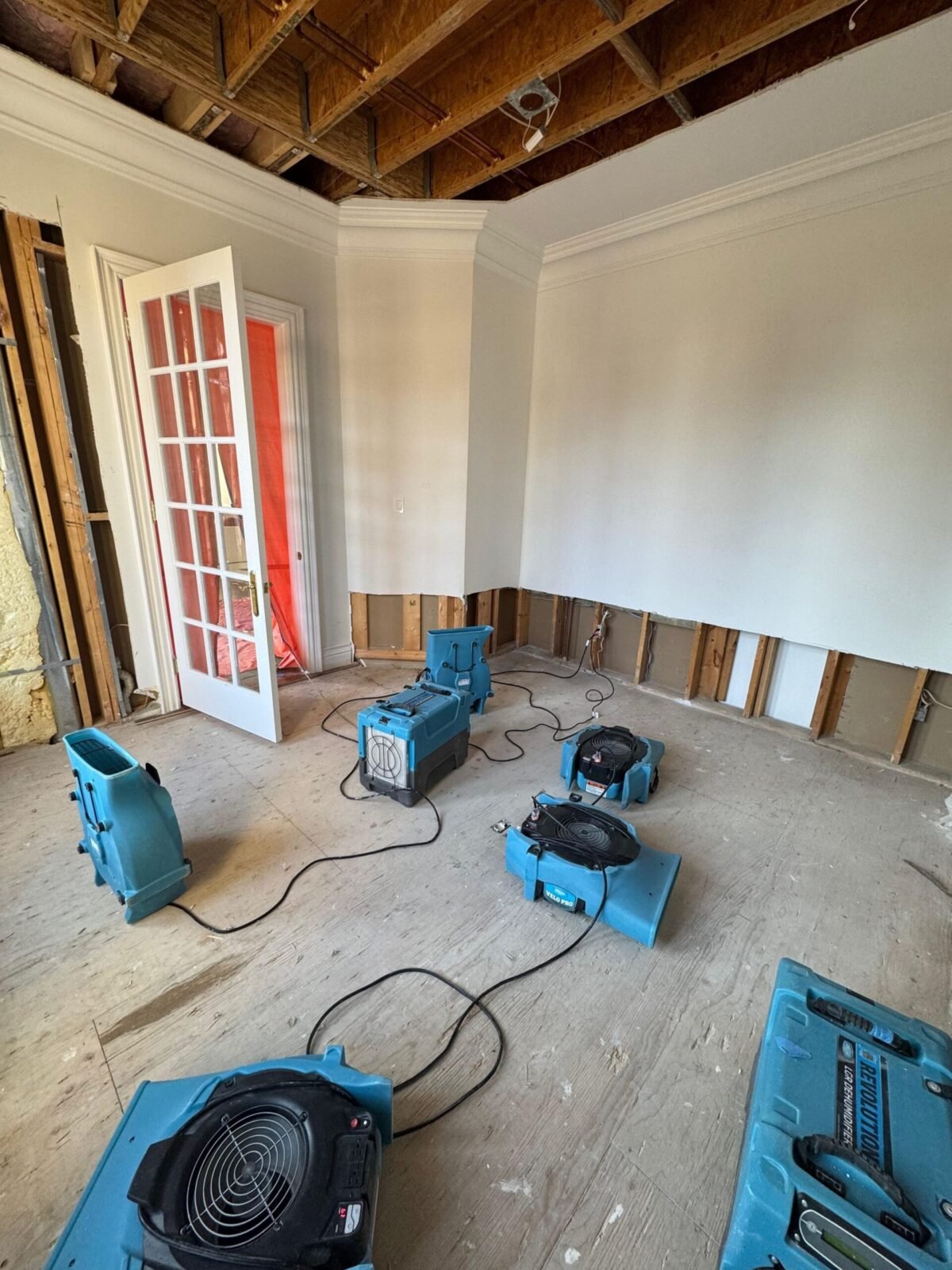
This is why professional drying is not just about running a few fans. Proper mitigation requires moisture mapping, targeted removal where needed, and controlled drying based on the material and the category of water involved.
Why waiting makes repairs more expensive
The cost jump between primary and secondary damage is often significant. Early on, a response may involve extraction, drying, and selective material removal. Wait too long, and the same event can require demolition of multiple rooms, mould remediation, odour treatment, and reconstruction.
Insurance complications can also increase. Some policies cover sudden and accidental water losses but may question avoidable deterioration caused by delayed action. Every case depends on the policy and the loss circumstances, but the general rule is simple: documented, prompt mitigation protects both the property and the claim process.
For property managers and business operators, delay also means more disruption. Wet suites can affect neighbouring units. Retail and office spaces may face downtime. Tenants may report air quality concerns before the full moisture issue is even located.
How to stop secondary damage before it takes hold
The first priority is always to stop the source if it is safe to do so. Shut off the water supply, isolate the affected area, and keep people away from contaminated water or electrical hazards. After that, speed matters.
Extraction should happen as soon as possible, followed by a proper assessment of how far the moisture has travelled. That means checking more than the visibly wet area. Moisture meters, thermal imaging, and material-specific readings help identify where drying equipment needs to be placed and which materials can be saved.
Not every wet material has to be removed, but not every material can be dried in place either. That depends on the water category, the duration of exposure, the material type, and whether contamination is present. Clean water from a fresh supply line is different from sewage backup or long-standing floodwater. The right response changes accordingly.
Air movement and dehumidification must be controlled, not improvised. Too little drying leaves moisture behind. Too much heat or poor airflow can damage materials or dry surfaces while trapping moisture deeper inside. Certified restoration teams follow drying goals based on readings, not guesswork.
For owners in Toronto and the GTA, fast response is especially important during humid summer conditions or in tightly built condo and commercial spaces where moisture can spread quietly. That is why companies like CPR24 Restoration focus on emergency arrival, moisture detection, drying, sanitization, and repairs under one process instead of treating cleanup as a surface-level task.
When the damage looks minor but is not
A slow dishwasher leak, a small overflow, or a ceiling stain that seems dry can still create serious secondary issues. The size of the original event does not always predict the final repair scope. A small but hidden leak over several days can be worse than a larger event that is discovered and mitigated immediately.
If materials feel swollen, odours linger, paint changes appearance, or humidity remains elevated after cleanup, assume more investigation is needed. The cost of checking early is usually far lower than the cost of reopening the area later after mould or structural deterioration has developed.
Water damage gets more complicated with time, not less. The best move is to treat even a modest leak as a building moisture problem until proper drying confirms otherwise. Acting fast is not overreacting – it is how you keep a manageable loss from becoming a much larger restoration project.