

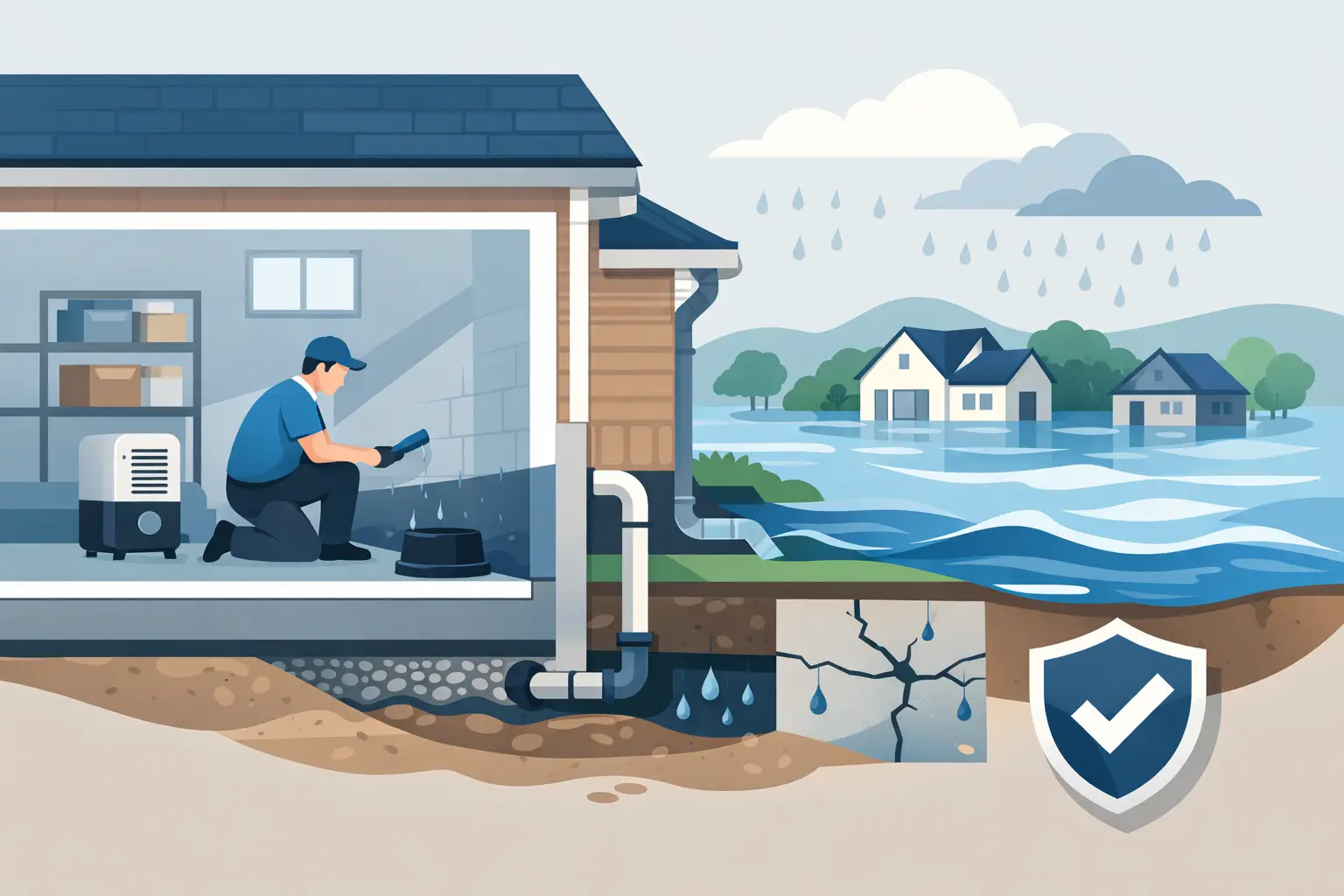
A flooded basement is not waterproofed simply because the visible water is gone. Basement waterproofing after flooding starts with finding out how water entered, how far moisture travelled, and whether the structure can safely dry before repairs begin. Covering a damp wall with paint or sealing one crack while water is still trapped behind it can lead to mould, damaged finishes, and another flood during the next heavy rainfall.
For Toronto and GTA property owners, the right solution depends on the source of the water. A sewer backup, foundation leak, burst pipe, failed sump pump, and overland stormwater event require different cleanup and waterproofing decisions. The first priority is always to stop the loss and dry the property properly. Waterproofing comes next, once the basement is clean, safe, and assessed.
Start With Emergency Cleanup and Moisture Control
Standing water needs to be extracted immediately. The longer it remains, the more likely it is to soak drywall, insulation, flooring, wood framing, stored contents, and electrical components. Water can also move below finished flooring and into wall cavities, where it continues causing damage long after the surface appears dry.
If the flood involved sewage, toilet water, or outdoor water that may carry contaminants, do not treat it as a standard cleaning job. Porous materials such as soaked carpet, underpad, insulation, and damaged drywall may need removal. A professional restoration team uses containment, appropriate protective equipment, commercial extraction, antimicrobial treatment, and controlled drying to reduce contamination and mould risk.
Drying is not a matter of opening a window and running a household fan. Restoration technicians use air movers, dehumidifiers, moisture meters, and thermal imaging to identify wet materials and verify drying progress. This matters because a basement wall can feel dry to the touch while moisture remains inside the framing or behind the insulation.
Do not start waterproofing over wet concrete, damp drywall, or concealed mould growth. Any coating, membrane, or repair installed over unresolved moisture can fail prematurely and hide a larger problem.
Identify Why the Basement Flooded
Waterproofing is effective only when it addresses the actual entry point. Before choosing a repair, determine whether the water came from outside the foundation, the plumbing system, or the municipal sewer connection.
A foundation problem is more likely when water appears after rain or snowmelt, especially along exterior walls, at the cove joint where the wall meets the floor, or around window wells. Poor grading, overflowing eavestroughs, short downspouts, blocked weeping tiles, and hydrostatic pressure can force water through small cracks and joints.
A plumbing failure may be the cause if water appeared suddenly without rain, originated near a utility room, or coincided with a leaking appliance, burst pipe, or failed water heater. In that case, foundation waterproofing will not prevent a repeat incident. The failed plumbing component needs repair, followed by proper drying and restoration.
Sewer backups require a separate response. They may result from a blocked private drain, a municipal system surcharge during heavy rain, or tree root intrusion. Depending on the property and local requirements, drain cleaning, repair, a backwater valve, or a sump pump improvement may be part of the long-term prevention plan.
Signs That Point to an Exterior Water Problem
Watch for recurring dampness after storms, white mineral deposits on foundation walls, peeling paint, rusting furnace components, musty odours, cracks that widen over time, or water collecting near the home’s exterior. These signs do not always mean full excavation is necessary, but they do justify a professional inspection before refinishing the basement.
Basement Waterproofing After Flooding: Choosing the Right Repair
There is no single waterproofing method that fits every basement. The best approach depends on where water enters, the condition of the foundation, the property’s drainage system, and whether the basement is finished.
Improve Surface Drainage First
Sometimes the most effective repair begins above ground. Soil should slope away from the foundation so rainwater does not collect against the walls. Downspouts should discharge far enough from the home to prevent roof runoff from returning to the footing area. Eavestroughs also need regular cleaning and repair.
These measures are relatively straightforward, but they are not a substitute for foundation repairs where water is already entering through cracks, failed exterior membranes, or blocked drainage tiles. They work best as part of a broader prevention plan.
Seal Cracks When the Problem Is Localized
A single, stable foundation crack may be repaired by injection from the interior or exterior, depending on its location and condition. Polyurethane injection is often used for active water leaks because it expands to fill the crack. Epoxy may be appropriate where structural bonding is required, but it is not always the best choice for a crack exposed to movement or ongoing moisture.
Crack injection can be a cost-effective solution for a localized leak. It will not solve widespread seepage at the cove joint, poor exterior drainage, or water pressure affecting multiple foundation walls.
Consider Interior Drainage for Ongoing Seepage
Interior waterproofing systems are designed to manage water that reaches the foundation rather than trying to block every drop outside. They commonly involve a drainage channel at the perimeter of the basement floor, connected to a sump pit and pump. Water is collected and discharged away from the foundation.
This approach can be practical where exterior excavation is difficult, such as properties with limited access, decks, landscaping, or neighbouring structures close to the foundation. The trade-off is that it manages water inside the foundation system rather than preventing soil moisture from contacting the exterior wall.
A sump pump needs maintenance, a properly sized discharge line, and backup power consideration. During severe storms, power outages and heavy water volumes can happen at the same time. A battery backup or secondary pump may be worth considering for properties with a history of flooding.
Use Exterior Waterproofing for Foundation-Level Repairs
Exterior waterproofing generally involves excavating to the footing, repairing cracks, applying a waterproof membrane, and addressing the drainage layer or weeping tile system. It is often the most comprehensive option when water intrusion is widespread, exterior foundation walls are deteriorated, or drainage tiles have failed.
It is also more disruptive and typically more expensive than a targeted interior repair. Landscaping, walkways, and access constraints can affect the scope. However, when an inspection confirms that the problem is outside the foundation, exterior work can offer the most durable correction because it stops water before it reaches the wall assembly.
Do Not Refinish Until the Basement Is Verified Dry
The pressure to rebuild quickly is understandable, particularly after a major flood. But new flooring, insulation, drywall, and baseboards should not be installed until moisture readings show that materials are dry and the source of water has been addressed.
This is especially critical in finished basements. Reinstalling fibreglass insulation or closing a wall cavity too early can create the conditions for hidden mould. Consider moisture-tolerant materials in areas with a previous flooding history, and keep valuables, paper records, and electronics elevated off the floor.
If mould is visible, materials smell persistently musty, or occupants experience irritation around the affected area, arrange an assessment before reconstruction. Mould remediation is different from ordinary cleaning because it requires controlling spores and removing contaminated materials without spreading them through the property.
When to Call a Restoration and Waterproofing Professional
Call for professional help immediately if floodwater is contaminated, the basement has electrical hazards, water has reached finished walls or flooring, or the source is unclear. Fast action limits the area that must be removed and reduces the chance of mould growth within the first days after a loss.
For recurring leaks, a proper assessment should examine both restoration needs and long-term waterproofing options. CPR24 Restoration provides 24/7 emergency response across Toronto and the GTA, with IICRC-certified technicians who can extract water, dry and sanitize affected areas, identify hidden moisture, and coordinate repairs after the cause is addressed.
A dry basement should not rely on luck during the next storm. Once the emergency is under control, use the flood as a reason to correct drainage, repair weak points, and rebuild with materials and systems that give the property a better chance of staying dry.