

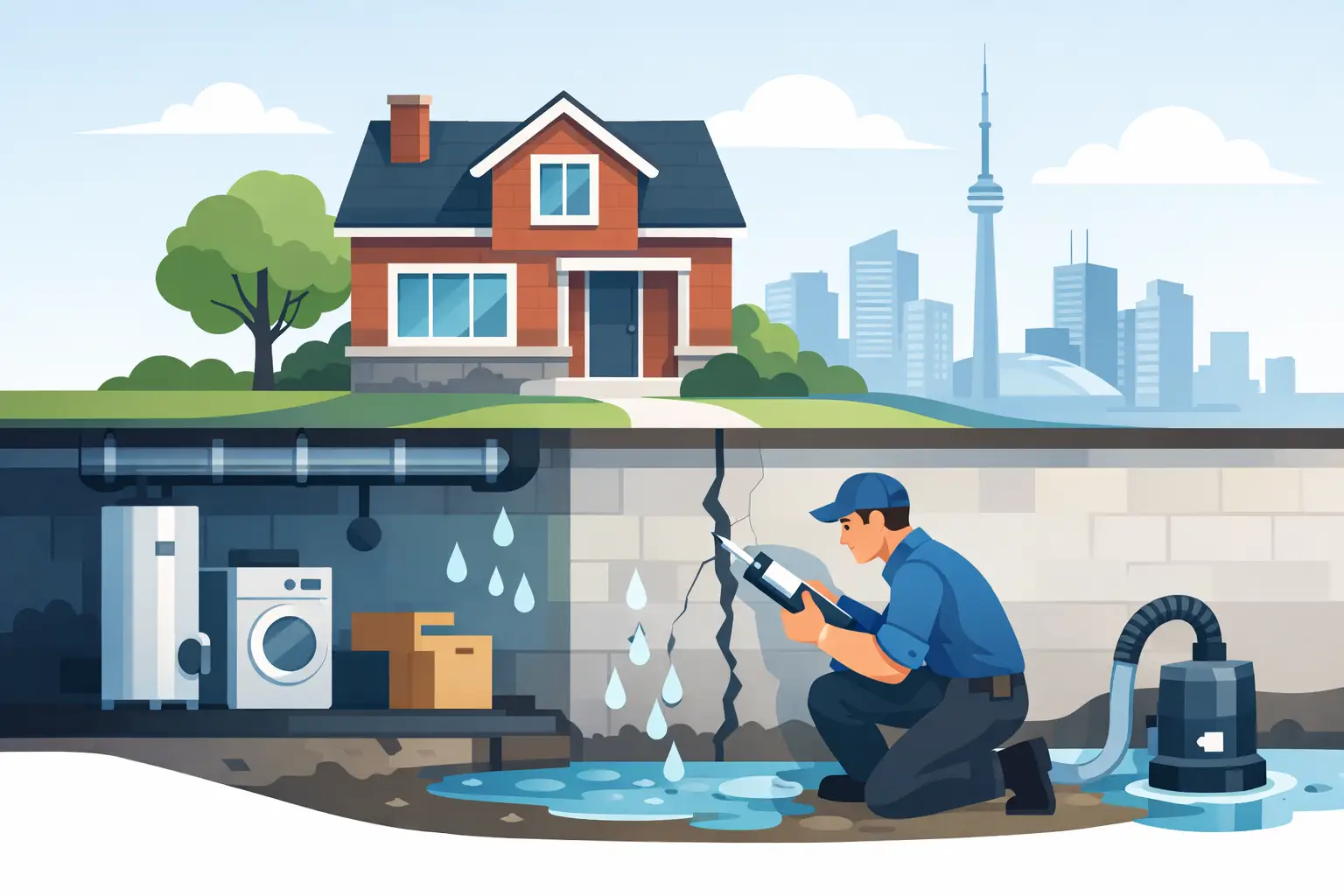
A wet basement rarely stays a small problem for long. In Toronto, one heavy rain, a spring thaw, or a failed foundation seal can turn a minor seep into damaged drywall, warped flooring, mould growth, and expensive structural repairs. That is why basement leak repair Toronto property owners choose should start with one question – where is the water actually coming from?
Too many leaks get patched at the surface while the real entry point stays active behind the wall or under the slab. The result is repeat flooding, hidden moisture, and a basement that never fully dries out. A proper repair plan looks beyond the puddle and addresses the source, the damage, and the conditions that let the leak happen in the first place.
Why basement leaks happen in Toronto
Toronto basements deal with a mix of pressure, age, and weather. Older homes often have foundation cracks, aging weeping tile, or deteriorated waterproofing. Newer properties can still develop leaks if grading is poor, downspouts discharge too close to the home, or construction joints open over time.
Hydrostatic pressure is one of the biggest drivers. When soil around the foundation becomes saturated, water pushes against basement walls and floors. That pressure forces moisture through cracks, tie-rod holes, cove joints, and porous concrete. Even a hairline crack can become a steady entry point during prolonged rainfall.
There is also the issue of freeze-thaw movement. In our climate, soil expands and contracts through the seasons. Foundations shift, tiny openings widen, and previously manageable moisture paths become active leaks. Add clogged drains, broken sump systems, or sewer backup risk, and the basement becomes the first place trouble shows up.
Signs you need basement leak repair in Toronto
Some leaks are obvious. Others hide in plain sight until the damage spreads. If you notice a musty smell, damp carpet, bubbling paint, white chalky residue on concrete, rusting metal studs, or dark staining along the wall base, moisture is already active in the space.
You may also see water collecting where the wall meets the floor. That often points to pressure beneath the slab or failure at the cove joint. If the leak appears only after storms, exterior drainage may be the main issue. If it happens even in dry weather, a plumbing leak, condensation problem, or subsurface water intrusion could be involved.
For condo owners and property managers, the timeline matters. Moisture left untreated can move into shared walls, elevator areas, storage rooms, and adjacent units. For commercial properties, even a small basement leak can interrupt operations, affect inventory, and create liability if flooring becomes unsafe or mould begins developing.
Not every basement leak needs the same repair
This is where many property owners lose time and money. A crack injection, for example, can be an excellent repair for the right type of wall crack. But it will not solve poor exterior drainage, failed waterproof membranes, or water entering from the floor slab. Likewise, interior waterproofing can manage recurring seepage, but if the problem is a broken downspout line dumping water against the foundation, that needs to be corrected too.
A good leak repair strategy starts with inspection. The technician should identify the water source, map the moisture spread, check for hidden damage, and determine whether the issue is isolated or part of a wider drainage failure. Surface repairs without moisture testing are risky because basement materials can hold water long after visible pooling is gone.
Common basement leak repair methods
Crack injection for foundation wall leaks
When water enters through a vertical or diagonal foundation crack, polyurethane or epoxy injection is often used to seal the opening from the inside. This can be highly effective when the crack is accessible, structurally suitable for injection, and not part of a larger waterproofing failure.
Polyurethane is usually preferred for active water infiltration because it expands and helps block moisture paths. Epoxy is more often used when structural bonding is part of the goal. The right material depends on the condition of the crack and whether movement is ongoing.
Interior drainage and sump solutions
If water is rising under the slab or entering at the wall-floor joint, interior drainage systems may be needed. These systems collect water below the basement floor and direct it to a sump pump for discharge. This approach does not stop water from reaching the foundation, but it controls it before it damages interior finishes.
This can be a practical option in finished basements where exterior excavation is difficult or where hydrostatic pressure is the main issue. The trade-off is that it manages water rather than stopping all exterior contact with the foundation.
Exterior waterproofing
When foundation walls are leaking broadly or repeated issues point to failed outside protection, exterior waterproofing is often the long-term fix. This may involve excavation, foundation wall cleaning, crack repair, membrane application, drainage board installation, and weeping tile replacement or repair.
It is more invasive and typically more expensive than interior spot repairs, but it addresses the problem at the source. For severe or recurring leaks, that matters. If the basement is being renovated or the property has a history of repeated water entry, exterior work may save significant cost over time.
Drainage corrections above grade
Not every leak starts below ground. Improper grading, short downspouts, blocked eavestroughs, and driveway slope issues can channel water directly toward the foundation. Correcting these conditions is often the simplest way to reduce basement water entry.
This step is sometimes overlooked because it feels less technical than foundation work. In reality, managing roof and surface runoff is one of the most effective parts of any basement protection plan.
Why speed matters after a leak starts
Water damage is not limited to what you can see. Drywall wicks moisture upward. Wood framing absorbs water and can begin to swell or weaken. Insulation loses effectiveness. Within a short window, damp organic materials can support mould growth.
That is why basement leak repair should not be treated as a next-week task if water is active now. Fast response limits the spread, reduces demolition, and protects air quality. In many cases, the repair process also needs water extraction, commercial drying, dehumidification, sanitization, and selective reconstruction.
A full-service restoration company can coordinate those steps under one response. For property owners under pressure, that means fewer delays, clearer documentation, and a better chance of preventing secondary damage. CPR24 Restoration handles that kind of emergency work across Toronto and the GTA, which is especially valuable when a leak has already affected finishes, contents, or occupied areas.
What a proper repair process should include
A reliable contractor should do more than stop the drip. First comes inspection and moisture detection, including affected walls, flooring, and concealed cavities. Then the water source is isolated and the repair method selected based on actual entry points, not assumptions.
If materials are wet, drying equipment should be placed quickly and monitored until moisture levels return to acceptable ranges. If contamination is involved, such as stormwater intrusion or sewage backup, the cleanup standard changes immediately. Sanitization and safe material removal become essential, not optional.
Finally, the space should be restored properly. That may include drywall replacement, painting, trim work, flooring repair, or waterproofing improvements. The goal is not just a dry basement today, but a lower chance of repeat loss during the next storm.
How to choose the right basement leak repair Toronto contractor
Look for emergency capability, IICRC-certified technicians, and direct experience with both water intrusion and structural drying. Basement leaks are rarely only a repair issue or only a cleanup issue. The contractor should understand both sides.
Ask how they identify the source, what equipment they use to detect hidden moisture, and whether they handle repairs after mitigation. If you need to coordinate separate companies for extraction, drying, mould concerns, and reconstruction, the job often slows down and gaps appear between trades.
Local experience matters too. A contractor who regularly works in Toronto homes understands the basement conditions common in older neighbourhoods, the pressure points during heavy rain events, and the urgency of keeping damage from spreading in finished lower levels.
The cost question depends on the cause
There is no honest flat answer because basement leak repair ranges from minor crack sealing to major waterproofing and reconstruction. A single crack repair may be relatively contained. A leak that has soaked insulation, flooring, and framing is a different project altogether.
The cheapest option is not always the lowest cost. If a surface patch fails and the basement floods again, the second repair usually costs more than doing the first one properly. What matters is matching the repair scope to the actual cause and moving quickly before damage expands.
If your basement is taking on water, treat it like an active property threat, not a cosmetic annoyance. The sooner the source is identified and the space is dried, the more control you keep over the repair, the health risks, and the final bill.