
A leak from the suite above can soak your ceiling cavity long before water reaches the floor. A failed dishwasher hose can spread beneath engineered flooring and into a neighbouring unit within minutes. This condo water damage checklist helps owners, tenants, and property managers take the right actions early, protect people, and reduce the chance of hidden moisture becoming a costly mould or reconstruction problem.
Condo losses are different from detached-home floods because responsibility may be shared. Your suite, common elements, building systems, neighbouring units, property manager, insurer, and condominium corporation may all be involved. Acting quickly does not mean guessing who is at fault. It means stopping the active damage, documenting conditions, and getting qualified help before materials stay wet too long.
Condo Water Damage Checklist: First Actions
1. Protect people before protecting property
If water is near outlets, electrical panels, appliances, or exposed wiring, do not enter the affected area or attempt to unplug equipment while standing on wet flooring. Leave the area, keep children and pets away, and contact building management or emergency services if there is an immediate electrical or structural concern.
Water coming from a toilet overflow, drain backup, or sewage source requires extra caution. This water may contain harmful contaminants. Avoid contact, do not use towels or a household vacuum to clean it up, and keep affected belongings separate from clean areas. A professional restoration team can determine whether materials can be safely cleaned or need to be removed.
2. Stop the source if it is safe and within your control
A running fixture, overflowing sink, leaking supply line, or appliance hose should be shut off right away if you can do so safely. Close the local fixture valve or the suite water shutoff, if you know where it is. Do not start opening walls, ceilings, or plumbing connections to investigate the cause.
If water is entering from another suite, a shared plumbing stack, a roof leak, or a sprinkler system, notify the concierge, superintendent, or property manager immediately. They may need to access another unit, close a building valve, or call the appropriate contractor. Record the time you reported the incident and the name of the person who received the report.
3. Notify building management in writing
Call first, then send a short written notice by email or through the building’s reporting system. Include the suite number, when the water was discovered, the apparent source, rooms affected, and whether water may be reaching a neighbouring unit or common area.
This step matters because the condo corporation may need to inspect common elements, coordinate access, and open its own insurance file. It also creates a clear record that you reported a time-sensitive issue promptly. Do not wait until business hours if water is active, ceilings are bulging, or the source may affect other residents.
4. Contact your insurer without delaying mitigation
Notify your condo insurer as soon as practical, especially if your contents, upgrades, additional living expenses, or liability may be involved. Ask about the information they need, but do not leave wet materials in place while waiting for an adjuster. Most policies expect reasonable steps to prevent further damage.
Keep receipts for emergency services, temporary accommodation, laundry, storage, and items purchased to protect the property. Coverage depends on your policy, the origin of the water, your deductible, and the condominium corporation’s insurance obligations. Your adjuster can address coverage. Your immediate job is to limit damage and preserve evidence.
Document the Loss Before Cleanup Changes It
Take clear photos and video from several angles before moving furniture or removing materials, provided the area is safe to enter. Capture standing water, stained ceilings, wet baseboards, flooring transitions, visible leaks, damaged belongings, and the apparent path of water.
Write down a simple timeline: when the problem was found, who was contacted, what actions were taken, and when technicians arrived. If a neighbour reports water entering their suite, note that as well. This record can help the property manager, insurer, and restoration contractor understand how the loss developed.
Do not throw away damaged items until your insurer advises you to do so, unless they are contaminated or create an immediate safety issue. If an item must be discarded, photograph it first and keep any identifying information, such as model numbers or purchase receipts, where available.
Limit Damage Without Creating New Risks
Move dry, portable belongings away from the wet area. Place foil, plastic blocks, or other non-absorbent barriers under furniture legs if floors are wet, and remove area rugs only if they can be handled without spreading contamination or damaging the flooring underneath. Open closet doors and cabinet doors near the affected area to improve air movement.
Small, clean-water spills may be manageable with prompt blotting and ventilation. However, condo water often travels behind baseboards, under flooring, through wall cavities, and into ceilings below. Fans alone cannot confirm that hidden materials are dry. In fact, aggressive air movement can spread contaminants after a sewage backup or disturb suspect mould growth.
Avoid these common mistakes:
- Do not use a household vacuum on standing water.
- Do not puncture a sagging ceiling or cut into walls without professional direction.
- Do not run HVAC systems if sewage-contaminated water or mould may be present.
- Do not cover wet flooring with rugs, plastic sheets, or furniture.
- Do not assume a surface that feels dry has dried underneath.
A ceiling that is swollen, cracked, or holding water can fail suddenly. Keep clear of it and report it to building management and restoration professionals. The same applies to warped flooring, loose drywall, or walls that feel soft to the touch.
Get the Right Drying Plan for a Condo
Effective water restoration is more than extracting visible water. The affected area must be inspected with moisture detection tools, and the drying plan must account for the type of water, the materials involved, how long they were wet, and whether water migrated beyond the suite.
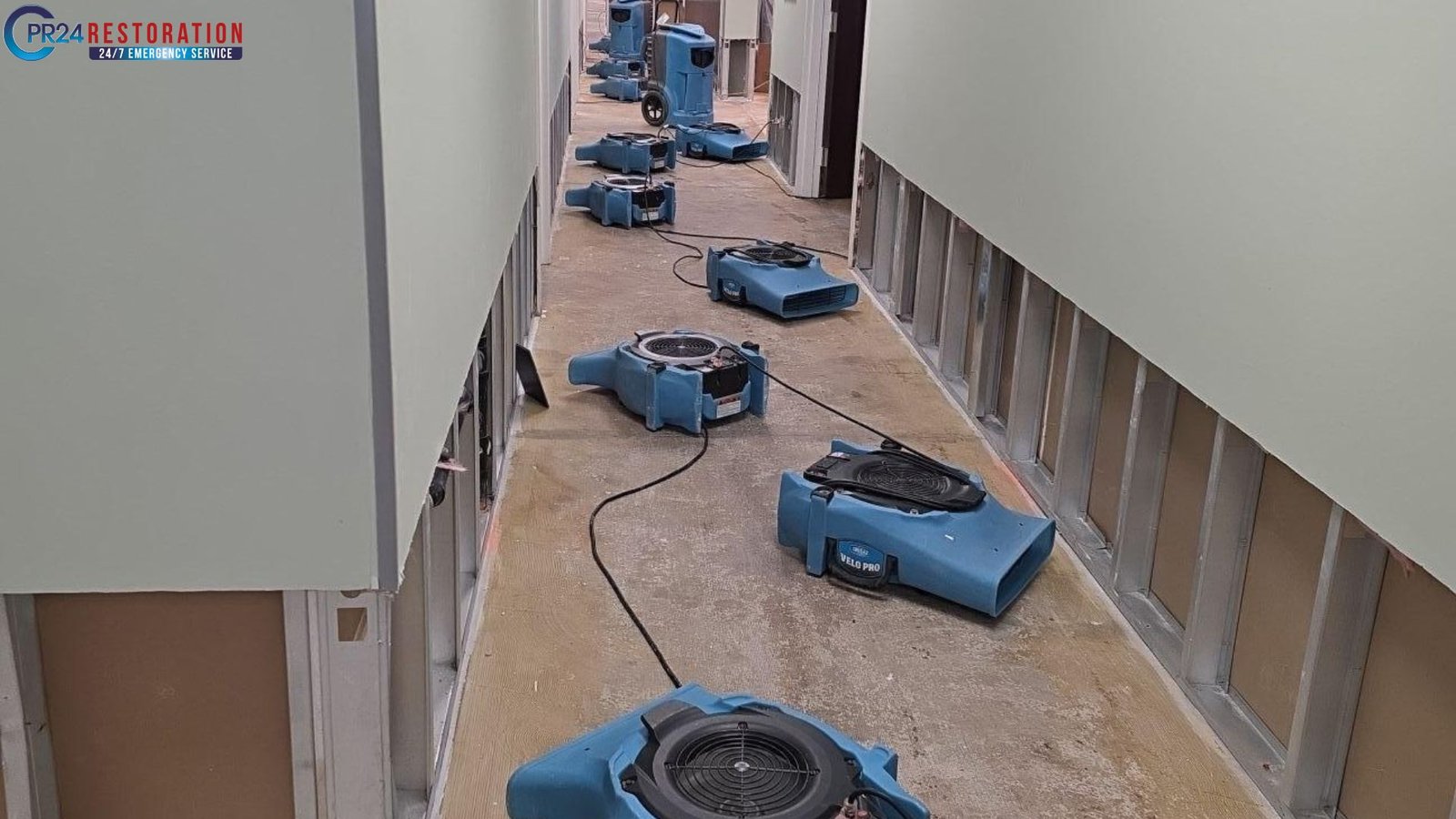
For clean water caught quickly, drying may involve controlled extraction, dehumidification, air movement, moisture monitoring, and limited removal of affected materials. If the source is sewage, a drain backup, or water that has passed through contaminated building areas, sanitization and selective demolition may be necessary. Porous materials such as wet insulation, particleboard, drywall, and some underlayments may not be safely restorable.
Condo access adds another layer. Restoration equipment may need to run for several days, building rules may restrict work hours, and affected common areas or neighbouring suites may need coordinated inspection. A contractor experienced with multi-unit properties can document moisture conditions, communicate the scope clearly, and help avoid leaving hidden wet materials behind.
CPR24 Restoration provides 24/7 emergency water damage response across Toronto and the GTA, with IICRC-certified technicians equipped to extract water, dry affected structures, sanitize contaminated areas, address mould risks, and complete required repairs.
Watch for Hidden Moisture and Mould After the Emergency
The first 24 to 48 hours are critical, but a condo loss can reveal itself gradually. Watch for a persistent musty odour, bubbling paint, warped baseboards, cupped flooring, staining that expands after drying, recurring condensation, or a ceiling that becomes soft. These signs may indicate moisture remains inside a wall, floor, or ceiling assembly.
Mould does not need a dramatic flood to develop. A slow leak behind cabinetry or an incomplete drying job can create the conditions for growth. Do not paint over staining or reinstall materials simply because the room looks dry. Moisture readings and a documented drying record provide a more reliable basis for repairs.
If you are a landlord or property manager, communicate clearly with occupants about access requirements, equipment noise, safety restrictions, and when the area can be used again. Rushing tenants back into an unfinished or damp space can create avoidable complaints and a more complicated claim.
Know What Belongs to You and What May Belong to the Corporation
Responsibility varies by condominium declaration, bylaws, insurance policy, and the source of the water. Unit-owner coverage often addresses personal contents, improvements or betterments, and certain liability exposures. The corporation may be responsible for common elements or standard-unit components, depending on governing documents and the circumstances.
Do not rely on assumptions made during a stressful call. Request the corporation’s standard-unit definition, ask your insurer about your policy, and keep all reports and invoices. Even where another party may ultimately be responsible, immediate mitigation should not wait for a final liability decision.
The best time to use this checklist is before a small leak becomes a multi-suite loss. Keep your property manager’s emergency number, insurer’s claim number, and suite shutoff location accessible. When water appears, fast, documented action gives everyone involved a clearer path to safe drying and proper recovery.