
A flooded basement can look like a straightforward water-removal job until the source becomes clear. Sewage cleanup versus water extraction is not a minor distinction in the restoration process. One deals primarily with removing unwanted water and drying materials. The other addresses contaminated wastewater that can carry bacteria, viruses, chemicals, and waste – while protecting the people who live or work in the property.
When a drain backs up, a toilet overflows, or a municipal sewer line pushes wastewater into a lower level, speed matters. But simply pumping out the visible liquid is not enough. The affected area must be contained, cleaned, disinfected, dried, and assessed for materials that cannot be safely restored.
What Is the Difference Between Sewage Cleanup and Water Extraction?
Water extraction is the controlled removal of standing water from a property. Restoration technicians use pumps, truck-mounted systems, wet vacuums, and specialty extraction equipment to remove water from floors, carpets, subfloors, wall cavities, and other building materials. It is a critical first step after a burst pipe, appliance leak, roof leak, or clean-water flood.
Sewage cleanup starts with extraction, but it goes much further. Sewage is generally treated as Category 3 water, often called black water. This category can include toilet waste, septic waste, wastewater from sewer backups, and floodwater that has mixed with contaminants. It may contain pathogens and hazardous debris that create a health risk on contact or through airborne particles during cleanup.
That changes the objective. With a clean-water event, the priority is to stop the source, remove moisture quickly, and prevent mould growth. With sewage, the priority is to control contamination first, then remove damaged materials, sanitize the structure, dry it to an acceptable standard, and complete necessary repairs.
Why Removing the Water Is Not Enough After a Sewer Backup
A property may look dry after the standing sewage has been extracted, yet still be unsafe. Wastewater can soak into carpet backing, insulation, drywall, wood framing, baseboards, furniture, and stored belongings. It can also travel beneath finished flooring or behind walls, where moisture and contamination are not immediately visible.
Porous materials are the main concern. Carpet, padding, paper-faced drywall, cellulose insulation, upholstered items, and particleboard products often cannot be reliably cleaned after significant sewage contact. Keeping these materials in place to save time or cost can leave behind contamination and odours, while trapped moisture creates conditions for mould growth.
Non-porous or semi-porous surfaces may be recoverable, depending on the extent of the loss. Concrete, metal, plastic, tile, and some sealed surfaces can often be cleaned and disinfected using the appropriate process. The decision should be based on the source of the water, how long it remained in the building, the materials affected, and whether contamination has migrated into concealed areas.
What Professional Water Extraction Involves
For a clean-water loss caught early, professional water extraction can prevent a manageable leak from becoming a full reconstruction project. The process begins by identifying and stopping the source. Technicians then document the affected area, extract standing water, and inspect moisture levels in adjacent materials.
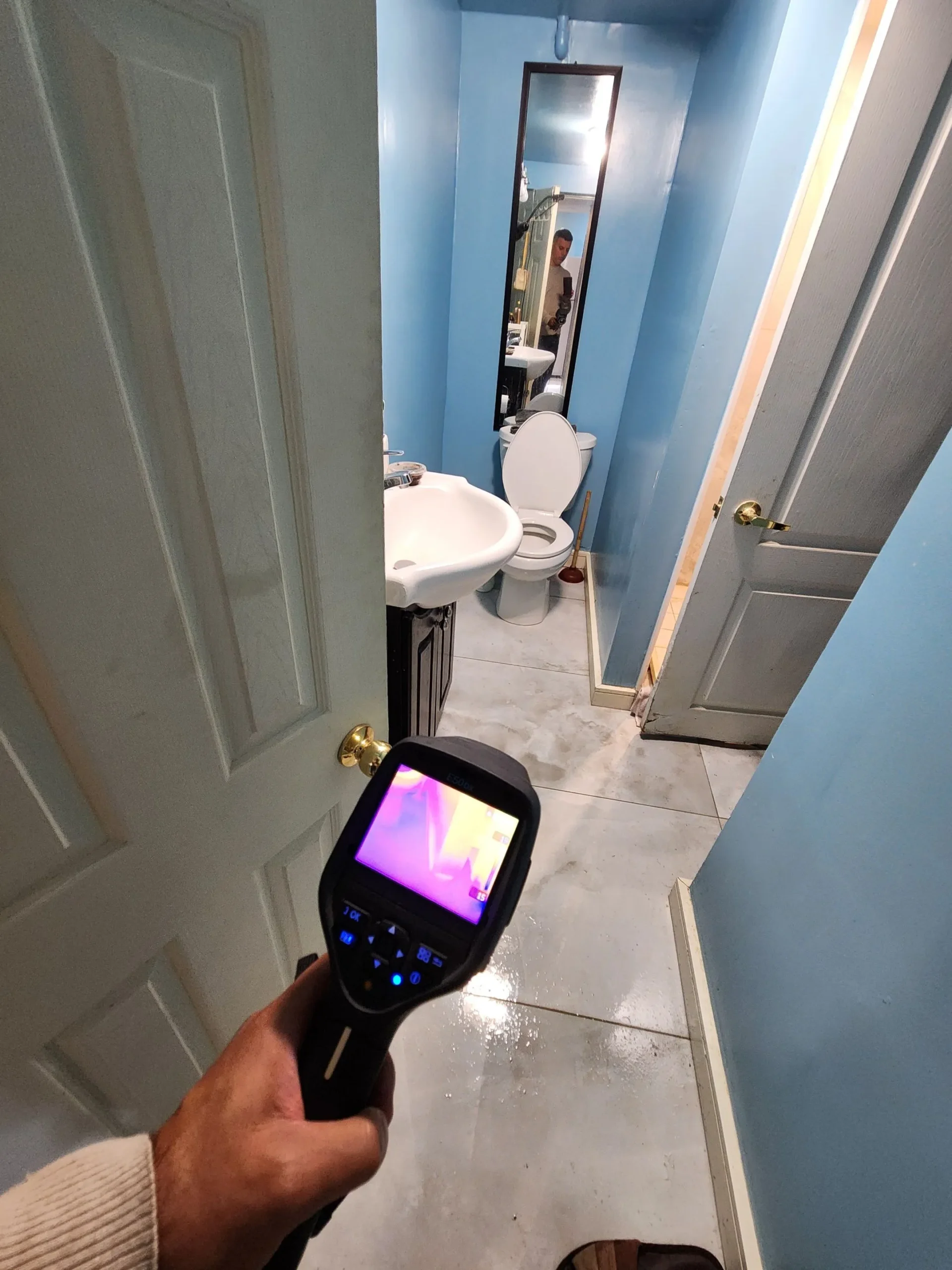
High-capacity extraction equipment removes far more water than household wet vacuums or towels. After extraction, commercial air movers and dehumidifiers lower moisture levels in materials and indoor air. Moisture meters and thermal imaging help identify wet drywall, damp subfloors, and hidden migration behind finishes.
Drying is not guesswork. Materials should be monitored until they reach an appropriate dry standard. If a clean-water leak has been sitting for too long, or if it has passed through contaminated building areas, its classification can change. That is why an assessment at the start of the job matters.
What a Proper Sewage Cleanup Requires
Sewage incidents require controlled procedures from the first entry into the affected space. Technicians should use appropriate personal protective equipment and establish containment where needed to reduce the spread of contamination to clean parts of the property.
The exact scope depends on the property and the loss, but a professional sewage cleanup commonly includes:
- Stopping the backup source where possible and extracting contaminated water and debris.
- Removing unsalvageable porous materials, including affected carpet, padding, insulation, drywall, and contents when required.
- Cleaning structural surfaces and applying appropriate disinfectants after physical soil and debris have been removed.
- Drying the remaining structure with commercial equipment and verifying moisture conditions throughout the process.
- Addressing odours, mould risk, and reconstruction needs after the area is clean and dry.
Physical removal of contamination comes before disinfection. Spraying disinfectant over sewage residue, wet carpet, or contaminated drywall does not make the area safe. The affected materials and visible waste must be removed or thoroughly cleaned first.
How CPR24 Restoration Handles Sewage Cleanup Differently
At CPR24 Restoration, we respond to both clean-water losses and sewage backups throughout Toronto and the GTA, but the restoration process is not the same. When sewage is involved, our technicians assess how far contaminated water has travelled before establishing the remediation scope. Depending on site conditions, the work may include 6-mil poly containment, controlled removal of contaminated drywall and insulation, HEPA air filtration, HEPA vacuuming, antimicrobial treatment, commercial dehumidification, and moisture monitoring. Our IICRC-certified restoration team also documents affected materials, moisture conditions, equipment use, and completed work when required for insurance claims before coordinating reconstruction of the affected areas.
The Health and Building Risks Are Different
The biggest difference between sewage cleanup and ordinary water extraction is contamination risk. Clean water from a supply line generally presents a lower initial contamination concern, while sewage can contain microorganisms, waste, chemicals, and other contaminants that require additional precautions during cleanup.
Children, older adults, pets, and tenants should stay out of the affected area until it has been professionally cleaned. Do not allow anyone to walk through sewage and track it across finished flooring. Avoid using fans before contamination has been controlled, since uncontrolled airflow can spread odours and particles beyond the original loss area.
There is also a serious property risk. Toronto and GTA basements often contain finished living space, storage, mechanical systems, and electrical components. A sewer backup can affect furnace areas, electrical outlets, drywall partitions, wood framing, and personal belongings within hours. Delayed cleanup gives moisture more time to penetrate, increasing the extent of demolition and repair.
What Property Owners Should Do Immediately
If sewage is actively entering the property, keep people and pets away from the area. Do not attempt to use toilets, sinks, showers, dishwashers, or laundry fixtures if the plumbing system appears to be backing up. If it is safe to do so, shut off the water supply to a fixture that is overflowing.
Avoid touching wastewater without proper protection, and do not use a standard household vacuum to remove it. Electrical hazards are common in flooded basements, especially near appliances, extension cords, outlets, and panels. If there is any concern about electrical contact, stay clear of the area until it can be assessed safely.
Take photos or video from a safe location for insurance documentation, but do not delay emergency response to create a perfect record. The longer contaminated water remains in contact with building materials, the more difficult and costly the recovery can become.
When Extraction May Be Enough – and When It Is Not
Extraction may be the main requirement when clean water from a burst pipe or supply-line leak is addressed quickly, has not contacted contaminants, and has affected materials that can be dried and verified. Even then, hidden moisture inspection is essential. Water under laminate flooring or inside walls can cause damage after the surface appears dry.
Sewage cleanup is required when wastewater, toilet overflow containing waste, septic discharge, or a sewer backup enters the property. It is also the appropriate response when floodwater has moved through contaminated areas or when the source cannot be confirmed as clean. Treating uncertain water as clean is a risky shortcut.
There are grey areas. A toilet overflow containing only clean bowl water may not require the same level of demolition as a major sewer backup. However, once water has contacted waste, travelled across dirty flooring, or remained stagnant, a more cautious contamination protocol is warranted. A qualified restoration assessment can determine what can safely stay and what must be removed.
Need Water Extraction or Sewage Cleanup in Toronto?
If you are unsure whether your property needs standard water extraction or full sewage remediation, the source of the water and the materials it contacted should be assessed before cleanup begins. CPR24 Restoration provides 24/7 water damage and sewage cleanup throughout Toronto and the GTA for homes, condominiums, rental properties, and commercial buildings.
Our IICRC-certified technicians can assess the affected area, extract standing water, identify hidden moisture, establish containment where required, remove contaminated materials, clean and treat remaining surfaces, install professional drying equipment, and monitor moisture conditions before reconstruction. For basement losses, CPR24 also provides emergency basement flooding restoration in Toronto when immediate extraction and drying are required.
Frequently Asked Questions About Sewage Cleanup and Water Extraction
Is sewage cleanup the same as water extraction?
No. Water extraction removes standing water from a property. Sewage cleanup also addresses contamination and may require containment, removal of affected porous materials, cleaning, antimicrobial treatment, structural drying, and additional protective procedures.
Can carpet be saved after a sewer backup?
Carpet and underpad that have been significantly exposed to sewage generally require removal because contaminants can penetrate porous materials. The restoration scope should be determined after assessing the water source and extent of exposure.
Can you just extract sewage water and dry the basement?
Extraction alone does not address contamination left on or inside affected materials. Sewage losses may require removal of contaminated materials, detailed cleaning, appropriate treatment, and structural drying before reconstruction begins.
How do I know if water damage is contaminated?
The water source, where the water travelled, what it contacted, and how long it remained in the property all matter. When the source is uncertain or sewage may be involved, a professional restoration assessment can help determine the appropriate cleanup procedure.