

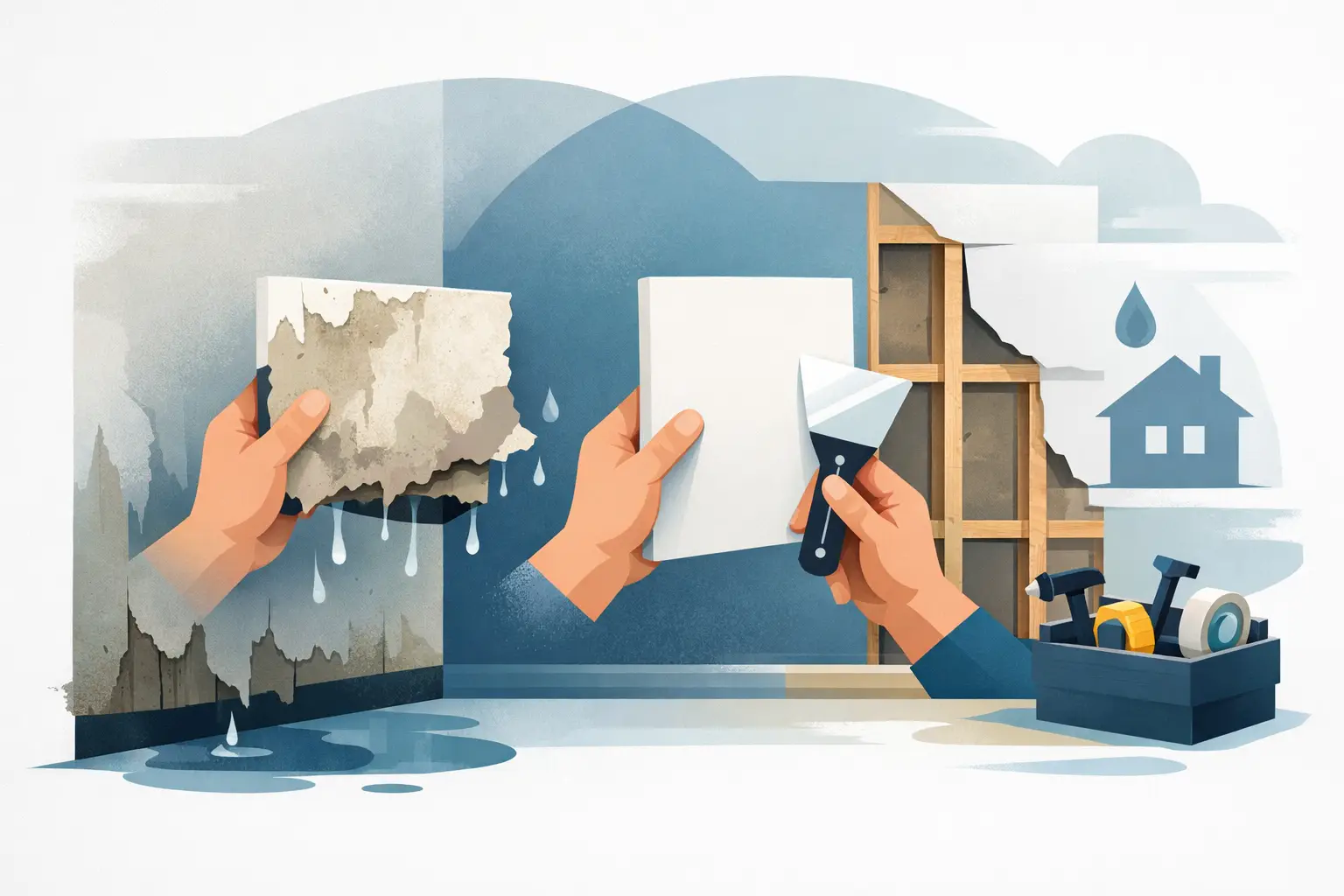
A ceiling stain after a roof leak and a soaked basement wall after a flood are not the same problem. That is why the answer to can wet drywall be saved is not a simple yes or no. It depends on how much water got in, where it came from, how long the drywall stayed wet, and whether insulation, framing, or hidden cavities are still holding moisture.
Drywall is a porous material. Once it absorbs water, it can lose strength, sag, swell, stain, and start supporting mold growth faster than many property owners expect. In some cases, it can be dried and kept. In others, saving it creates a bigger repair later.
Can wet drywall be saved? Sometimes – but only under the right conditions
Wet drywall can sometimes be saved if the water exposure was clean, limited, and addressed quickly. A small area affected by a fresh supply-line leak has a better chance than drywall hit by floodwater, sewage, or a long-hidden plumbing leak.
The timeline matters. If drywall has been wet for more than 24 to 48 hours, the risk of mold growth rises sharply, especially in enclosed wall cavities with poor airflow. Even if the surface looks dry, moisture can remain trapped behind the wall, inside insulation, or along wood framing.
The source of water matters just as much. Clean water from a broken pipe is very different from grey or black water. If drywall has been exposed to sewage backup, river flooding, or contaminated water, removal is usually the safer and more appropriate option. Porous materials do not respond well to contamination.
The key factors that decide whether drywall stays or goes
The first question is how wet the drywall actually is. Slight surface dampness from a small leak near the top of a wall is different from full saturation. If the drywall feels soft, bulges outward, crumbles at the edges, or has visible swelling at seams and baseboards, the material may already be structurally compromised.
The second question is how long the moisture has been present. A leak discovered right away gives you more options. A leak that has been active behind a bathroom wall for days or weeks often means the paper facing and interior gypsum core have been exposed long enough to support mold.
The third question is what is behind the wall. Drywall rarely gets wet alone. Insulation can trap moisture, wood studs can absorb it, and vapour barriers can slow drying. Even when the drywall appears salvageable, hidden moisture can keep the assembly wet and create odours, staining, or microbial growth later.
The fourth question is contamination. This is the line that changes everything. If the wall was affected by sewer backup, toilet overflow involving waste, or floodwater entering from outside, replacement is the prudent call in most cases.
When drywall can usually be saved
Drywall is most likely to be saved when the water came from a clean source, the affected area is limited, and drying starts immediately. This often happens with a small plumbing leak, appliance supply line issue, or minor roof leak discovered early.
In those cases, restoration professionals use moisture meters and thermal imaging to map the damage, then open enough of the area to release trapped moisture if needed. High-capacity air movers and dehumidifiers can then dry the wall system in a controlled way. If readings return to normal, the drywall remains firm, and there is no contamination or mould growth, replacement may not be necessary.
This is also where proper assessment matters more than guesswork. Running a household fan at a damp wall may dry the paint film, but it does not confirm the interior is dry. Professional drying is about measured moisture reduction, not appearance.
When wet drywall should be removed
If drywall has sagged, swelled, softened, or started to break down, replacement is usually the right move. The same applies when water has wicked upward from the floor, because drywall acts like a sponge and can pull moisture well above the visibly wet line.
Removal is also standard when the source water is contaminated. Floodwater and sewage incidents carry health risks and leave behind particles and bacteria that porous materials can retain. Trying to save drywall in those conditions can leave a property unsafe and prolong the restoration timeline.
Long-duration leaks are another common reason for removal. If the damage was hidden behind cabinets, inside a basement wall, or beneath a window leak that went unnoticed, the paper facing may already support mould even if staining looks minor. At that stage, drying alone is not enough.
Signs your drywall may not be salvageable
Some warning signs are obvious. Sagging ceilings, bubbling paint, soft spots, swollen baseboards, and crumbly corners usually point to material failure. A musty smell is another red flag, particularly in basements, bathrooms, and lower wall sections.
Other signs require testing. Elevated moisture readings, wet insulation, mould inside the cavity, or staining patterns that suggest repeated exposure can all turn a small drywall issue into a larger remediation project. This is one reason quick inspection is so valuable – the visible damage is often only part of the problem.
Why drying speed matters more than most people think
The first 24 hours are critical. Fast extraction, controlled demolition where needed, and professional drying can make the difference between a limited repair and a full tear-out. Waiting to see if the wall dries on its own often leads to hidden moisture, odours, and mould.
In Toronto and across the GTA, this becomes even more important in basements, condos, and commercial units where airflow may be restricted and moisture can spread into adjacent suites or neighbouring rooms. Speed does not just protect drywall. It protects framing, flooring, insulation, finishes, and indoor air quality.
What a proper drywall water damage assessment looks like
A real assessment does more than identify a wet spot. It starts with the source of loss. If the leak is active, it must be stopped before drying can succeed. From there, technicians measure moisture in drywall, trim, flooring, and structural materials, and check whether the water migrated into cavities or insulation.
If the drywall may be saved, the drying plan has to support that goal. That can include strategic access openings, dehumidification, air movement, and ongoing monitoring. If the wall is not a candidate for salvage, removal should be clean, contained, and limited to the affected area wherever possible.
The benefit of working with a full-service restoration contractor is that the decision is tied to the next step. If drywall comes out, the same team can manage drying, sanitization, mould control if needed, and rebuild. That reduces delays and limits the risk of moisture being sealed back into the wall.
Common mistakes property owners make
One of the biggest mistakes is assuming dry to the touch means fully dry. Another is painting over stains or patching a section before the cavity has been tested. That may hide damage, but it does not solve it.
Another common mistake is leaving wet drywall in place after contaminated water exposure. This is especially risky after sewer backup or basement flooding. Porous materials are not meant to be cleaned and trusted indefinitely after that kind of event.
There is also the temptation to wait a few days before calling for help. That delay often turns a salvageable section into a removal job. If the wall cavity stays wet, mould can begin quickly and the repair scope grows.
So, can wet drywall be saved in your property?
If the water was clean, the damage is recent, and the drywall is still structurally sound, there is a good chance it can be dried and preserved. If the material is saturated, weakened, contaminated, or wet for too long, replacement is usually the safer and more cost-effective decision.
The right answer comes from moisture testing, not assumptions. For homeowners, condo boards, property managers, and business operators, fast assessment protects both the building and the repair budget. Teams like CPR24 Restoration deal with this every day, which means the call is based on conditions on site, not guesswork.
If you are staring at a stained wall, a soft ceiling, or a wet basement partition, treat it like a time-sensitive structural issue, not a cosmetic one. The sooner the wall is tested and the moisture is controlled, the better your chances of keeping the damage small and the recovery straightforward.