
A ceiling stain in an office, standing water in a retail unit, a burst pipe above a server room – commercial water damage restoration starts the moment the problem is discovered, not when the floor is visibly flooded. In commercial properties, water spreads fast through wall cavities, insulation, electrical pathways, floor systems, and shared building components. Every hour of delay increases repair costs, business interruption, and the risk of mould, contamination, and structural damage.
For property managers, facility teams, business owners, and condo boards, the real challenge is not just removing water. It is protecting occupants, limiting downtime, documenting the loss, and getting the property back to safe operating condition with as little disruption as possible. That requires a response that is fast, controlled, and technically sound.
What commercial water damage restoration actually involves
Commercial losses are rarely simple cleanups. A wet carpet in a small office is one thing. Water affecting multiple suites, common areas, electrical rooms, elevators, inventory, or finished interiors is another. Restoration has to account for the source of the water, the category of contamination, the materials affected, and whether business operations can continue safely during the work.
Commercial water damage restoration usually begins with emergency mitigation. The first priority is to stop the source if it is still active, secure the affected area, and identify immediate safety concerns. That can include slip hazards, electrical risks, compromised ceilings, sewage contamination, or damage to fire-rated assemblies.
From there, the focus shifts to inspection and moisture mapping. Surface water is only part of the problem. Water can travel behind baseboards, under vinyl plank flooring, into drywall, inside insulation, and beneath equipment or shelving systems. Moisture detection tools help define the true scope of loss so drying plans are based on facts, not guesswork.
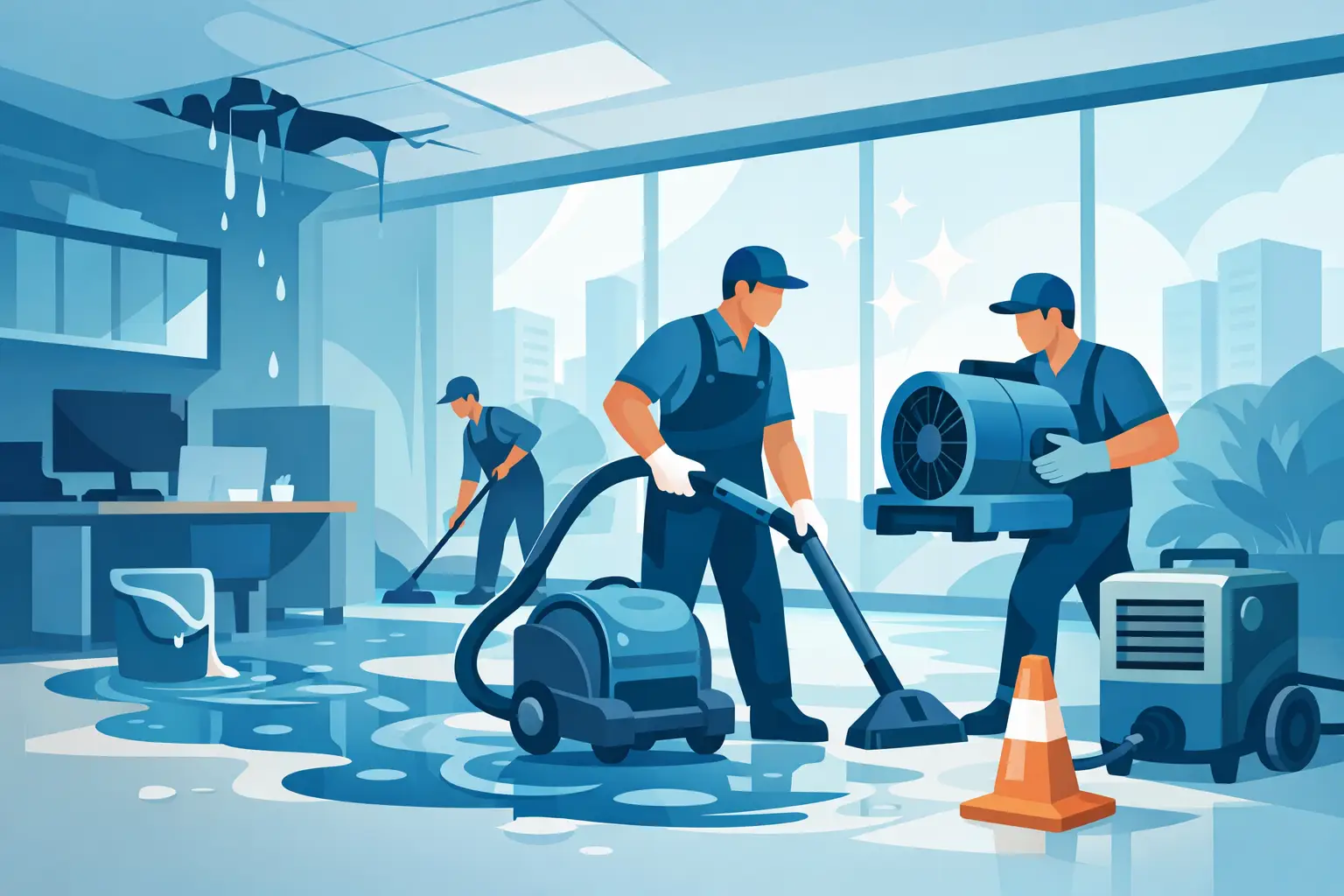
Extraction and controlled drying follow. Depending on the building type, this may involve truck-mounted extraction, portable pumps, floor mat systems, air movers, dehumidifiers, and negative air machines. In a commercial setting, the setup often has to be staged carefully to reduce disruption to tenants, staff, customers, or ongoing operations.
Why speed matters in commercial water damage restoration
In commercial buildings, delay creates a chain reaction. Water does not stay where it started. It migrates to adjacent units, penetrates porous materials, weakens finishes, and creates odour and indoor air quality concerns. If the water came from a sewer backup, drain overflow, or other contaminated source, the health risk increases immediately.
There is also the operational side. A restaurant may lose service hours. A clinic may have to close treatment rooms. An office may face equipment damage and employee displacement. A multi-tenant property may deal with complaints, access coordination, and liability concerns all at once. Fast action reduces the spread of damage and gives everyone involved a clearer path forward.
That is why response time is not just a selling point. It directly affects the outcome. An emergency team that arrives quickly can begin extraction before water wicks further into building materials, isolate affected areas before contamination spreads, and start drying before mould growth becomes a secondary problem.
Common causes of commercial water losses
Commercial properties see water damage for many reasons, and each one affects the restoration plan. Burst pipes are common during cold weather or after pressure failures. Roof leaks can go unnoticed until water stains appear, by which point insulation and ceiling materials may already be saturated. Sprinkler discharges, appliance failures, drain backups, HVAC leaks, and storm intrusion can all affect different areas of the building in different ways.
In mixed-use buildings, one incident can impact several occupants. A plumbing failure in an upper unit may affect offices below. A flooded mechanical area may lead to shutoffs that interrupt normal operations elsewhere in the property. Even a relatively small leak can become a large commercial claim if it reaches electrical infrastructure, elevator systems, tenant improvements, or inventory.
This is where experience matters. The cause of loss helps determine whether materials can be dried in place, require removal, or need sanitization and controlled demolition. Clean water from a supply line is treated differently than grey water from an appliance discharge or black water from a sewage event.
The biggest mistakes after a commercial water incident
One of the most common mistakes is underestimating the scope. If staff mop up visible water and assume the issue is handled, trapped moisture may remain in walls, flooring, millwork, or subfloors. The property may look dry while humidity stays elevated and hidden damage worsens.
Another mistake is waiting for insurance direction before starting mitigation. Documentation is important, but so is acting quickly to prevent further loss. Professional restoration teams can document conditions thoroughly while beginning emergency work. In many cases, that early record of damage, moisture readings, and mitigation steps is helpful during the claims process.
A third mistake is treating every water loss as the same. It depends on the source, the occupancy, and the materials involved. A warehouse, medical office, retail unit, condominium common area, and restaurant kitchen all present different risks and restoration requirements. Occupant safety, contamination control, and business continuity have to be weighed against the urgency of demolition and drying.
How a proper restoration process reduces downtime
The best commercial restoration plans do not just dry the building. They organize the recovery so the property can return to use as quickly and safely as possible. That starts with a clear site assessment and a practical scope of work. Which areas are unsafe? Which operations can continue? Which materials are salvageable? What needs immediate removal to stop deterioration?
Containment is often part of the answer. In an active office or tenanted building, affected zones may be isolated while unaffected areas remain operational. After-hours work may also make sense where access is limited or tenant disruption has to be minimized. The right approach depends on the building and the severity of damage.
Documentation also plays a major role. Moisture maps, photographs, equipment logs, and daily progress tracking help property owners, managers, and insurers understand what was affected and how the drying process is progressing. That transparency reduces confusion and helps decisions move faster.
When one contractor handles mitigation, drying, sanitization, mould prevention, and reconstruction, the handoff between phases is typically smoother. That matters in commercial settings, where delays between emergency service and repairs can leave areas unusable for longer than necessary.
When water damage turns into a mould problem
Mould is not guaranteed after every water event, but the risk rises quickly when moisture is left in place. Drywall, insulation, wood framing, ceiling tiles, and carpeting can all support growth under the right conditions. In commercial properties, that creates more than a cosmetic issue. It can affect indoor air quality, tenant comfort, complaint volume, and the time needed to fully restore the space.
If a building has experienced repeated leaks, unnoticed seepage, or slow drying after a flood, mould assessment and remediation may need to be built into the project. The right response depends on how long materials were wet, whether contamination is visible, and whether occupants reported odours or air quality concerns.
A qualified restoration contractor should know when standard drying is enough and when conditions call for removal, HEPA filtration, containment, or a broader remediation plan. That judgment can prevent small losses from becoming more disruptive and more expensive.
Choosing a commercial water damage restoration team
Commercial clients need more than extraction equipment. They need a team that can take control of the site, communicate clearly, and manage the work from emergency response through final repairs. Certifications matter, but so do logistics, reporting, and the ability to work inside occupied properties.
Look for a contractor that understands commercial risk. That means clear emergency protocols, moisture documentation, contamination control, and practical planning around tenant access, safety, and operating hours. It also helps when the same provider can complete repairs after drying, since that reduces delays and finger-pointing between trades.
For properties across Toronto and the GTA, fast local response can make a measurable difference. In a commercial loss, forty-five minutes versus several hours may mean the difference between a controlled mitigation job and a much larger interruption.
CPR24 Restoration is built around that reality – emergency response, certified restoration methods, and full-service recovery that moves from mitigation to repairs without losing momentum.
What property owners and managers should do first
Once water is discovered, act immediately. Stop the source if it is safe to do so, restrict access to affected areas, protect occupants from slip and electrical hazards, and document visible conditions. Then bring in a professional team that can assess hidden moisture, classify the loss, and start mitigation before damage spreads further.
Do not assume the problem ends when standing water is gone. Commercial buildings are complex, and moisture often travels farther than expected. A fast, well-managed response protects the structure, supports insurance documentation, and gives your business or property the best chance of getting back to normal without avoidable delays.
When water hits a commercial space, the goal is not just cleanup. It is control – fast enough to protect people, precise enough to protect the building, and thorough enough to keep one emergency from becoming three.