

A soaked basement at 2 a.m. does not feel like a scheduling question, but that is exactly what most owners ask once the water is shut off and the panic settles – how long does water damage restoration take? The honest answer is that some jobs are stabilized in a day, many are dried within three to five days, and full restoration can take anywhere from several days to a few weeks depending on how far the water spread, what materials were affected, and whether repairs are needed after drying.
For Toronto and GTA property owners, speed matters because water damage keeps moving after the visible flooding stops. Drywall wicks moisture upward, wood swells, insulation traps water, and hidden pockets behind baseboards or under flooring can turn into mould problems fast. The clock starts the moment water enters the property, not when someone can finally come take a look.
How long does water damage restoration take in most properties?
In most standard residential losses, emergency mitigation starts immediately, water extraction happens the same day, and structural drying takes about three to five days. If the damage is limited to a small area and the water is clean, the process can move faster. If the loss involves sewage, multiple rooms, saturated materials, or delayed response, the timeline gets longer.
The biggest mistake people make is treating restoration as one single task. It is actually a chain of steps, and each step has its own timeline. Emergency response and extraction are measured in hours. Drying is measured in days. Repairs and reconstruction are often measured in days or weeks depending on material availability and scope.
The stages that shape the timeline
Emergency inspection and damage assessment
The first stage usually takes a few hours. Technicians identify the water source, stop active intrusion if possible, assess contamination levels, check affected materials, and map moisture migration with specialized meters and thermal imaging.
This stage matters because the right plan can shorten the whole project. If hidden moisture is missed early, the property may appear dry while damp framing or subfloors continue deteriorating out of sight.
Water extraction and site stabilization
Extraction is often completed the same day, especially when crews arrive quickly. Standing water is removed using pumps, truck-mounted extraction units, or portable systems depending on access and volume.
A small condo overflow can be extracted quickly. A flooded basement, commercial unit, or sewer backup takes longer because there is more water, more debris, and more safety control required. If contents need to be moved, documented, or protected before extraction continues, that adds time too.
Removal of damaged materials
Demolition is not always required, but when materials are saturated beyond recovery, removal can happen on day one or day two. This may include drywall cuts, insulation removal, lifting flooring, detaching baseboards, or removing contaminated contents.
This part can feel disruptive, but it often speeds recovery. Trapped moisture inside walls and under floor systems does not dry properly if everything stays closed up.
Structural drying and dehumidification
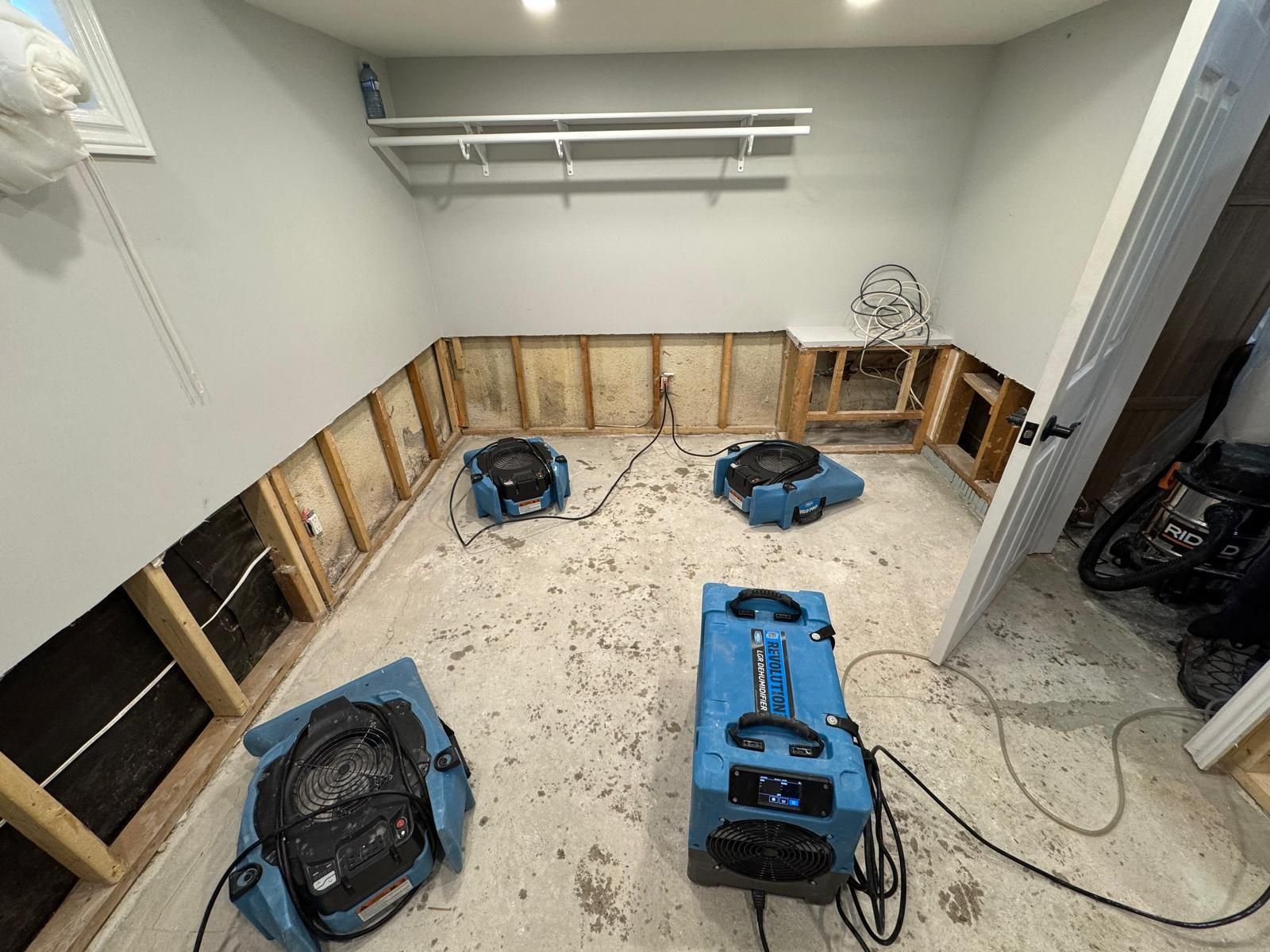
This is usually the longest mitigation phase. In many cases, drying takes three to five days. More severe losses may require seven days or longer.
Industrial air movers, dehumidifiers, floor drying systems, and negative air equipment may run continuously while technicians monitor moisture readings. Drying is not based on guesswork or how the room feels. It is based on moisture targets in materials like wood, drywall, and concrete.
Cleaning, sanitizing, and odour control
If the water is contaminated or if materials have been exposed to bacteria, dirt, or sewage, cleaning and sanitization become essential. This step may happen during or after drying, depending on the loss.
Clean water from a supply line is one thing. Grey water from appliances is another. Black water from sewage backup or ground intrusion requires a stricter process, more protective measures, and in many cases more material removal. That can extend the overall timeline.
Repairs and reconstruction
Once the property is dry and cleared for rebuilding, repairs begin. Minor repairs may take a few days. Larger reconstruction projects can take one to several weeks.
Replacing drywall, flooring, trim, paint, cabinetry, or sections of finished basement space adds a second timeline after mitigation. If custom materials are involved or insurance approvals are delayed, the project can take longer even after the wet work is done.
What makes one water damage job take longer than another?
The first factor is the type of water. Clean water losses are generally more straightforward if addressed quickly. Sewer backups and contaminated flooding demand stricter handling, containment, cleaning, and disposal.
The second is how long the water sat before help arrived. A burst pipe discovered within an hour is very different from water found after a weekend away. The longer materials stay wet, the deeper the moisture migration and the greater the chance of swelling, staining, delamination, and microbial growth.
The third is the building material itself. Concrete takes longer to release moisture than drywall. Hardwood flooring can cup and trap moisture underneath. Insulation often needs removal because it holds water and dries poorly inside closed cavities.
The fourth is how far the damage spread. One laundry room is manageable. A basement, hallway, storage area, and two adjacent rooms create a much larger drying chamber and more demolition, equipment, and monitoring.
The fifth is access. Condo units, finished basements packed with contents, occupied commercial spaces, and tight mechanical rooms can all slow down extraction, setup, and repairs.
Typical timeline by severity
A minor water loss affecting a small area with clean water may be stabilized and dried in one to three days, with limited repairs after that. A moderate loss affecting multiple rooms usually takes three to seven days for mitigation, plus extra time for repairs. A major flood, sewer backup, or long-standing intrusion can require a week or more of mitigation and several additional weeks for reconstruction.
This is why a simple promise like fast drying can be misleading. Fast response helps. Proper drying matters more. If a contractor removes equipment too early just to shorten the timeline, the property may face recurring moisture issues, odours, or mould later.
Insurance, testing, and approvals can affect timing
Not every delay is caused by the water itself. Insurance documentation, adjuster review, scope changes, and repair approvals can all extend the project. In some losses, asbestos testing or other environmental checks are needed before demolition can proceed, especially in older properties.
For commercial buildings, tenant coordination, after-hours access, business continuity planning, and health and safety requirements can add complexity. The right restoration team plans around these issues instead of reacting to them late.
Why fast response changes the timeline
Emergency response does more than reduce visible damage. It can reduce demolition, shorten drying time, protect contents, and improve the chance that materials can be saved instead of replaced.
That is why companies built for emergency deployment, including CPR24 Restoration, focus on immediate extraction, moisture mapping, and controlled drying from the start. The goal is not just to arrive quickly. The goal is to take control before the damage expands into a larger reconstruction project.
Signs your restoration may take longer than expected
If water reached wall cavities, soaked insulation, got under hardwood or vinyl plank flooring, or involved sewage contamination, expect a longer process. The same applies if there is visible mould, recurring odour, warped finishes, or moisture readings that stay elevated after several days of drying.
Another warning sign is when the source has not truly been resolved. Ongoing leaks from plumbing, roofs, foundations, or exterior drainage can stall the restoration because the property is being re-wet while crews are trying to dry it.
What property owners can do to keep the project moving
Shut off the water source if it is safe to do so, call for emergency restoration right away, and avoid waiting to see if materials will dry on their own. Move valuables and documents out of affected areas if possible, but do not use household vacuums or enter contaminated water zones.
It also helps to give technicians clear access, provide details about when the incident started, and document damage for insurance. Quick decisions on scope and repairs can prevent downtime between mitigation and reconstruction.
The real answer most owners need
If you are asking how long does water damage restoration take, you are usually asking when life goes back to normal. For a small loss, that can happen quickly. For a major flood or sewer backup, normal takes longer because safe recovery requires more than removing water.
The best timeline is the one that is both fast and correct. A property that is extracted, dried, sanitized, and repaired properly will cost less trouble later than one that only looks dry on the surface. When water hits your home or building, early action gives you the best chance at a shorter, cleaner recovery.