
Water is patient for about five minutes. After that, it starts moving into drywall, subfloors, insulation, baseboards, cabinets, and anything else that can absorb it. If you are asking what is water damage restoration, you are usually not researching out of curiosity. You are dealing with a flooded basement, a burst pipe, a roof leak, a sewage backup, or water that has shown up where it should not be.
Water damage restoration is the professional process of stopping the source, removing water, drying the structure, cleaning and sanitizing affected areas, preventing mould growth, and repairing damaged materials to bring a property back to its pre-loss condition. It is not just mopping up visible water. It is a controlled recovery process designed to limit structural damage, health risks, and the cost of future repairs.
What is water damage restoration really meant to do?
At a practical level, water damage restoration has two goals. The first is to prevent the damage from spreading. The second is to restore the property safely and properly.
That distinction matters. A room can look dry while moisture is still trapped behind walls, under flooring, or inside ceiling cavities. Left alone, that hidden moisture can lead to swelling, warping, odours, electrical hazards, and mould growth. In commercial settings, it can also interrupt operations, affect tenants, and create liability issues.
Professional restoration is built around moisture control, material assessment, contamination management, and reconstruction. The work has to happen in the right order. If it does not, the property may dry unevenly, contaminated areas may be missed, and repairs may fail later.
The main stages of water damage restoration
Every loss is different, but the process usually follows a clear sequence.
1. Emergency assessment and safety control
The first step is identifying the source of the water and determining whether the area is safe to enter. That may mean shutting off the water supply, isolating electrical risks, or restricting access to contaminated zones.
Not all water damage is equal. Clean water from a supply line is handled differently than grey water from an appliance overflow or black water from a sewer backup. The contamination level changes the cleanup protocol, the protective equipment required, and whether certain materials can be saved.
2. Water extraction
Once the site is stabilized, standing water is removed as quickly as possible. This is where timing matters most. The longer water sits, the more it penetrates porous materials and the more likely it is that flooring, drywall, insulation, and wood framing will suffer lasting damage.
Extraction is usually done with commercial pumps, wet vacuums, and other specialized equipment. Household fans and shop vacs may help with a minor spill, but they are not enough for a significant flood, basement intrusion, or hidden moisture event.
3. Drying and dehumidification
This is the stage many people underestimate. Removing visible water is only the beginning. Materials and air still hold moisture, and that moisture has to be brought down to acceptable levels.
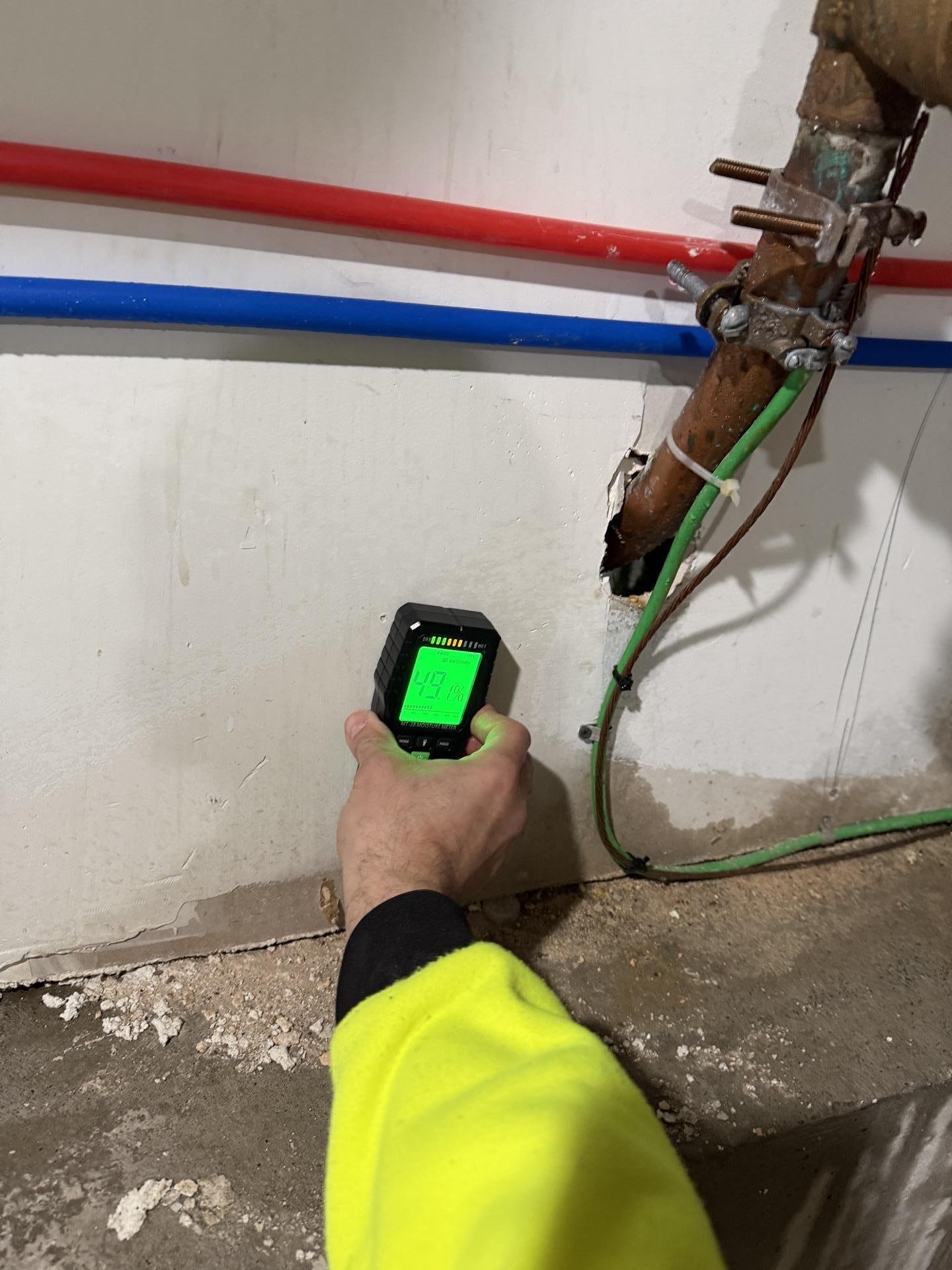
Technicians use air movers, dehumidifiers, moisture meters, and thermal imaging tools to track drying progress. In some cases, sections of drywall or flooring need to be removed to allow trapped moisture to escape. That can feel aggressive in the moment, but targeted removal is often what prevents wider damage later.
4. Cleaning, sanitizing, and odour control
If the water came from a contaminated source, or if materials stayed wet long enough to support microbial growth, cleaning is not optional. A proper restoration plan includes sanitation of affected surfaces and, when needed, antimicrobial treatment and odour control.
This is especially important after sewage backups, stormwater intrusion, or flood events involving debris. In those cases, the issue is not just moisture. It is bacteria, pathogens, and indoor air quality.
5. Repairs and reconstruction
The final stage is restoring what had to be removed or what could not be saved. That may include drywall replacement, insulation, flooring, trim, painting, plaster repair, or more substantial reconstruction.
This is where a full-service restoration company can make the process far easier. If cleanup and repairs are split between multiple contractors, delays are common and accountability gets murky. A coordinated approach is faster and usually cleaner from an insurance and scheduling standpoint.
Why fast response changes the outcome
Water damage does not stay still. Within hours, materials begin to absorb moisture deeper into the assembly. Within a day or two, drywall can soften, wood can swell, and mould risk increases. Electronics, contents, and finishes also become harder to salvage as exposure time increases.
That is why emergency response is not just a selling point. It directly affects the scope of loss. A fast team can extract water before it travels farther, start drying before saturation worsens, and document conditions early for insurance purposes.
For Toronto and GTA properties, response speed can be even more important in basements, older homes, mixed-use buildings, and multi-unit properties where water can migrate between levels and units quickly.
What is water damage restoration not?
It is not the same as regular cleaning. It is not simply renovation work. And it is not always something a general contractor should handle first.
Restoration starts with damage control and environmental stabilization. Before walls are closed, flooring is installed, or paint goes up, the structure has to be dry and safe. Skipping that stage can trap moisture inside the building envelope, leading to recurring damage and mould complaints down the line.
It is also not always a total tear-out. Some materials can be dried and saved, while others need removal. The right decision depends on the water category, how long the material was wet, what the material is made of, and whether drying targets can realistically be met.
When should you call for professional water damage restoration?
If the water affects more than a small, fully visible area, professional help is usually the right move. That includes flooded basements, burst pipes, overflowing toilets, leaking appliances, roof leaks that soaked insulation or ceilings, and any event involving sewage or stormwater.
You should also call if you notice signs that moisture has travelled beyond the obvious source. Common clues include bubbling paint, warped flooring, a musty smell, stained ceilings, swollen baseboards, or recurring mould spots.
Property managers and business owners should be especially cautious. Even a smaller leak can affect tenant spaces, common areas, equipment, inventory, or business continuity. What looks minor at first can turn into a larger claim if hidden moisture is missed.
The role of moisture detection and documentation
One of the biggest differences between amateur cleanup and professional restoration is measurement. Certified technicians do not guess whether a wall or floor is dry. They test it.
Moisture readings help determine what can be saved, where drying equipment should be placed, and when the structure is ready for repairs. Documentation also supports insurance claims by showing the source, extent of damage, actions taken, and drying progress over time.
That paper trail matters. Without it, disputes over scope, timing, and pre-existing damage are more likely.
Why certification matters in water damage restoration
Water losses look simple until they are not. Contamination categories, drying standards, demolition decisions, and mould prevention all require training and experience. IICRC-certified technicians follow recognized industry procedures for water mitigation and structural drying, which helps reduce guesswork during a high-stress event.
That does not mean every job becomes a major reconstruction project. Sometimes the right response is relatively contained. But it should still be based on inspection data, contamination risk, and moisture mapping, not assumption.
For homeowners and commercial operators, that expertise often means fewer delays, better salvage decisions, and a lower chance of discovering hidden damage weeks later.
What Toronto property owners should keep in mind
Local building types and seasonal conditions affect how water damage behaves. Older Toronto homes may have finished basements, porous materials, and hidden vulnerabilities behind renovated spaces. Condos can involve shared systems, neighbouring unit impact, and building management coordination. Commercial properties may have stricter timelines tied to tenant safety and operational downtime.
In all of those settings, the best restoration response is one that moves quickly, communicates clearly, and handles both mitigation and repairs. That is why many property owners look for a team that can inspect, extract, dry, sanitize, remediate, and rebuild under one roof. CPR24 Restoration is one example of that full-service emergency model in the GTA.
If there is one thing to remember, it is this: water damage restoration is not about making the room look normal again by the end of the day. It is about making sure the property is truly dry, safe, and ready to return to normal without hidden problems waiting behind the walls.