

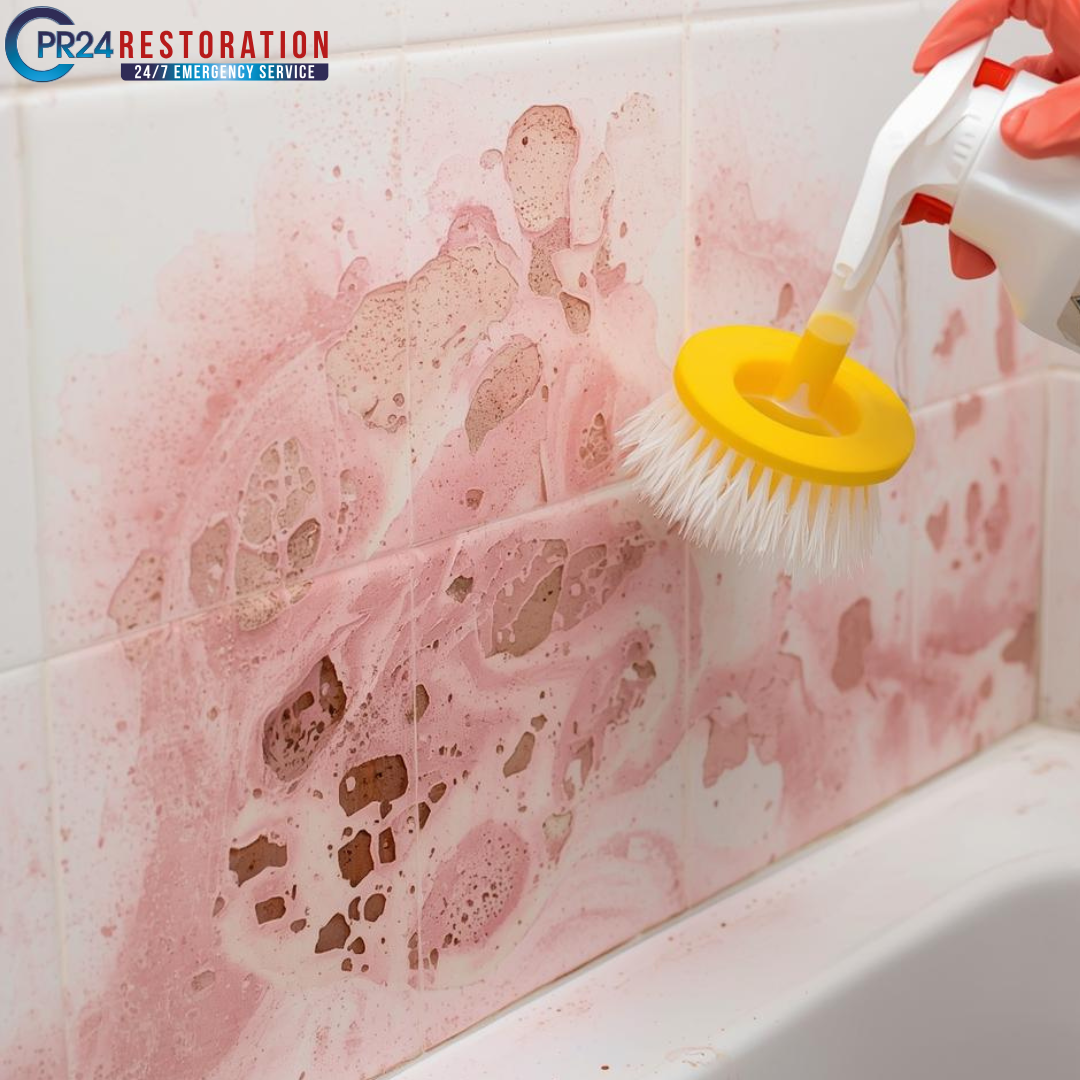
That pink mold you spotted in your Toronto home isn’t actually mold at all. The strange pink substance is a type of bacteria called Serratia marcescens. For effective pink mold removal, it’s important to address it promptly as it thrives in warm, moist places like your humidifier.
A pinkish film has probably appeared in your shower or bathroom. Pink mold appears in showers and bathrooms across Toronto homes because these spaces create perfect breeding conditions.
But this is more than just looks. Pink mold can cause health problems. This is especially true for people with weak immune systems, allergies, or asthma.
Many homeowners ask if pink mold is dangerous. The answer is yes, it can harm you, especially if you have a vulnerable immune system.
In this piece, we’ll explain why pink mold appears and help you spot it in your home’s different areas. You’ll learn effective removal techniques that work. We will share ways to prevent pink mold in your Toronto home. We will also help you know when to call for professional help.
What Is Pink Mold and Why Does It Grow in Toronto Homes?
That pink stuff growing in your bathroom isn’t actually mold at all. The rosy-colored buildup you’ll find in Toronto bathrooms comes from bacterial growth, specifically Serratia marcescens or Aureobasidium pullulans. This difference is vital to know how to treat and prevent it properly.
What causes pink mold in humid environments
Bacterial growth runs on specific conditions that often appear in residential bathrooms. When moisture levels climb above 60%, bacteria find their perfect breeding ground. Growth speeds up when temperatures hit between 68-86°F (20-30°C).
These bacteria enjoy eating organic matter. This includes soap scum, skin cells, and leftover personal care products that collect on surfaces.
Your bathroom becomes a bacteria magnet when it lacks proper airflow. Bathrooms without good exhaust fans or closed windows after showers give these bacteria the perfect home. Puddles of water sitting in shower corners, sink basins, or toilet bowls make the problem worse.
Is pink mold dangerous to your health?
Pink bacterial growth isn’t as toxic as black mold, but it can still harm your health. Many people develop breathing problems, allergic reactions, and skin irritation from exposure. These bacteria can also cause urinary tract infections, wound infections, and stomach issues.
Some people need to be extra careful:
- Infants and elderly individuals
- People with compromised immune systems
- Those with existing respiratory conditions
- If you have allergies
Watch out for symptoms ranging from mild coughing and sneezing to serious conditions that need a doctor’s attention. Quick treatment becomes essential if you spot pink growth, especially if vulnerable people live in your home.
Why Toronto homes are at higher risk
Toronto’s unique climate makes life harder for homeowners fighting pink bacterial growth. Winter indoor heating creates significant humidity differences that lead to wet surfaces. Spring brings its own problems when melting snow can make basements damp.
The mix of summer humidity and air conditioning creates condensation throughout Toronto homes. City building standards include vapour barriers and insulation rules. These can trap moisture if not installed or maintained properly.
Toronto homes face moisture challenges all year round that make them easy targets for pink bacterial growth. Learning these seasonal patterns helps homeowners develop better prevention strategies that work with our local climate.
Common Places You’ll Find Pink Mold Indoors
You need to know where pink mold appears to deal with it effectively. This bacterial colonization sets up camp in specific spots around your home that give it perfect growing conditions.
Pink mold in the bathroom and shower tiles
Bathrooms make a perfect home for pink mold because they stay wet constantly. Pink streaks usually appear first on shower curtains, especially where water collects at the bottom edges. The bacteria love settling in tile grout because its porous surface holds onto moisture long after you finish showering. Poor drainage in corner areas creates perfect breeding grounds for bacterial growth.
The problem doesn’t stop at tiles. Pink rings appear at the waterline in toilet bowls, usually within 1-2 weeks if you don’t clean regularly. Your sink’s drains and faucet bases collect minerals and organic matter that feed these bacteria. The pink visitor can even make its home in your toothbrush holders and soap dishes.
Growth in humidifiers and air vents
Pink mold doesn’t limit itself to bathrooms. Humidifiers create perfect conditions for it to grow. These bacteria thrive in water reservoirs that people don’t clean often enough.
Your home’s ventilation system can get pink patches in the air vents. This happens when condensation builds up, especially where warm and cool air meet.
The problem affects air conditioning units too, mainly in drain pans and cooling coils that stay wet. Window sills develop pink stains over time when condensation builds up from humidity differences.
Kitchen sinks and dishwashers
Your kitchen offers another welcoming spot for pink mold. Sink drains make prime growing conditions as they collect food bits and stay moist. Dishwashers clean your plates.
However, they can also have pink mold. This mold grows along the door seals and filters. It happens where food residue meets standing water.
Pink biofilm often appears in refrigerator drip pans, coffee maker reservoirs, and pet water bowls. Any surface that stays wet and has organic material can become this stubborn bacterium’s new home.
How to Remove Pink Mold Safely and Effectively
Getting rid of pink mold needs the right cleaning methods and safety measures. Let me show you a proven way to remove pink mold that works great in Toronto homes.
Step 1: Wear protective gear
You should never clean pink mold without proper protection. Rubber gloves will prevent skin contact with bacteria and cleaning solutions.
You’ll also need eye protection and a mask (preferably N95) to stay safe from respiratory exposure. You must cover any open cuts to avoid infections. These safety measures aren’t optional, even for small jobs.
Step 2: Use vinegar or hydrogen peroxide
Vinegar and hydrogen peroxide both kill pink mold bacteria effectively. Mix equal parts white vinegar and water for a simple solution. A 3% hydrogen peroxide solution works great on pink mold and needs minimal scrubbing.
Tough spots might need a paste made from baking soda and dish soap. The solution should sit on the affected areas for 10-15 minutes to break down the bacterial colony.
Step 3: Scrub affected surfaces thoroughly.
Take a nylon-bristle brush (skip the toothbrush – it takes too long) and scrub the affected areas with force. The job works best when you start from the top and move down. Try different scrubbing patterns – circles, side-to-side, and up-and-down – so the bristles reach every spot. The baking soda helps loosen the bacteria with gentle scrubbing action.
Step 4: Rinse and dry completely
Clean water should wash away all residue. You need to dry the area completely with a squeegee, microfiber towel, or clean cloth. This step matters because moisture helps bacteria grow back.
How to get rid of pink mold in shower areas
Shower grout needs special attention. Apply a baking soda paste, wait 10 minutes, then scrub with a stiff brush.
You can clean showerheads by filling a plastic bag with vinegar. Secure the bag over the showerhead with a rubber band. Leave it overnight. Your shower curtains will come clean in the washing machine on a gentle cycle with warm water.
Preventing Future Mold Growth and When to Call Experts
Your Toronto home needs continuous watchfulness to stay pink mold-free after removal. A proactive approach saves both time and money instead of repeated cleanings.
Daily habits to reduce moisture
Low humidity plays a vital role—you should keep it below 60%. Bathroom exhaust fans need to run during showers and 30 minutes after.
You can leave bathroom doors open for 15 minutes after showering as an alternative to prevent trapped moisture. A squeegee helps dry shower walls after each use, and shower curtains should stay fully closed to dry completely. Quick repairs of leaking faucets make a difference.
Weekly cleaning routines
Your bathrooms need weekly cleaning with antibacterial cleaners or vinegar solutions to eliminate soap scum and organic residues. Regular washing of shower curtains, bath mats, and grout lines helps prevent growth. Pink mold bacteria thrive in corners and crevices, so these areas need extra attention. Leftover shampoo becomes food for pink mold bacteria.
When to hire pink mold removal professionals in Toronto
You need professional help if pink mold spreads beyond three square meters, keeps returning after cleaning, or causes ongoing health symptoms. People with respiratory conditions or compromised immune systems should avoid DIY removal.
What to expect from pink mold remediation services
Minor surface cleaning costs range from CAD 278-697, while extensive contamination treatment can reach CAD 2,090-6,966+. Technicians work with protective gear, seal affected areas, and use HEPA air scrubbers. They apply antimicrobial treatments and provide encapsulants to stop future growth.
Contact CPR24 Restoration for Toronto Pink Mold Removal!
Toronto homeowners face an ongoing battle with pink bacterial growth because of our unique climate conditions. Many people mistake it for mold, but this Serratia marcescens bacteria needs specific removal and prevention methods. Moisture control is the foundation of any successful prevention strategy that will save you hours of cleaning time.
Your weekly bathroom cleaning routine makes a huge difference in keeping pink mold away. These regular sessions remove organic matter that these bacteria feed on and limit their growth in your home. You can also stop moisture buildup by using a squeegee on shower walls and leaving shower curtains spread out after use.
Vinegar, hydrogen peroxide, or baking soda work great as DIY solutions for most pink mold cases. Notwithstanding that, you might need professional help if you notice extensive growth or recurring problems. People with respiratory conditions or weakened immune systems should seek professional services instead of risking exposure during cleaning.
Pink mold prevention needs more than just cleaning—it demands a complete moisture management strategy. A healthy, mold-free Toronto home needs good ventilation, quick leak fixes, and indoor humidity below 60%. Using these prevention methods will keep that unwanted pinkish colour away from your bathrooms and kitchens.
FAQs – Certified Pink Mold Removal Toronto
Q1. What exactly is pink mold and is it dangerous?
Pink mold is actually a type of bacteria called Serratia marcescens. While it is not as harmful as black mold, it can still cause health problems. This is especially true for people with weak immune systems, allergies, or breathing issues. Exposure may cause respiratory issues, allergic reactions, and skin irritation.
Q2. Where am I most likely to find pink mold in my home?
Pink mold commonly appears in bathrooms, particularly on shower curtains, tile grout, and around toilet bowls. It can also grow in kitchens, especially in sinks and dishwashers. Other prone areas include humidifiers, air vents, and any place with consistent moisture and organic material.
Q3. How can I effectively remove pink mold from my bathroom?
To get rid of pink mold, wear protective gear. Use a mix of white vinegar and water or 3% hydrogen peroxide. Apply the solution, let it sit for 10-15 minutes, then scrub thoroughly with a nylon-bristle brush. Rinse the area well and dry completely to prevent regrowth.
Q4. Why are Toronto homes particularly susceptible to pink mold growth?
Toronto’s climate creates year-round moisture management challenges. Winter heating can cause differences in humidity.
In spring, snowmelt can lead to dampness. In summer, humidity and air conditioning can create condensation problems. These factors, along with specific building standards, make Toronto homes more prone to pink mold growth.
Q5. When should I consider hiring professional pink mold removal services?
Think about getting professional help if the pink mold is larger than three square meters. Also, consider it if it keeps coming back after cleaning or if you have ongoing health issues. Those with respiratory conditions or compromised immune systems should also avoid DIY remediation and opt for professional services.