

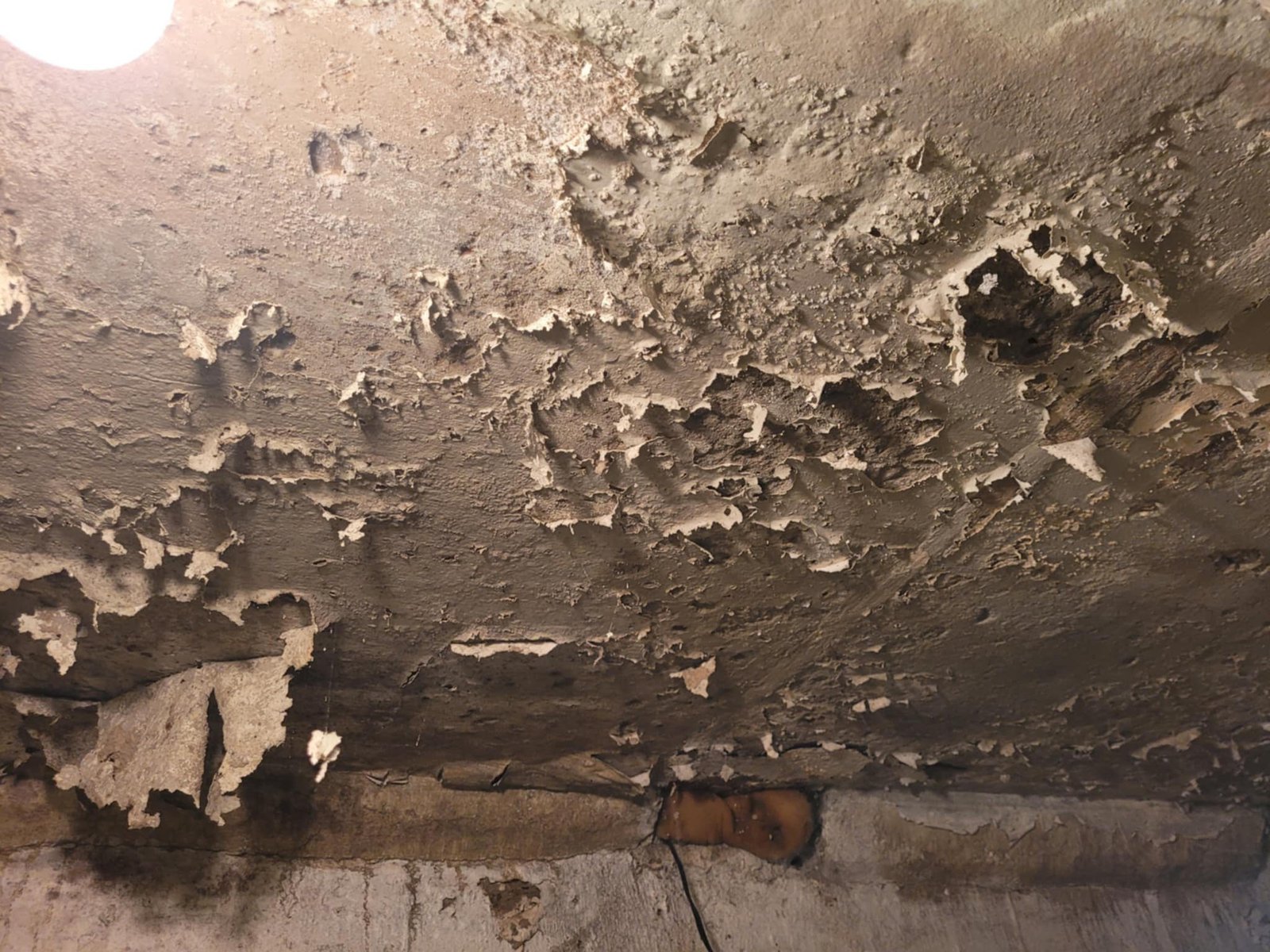
A brown ring on the ceiling is rarely just a cosmetic problem. By the time staining, peeling paint, or a soft patch becomes visible, water may already be moving through insulation, framing, drywall, electrical fixtures, and the floor above. To stop ceiling leak damage, act on the source and the moisture behind the surface – not only the stain you can see.
For homeowners, condo owners, and property managers, the first priority is safety. The second is speed. Water can weaken drywall quickly, create a ceiling-collapse hazard, and support mould growth in as little as 24 to 48 hours when materials stay wet.
Stop Ceiling Leak Damage: Make the Area Safe First
Do not stand directly beneath a sagging, bulging, or dripping ceiling. A water-filled section of drywall can fail without much warning. Move people, pets, furniture, electronics, and valuables away from the affected area. If water is close to a ceiling light, smoke detector, outlet, or electrical panel, turn off power to that area only if it is safe to do so. When in doubt, leave the electrical system alone and call a qualified professional.
Place buckets or waterproof containers beneath active drips. Protect flooring with plastic sheeting or towels around the container, but do not create a slippery walking surface. If the ceiling is visibly ballooning with trapped water, do not puncture it yourself unless you have confirmed the power is off and understand the risk. Controlled water release may reduce the chance of a sudden collapse, but an uncontrolled puncture can spread contaminated water, damage contents, and destabilize already saturated drywall.
Take clear photos and short videos before moving damaged contents or starting cleanup. Document the stain, active dripping, damaged property, and the likely source area. This record can help with insurance reporting and gives restoration technicians a useful picture of how the incident developed.
Find the Source Before You Dry the Ceiling
Drying a ceiling without stopping the water source is a temporary measure at best. The location of the stain does not always identify the location of the leak. Water follows pipes, joists, wiring paths, and low points before it appears below.
If the leak occurs beneath a bathroom, kitchen, laundry room, or mechanical room, stop using fixtures in that area. A failed supply line, loose drain connection, overflowing tub, damaged appliance hose, toilet seal, or leaking shower enclosure may be responsible. Shut off the local fixture valve if you can identify it safely. If water continues to run, turn off the property’s main water supply and arrange emergency plumbing service.
A ceiling leak after rain or snowmelt points to a different set of causes: roof damage, ice damming, flashing failure, clogged eavestroughs, skylight leaks, masonry cracks, or attic condensation. In a condo, water can also originate from another unit, a common plumbing stack, or a building system. Report the issue to property management immediately, particularly when water may be affecting shared elements or neighbouring suites.
A sewage backup or drain-water leak requires a different response. Do not attempt to mop, shop-vac, or dry contaminated water without proper protective equipment and disinfection procedures. Black or grey water can carry harmful bacteria and should be handled as a professional cleanup emergency.
Remove Water Carefully, Then Control Humidity
Once the source is stopped, remove standing water from hard surfaces and dry reachable contents. Use clean towels for a small clean-water leak, changing them often. Lift damp area rugs, move furniture away from wet walls, and open cabinet doors near the affected zone to improve air movement.
Fans and dehumidifiers can help with a minor, contained leak, but they are not a substitute for proper drying when water has entered a ceiling cavity. Aim fans across damp surfaces rather than directly into a compromised ceiling. Avoid blasting heat at wet drywall. Excessive heat can cause materials to warp, crack, or dry unevenly while moisture remains trapped above.
Keep indoor humidity low and monitor the affected area. A musty odour, expanding stain, new bubbling paint, or continued softness means moisture is still present. Surface dryness can be misleading. Drywall, insulation, wood framing, and subflooring may remain wet even when the room feels dry.
Why hidden moisture causes the bigger loss
Ceiling assemblies are layered. Water may soak into insulation above the drywall, travel through joist bays, and settle in wall cavities far beyond the visible stain. Wet insulation often loses its performance and may need removal. Damp drywall can delaminate or support mould growth. Wood framing can dry successfully in many cases, but only if it is exposed, measured, and dried under controlled conditions.
This is why professional restoration teams use moisture meters, thermal imaging, controlled demolition where necessary, air movers, dehumidifiers, and ongoing moisture readings. The objective is not to make the room look dry. It is to confirm that building materials have returned to an acceptable moisture condition before repairs begin.
Know When a Ceiling Leak Needs Emergency Restoration
A small drip from a clearly identified plumbing fitting may be manageable once a plumber repairs the cause. Even then, inspect the ceiling over the next several days. The situation changes quickly when water has spread beyond a small area or the source was active for an unknown period.
Call for emergency restoration support when the ceiling is sagging, water is near electrical components, the leak has soaked insulation or multiple rooms, or the source cannot be found. Fast professional response is also warranted after a burst pipe, roof leak during a storm, appliance failure, sewage incident, or flooding from an upper unit.
Commercial properties should act particularly quickly. Water above a suspended ceiling can affect electrical systems, fire-rated assemblies, tenant spaces, inventory, and business operations. Closing off the wet area, documenting the incident, and starting extraction and drying early can reduce downtime and limit the scope of reconstruction.
For Toronto and GTA properties, CPR24 Restoration provides 24/7 emergency water damage response with IICRC-certified technicians and on-site arrival within 45 minutes. A full restoration response can include inspection, water extraction, moisture mapping, structural drying, sanitization, mould prevention or remediation, and repairs once the area is confirmed dry.
Do Not Cover Up the Evidence of a Leak
Repainting a stain, applying caulking around a ceiling fixture, or installing a new piece of drywall before drying is complete often creates a larger problem later. Paint may hide the discolouration for a while, but it does not stop moisture, remove contaminated insulation, or correct the failed pipe, roof, drain, or building component.
Be cautious with bleach as well. It is not a complete mould-removal method for porous materials such as drywall, insulation, or unfinished wood. If mould is visible or there is a persistent odour after a leak, the affected materials and the source of moisture need proper assessment. The right approach depends on the extent of contamination, the materials involved, and whether moisture has moved into concealed spaces.
Insurance communication matters, but do not wait for an adjuster before taking reasonable steps to prevent further damage. Protecting the property, stopping the water, and documenting the condition are generally sensible first actions. Keep receipts for emergency services, temporary protective measures, and damaged-item replacement where applicable.
Prevent the Next Ceiling Leak
Prevention is usually less dramatic than the emergency, but it is where many repeat losses are avoided. Inspect appliance hoses, under-sink connections, toilet supply lines, and visible plumbing periodically. Replace aging rubber hoses with higher-quality braided lines where appropriate, and know where the main water shutoff is located.
For roof-related risks, keep eavestroughs and downspouts clear, address missing shingles or damaged flashing promptly, and have attic ventilation and insulation reviewed if you see winter condensation or ice damming. In condos and multi-unit buildings, report recurring stains promptly even if they appear to dry out. A repeating ceiling mark is a warning that the underlying source was never fully corrected.
The safest response is simple: stop the water, protect people and property, dry beyond the visible surface, and repair only after moisture is confirmed under control. A fast, measured response today can prevent a ceiling stain from becoming a collapse, mould, or major reconstruction claim tomorrow.