

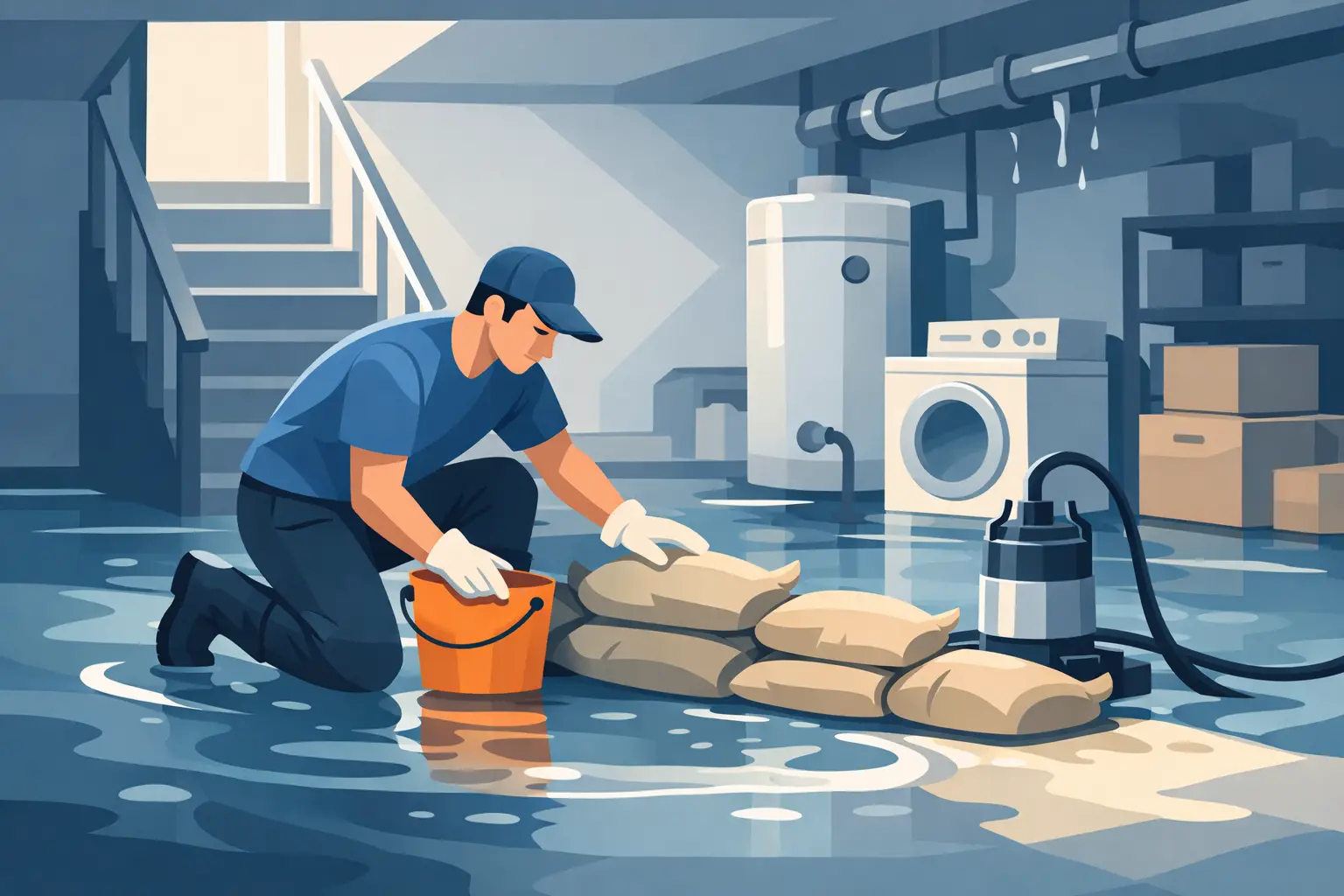
Water on a basement floor can move from a manageable cleanup to damaged drywall, warped finishes, contaminated contents, and mould growth in a matter of hours. Knowing how to handle basement flooding means making the right safety decisions first, then stopping the source and getting the space professionally dried before moisture becomes a larger restoration problem.
For homeowners, condo owners, landlords, and commercial property operators in Toronto and the GTA, the priority is not simply removing visible water. The priority is protecting people, preventing further damage, and ensuring hidden moisture does not remain behind walls, under flooring, or inside insulation.
First, make the area safe
Do not enter a flooded basement if the water may have reached electrical outlets, appliances, a furnace, or an electrical panel. Shut off power to the affected area only if you can do so without stepping into water. If there is any doubt, stay out and contact an electrician or emergency restoration professional.
Floodwater can also be contaminated. A sewer backup, overflowing toilet, or water entering from outdoors may contain bacteria, chemicals, and other harmful material. Keep children and pets away, wear waterproof boots and gloves if entry is safe, and avoid touching the water unnecessarily. If sewage is involved, do not attempt a standard household cleanup. Contaminated water requires controlled removal, sanitation, and disposal of affected porous materials.
If the flooding is severe, water is still rising, or the source cannot be safely stopped, call for emergency help immediately. Fast action limits the amount of building material that absorbs water and reduces downtime for tenants or businesses.
Stop the water source if possible
The next step depends on where the water is coming from. A burst supply line, failed appliance hose, leaking water heater, or overflowing fixture may require shutting off the property’s main water valve. If the problem is limited to one appliance or fixture, use its local shutoff valve when available.
For storm-related flooding, the source may be groundwater, a blocked drain, a failed sump pump, or water entering through foundation cracks or window wells. You may not be able to stop incoming water immediately, but you can prevent additional indoor water use from worsening the situation. Do not flush toilets, run laundry, or use sinks if you suspect a sewer backup.
Take a few photos or short videos before moving items, provided it is safe to do so. Record the water level, visible source, damaged finishes, and affected belongings. This documentation can help with an insurance claim and gives restoration technicians a clear record of the initial conditions.
How to handle basement flooding without spreading damage
Once the area is safe and the source is controlled, remove standing water as quickly as possible. Small amounts of clean water may be manageable with a wet-dry vacuum, mop, or pump. Empty the collected water away from the foundation, not into a drain that may be blocked or backing up.
For anything more than a minor spill, professional extraction is the safer choice. Shop vacuums and household fans are not designed to dry structural cavities, soaked insulation, subfloors, or flooring assemblies. They can make a basement look dry while moisture remains trapped where mould can grow.
Move furniture, boxes, area rugs, and stored belongings out of wet areas if they can be handled safely. Place furniture on blocks or aluminium foil to reduce contact with damp flooring. Avoid dragging saturated items across dry areas, as this can spread dirty water and contaminate more of the property.
Do not make quick decisions about discarding every wet item. Some contents, including solid wood furniture, metal items, certain documents, and non-porous belongings, may be recoverable with proper cleaning and drying. On the other hand, soaked cardboard, particleboard furniture, mattresses, upholstered materials, and wet insulation often cannot be restored safely, particularly after sewage exposure.
Identify the type of water involved
The water category affects both the health risk and the cleanup process. Clean water may come from a broken pipe or overflowing sink supply. Grey water may come from appliances or fixtures and can contain contaminants. Black water includes sewage, toilet overflow with waste, and floodwater that has entered from outside. It must be treated as hazardous.
A clean-water incident can become contaminated if it sits too long or contacts dirty surfaces. That is one reason delays matter. Water that remains in a finished basement can soak into drywall, baseboards, insulation, laminate flooring, and framing. What begins as a pipe leak may require more extensive removal and remediation after a day or two.
Never use a regular household vacuum on standing water. Do not use fans if sewage-contaminated water is present, as uncontrolled airflow can spread contaminants. Avoid mixing cleaning products, especially bleach with ammonia or other chemicals. These combinations can produce dangerous fumes.
Begin proper drying, not just surface cleanup
Extraction is only the first phase. Effective basement flood cleanup requires controlled drying, humidity management, moisture monitoring, and, when needed, removal of materials that cannot be dried to a safe standard.
Professional restoration teams use commercial extractors, air movers, dehumidifiers, moisture metres, and thermal imaging to locate water beyond what is visible. This matters in finished basements, where water can travel beneath flooring, behind walls, into cabinets, and through insulation. A dry-looking carpet or wall is not proof that the assembly is dry.
Drying should be measured, not guessed. Technicians compare moisture readings in affected materials with unaffected areas, then adjust equipment until structural materials reach acceptable levels. If drywall has wicked water upward, technicians may need to remove a controlled section to expose wet insulation and framing. This can feel disruptive, but retaining saturated materials often creates a more expensive mould and reconstruction problem later.
When dealing with contaminated water, cleaning and sanitization must follow removal of unsalvageable porous materials. The affected area may also need antimicrobial treatment and air filtration before repairs begin.
Protect your insurance claim and your property
Contact your insurer as soon as practical and ask what documentation they require. Keep photos, videos, a written timeline, receipts for emergency expenses, and a list of damaged contents. Do not throw away major damaged items until your insurer has advised you or they have been documented, unless they present an immediate health or safety risk.
Your policy may treat sewer backup, overland flooding, and plumbing failures differently. Ask about deductibles, coverage limits, and whether the insurer requires a preferred vendor. Even when an insurer is involved, you should expect a clear scope of work that explains extraction, drying, cleaning, demolition, mould control if required, and reconstruction.
For condo owners and property managers, notify building management quickly. The water source may affect common elements, neighbouring suites, electrical systems, or shared drainage infrastructure. Commercial operators should also document business interruption, inventory losses, and affected equipment while maintaining safe access controls around the damaged area.
Know when to call an emergency restoration team
A professional response is warranted when there is more than a small amount of water, water has reached finished materials, the source is unknown, sewage is involved, or the basement has been wet for several hours. It is also the right call when you smell mustiness, see staining or bubbling paint, or suspect water has travelled behind walls.
CPR24 Restoration provides 24/7 emergency flood cleanup across Toronto and the GTA, with IICRC-certified technicians equipped to extract water, assess hidden moisture, dry affected areas, sanitize contamination, remove mould where necessary, and complete repairs. A coordinated response avoids the gaps that can occur when cleanup and reconstruction are handled separately.
Reduce the chance of another basement flood
Once the basement is dry and repairs are complete, address the cause rather than treating the incident as a one-time event. Have sump pumps tested, maintain eavestroughs and downspouts, keep exterior grading sloped away from the foundation, and inspect plumbing hoses and valves regularly. If water entered through cracks, window wells, or drainage failures, a waterproofing assessment may be necessary.
Consider a battery backup for a sump pump where power outages are common during storms. Backwater valves can also help protect properties in areas vulnerable to sewer backup, though the right solution depends on the building’s plumbing layout and municipal requirements.
A flooded basement is stressful, but the next few hours shape the outcome. Keep people safe, stop the source where you can, document the damage, and bring in qualified help before hidden moisture turns an emergency cleanup into a long-term property problem.