

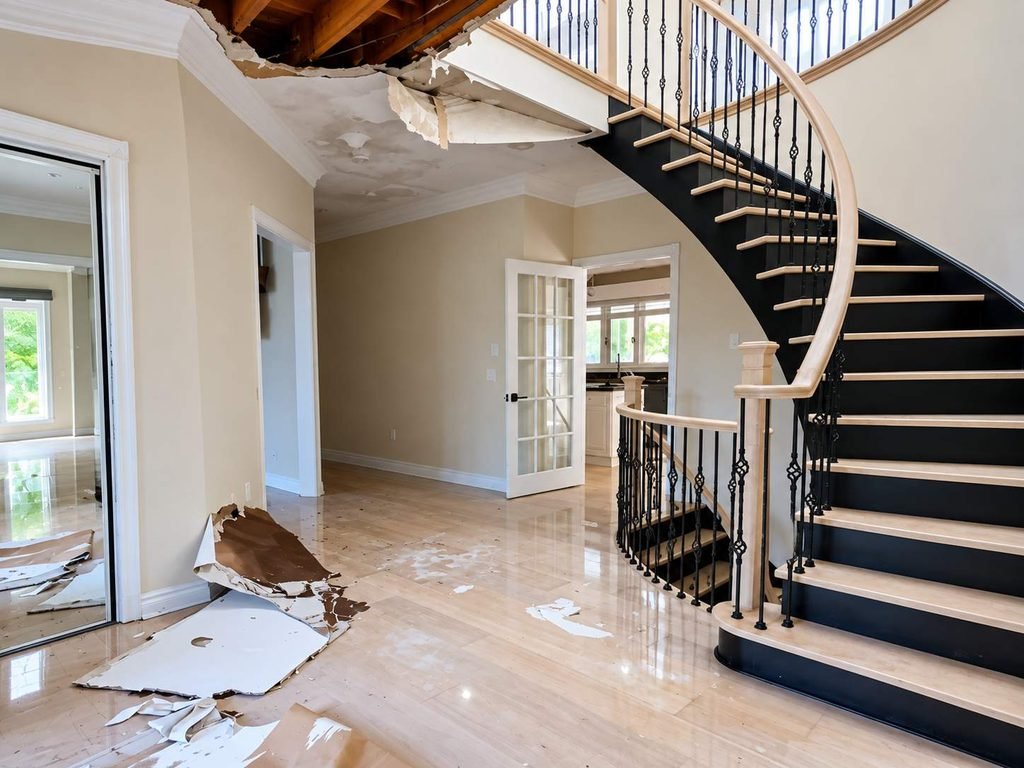
Why Use the Same Contractor for Mitigation and Restoration
Many property owners overlook a critical decision after experiencing damage: choosing the same contractor to handle mitigation and restoration. Water damage and freezing account for roughly one in four homeowners’ insurance claims in the United States. Time becomes critical at the moment disaster strikes. The EPA recommends drying water-damaged materials within 24 to 48 hours to prevent mold growth. Many homeowners hire separate companies to handle emergency mitigation and reconstruction. This creates delays and increases costs. A month of displacement versus six months can cost 10 to 20 times more. We’ll show you how one contractor for mitigation and repairs can save time and money. It also makes your recovery process simpler. What happens when you split mitigation and reconstruction between contractors Splitting mitigation and reconstruction between different contractors creates problems. Property owners lose both time and money. The handoff between companies introduces gaps that turn routine claims into disputed ones. The scope gap: why the second contractor starts from scratch The second contractor cannot trust a scope it did not build, so it starts over. On an occupied multifamily water loss, one contractor began mitigation but did not finish it. A second contractor then came in. That contractor spent two to three weeks on investigative cuts. It opened the double-layer corridor drywall and the demising walls at the start. Then came roughly another month going back and forth with insurance and consultants to rebuild the scope. The estimated result was three to six months of lost time. A scope gap indicates that you still need to do work. No contractor includes it in their scope of work. The mitigation crew opens walls without thinking over the rebuild cost, because rebuilding is not their job. Walls come open that could have stayed closed. They pull up flooring that would have dried in place. Someone tears out the materials before anyone tests them. Roughly 80 percent of commercial water mitigation projects end up requiring a full rebuild. Four of five water losses become reconstruction anyway, so treating mitigation as a standalone cleanup is the wrong approach. The team loses documentation during the handoff Your claim is only as strong as the file behind it. Moisture readings, timestamped photos and affected-area maps prove the loss to the carrier. The job moves from one vendor to another, and that file often does not move with it. Restoration companies create line-item estimates using claims software like Xactimate. They also use moisture maps with daily readings. They provide photos with timestamps that match the loss timeline. They include containment and clearance reports. Without this documentation, delays hit supplements, teams cut scopes, and homeowners cover the gaps out of pocket. How one contractor from emergency through rebuild saves time One mitigation and repair contractor changes the whole timeline by removing the handoff gap. The same team handles both phases. The project shifts from emergency response to rebuilding, without delays from switching vendors. No waiting period between mitigation and reconstruction The gap between mitigation and reconstruction, when using separate contractors, can last weeks in simple home claims. It can take even longer in complex claims or during high regional demand. The difference comes down to authorization and scheduling. A single restoration company has approvals in place and materials ordered before the last dehumidifier gets unplugged. Reconstruction planning starts during the drying process The estimator starts building the reconstruction scope while the building dries. One restoration company CEO explains it like this. “When you plug in the first dehumidifier, you start writing the rebuild estimate.” At the time the last piece of equipment unplugs, the drywall starts going back up”. The drying fans were still running on one project. The project manager met with the homeowner to select a new ceiling texture. They also chose matching paint. Water damage mitigation runs 3-5 days. The contractor’s home repair team checks the damage. They work with insurance. They get approvals. They order materials within 3 to 5 days. The parallel timeline eliminates weeks of idle time. Faster return to occupancy for your property Faster project starts translate to faster move-in dates. Commercial properties face lost rent, lost patient visits, or lost foot traffic with every week a building sits closed. Displacement costs accumulate daily for residential properties. A mitigation and construction company with in-house carpenters and construction managers finishes projects faster than industry standards. It reduces downtime by planning reconstruction schedules. The cost savings of using the same mitigation and repair contractor Financial impact drives decisions. Keeping one contractor for the entire home repair project delivers measurable savings in several areas. Vacancy costs add up faster than you think Every day a property sits unoccupied drains capital. Standard home insurance policies stop covering vacant properties after just 30 days. Owners who need extended coverage face premiums up to 50% higher, often with reduced protection. Vacant properties require ongoing maintenance budgeted at roughly 1% of the property’s value each year just for upkeep. Commercial properties face rent loss, which compounds quickly when reconstruction delays stretch weeks into months. Faster project completion means lower displacement costs and quicker return to generating income or living your life. Avoiding duplicate assessments and inspections Hiring individual trades means verifying each contractor’s insurance and WSIB clearance separately. Each inspection costs time and money. A mitigation and construction company completes all assessments once, with one insurance verification process and one set of permits. We eliminate duplicate inspections, which removes redundant labour costs that would otherwise appear in multiple vendor contracts. Better pricing through optimized project management Project management finds efficiencies that reduce costs through accurate construction budgets, regular spending reviews and cost savings opportunities throughout the restoration process. Setting deadlines reduces costs, and job sites with logical workflow minimize waste. A single restoration company Toronto manages resources more efficiently than coordinating separate vendors. You can save 15-25% by avoiding a general contractor’s markup. Hire individual trades instead. A mitigation and repair contractor can still coordinate the work. You get coordination without the markup penalty. One invoice