

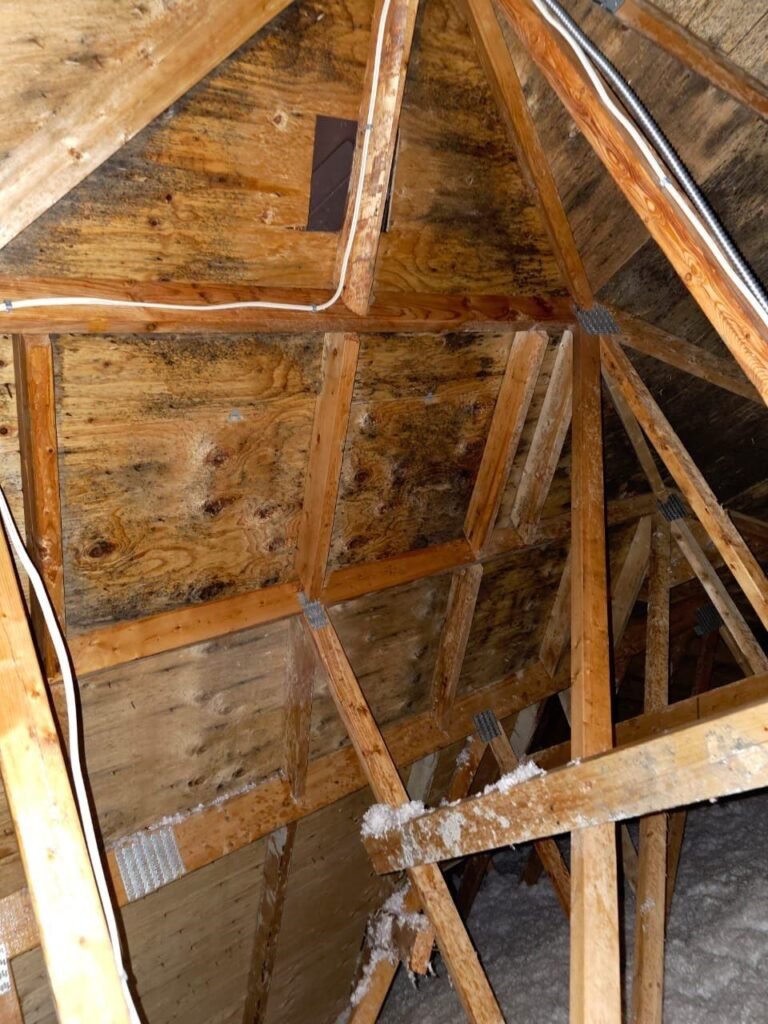
How Toronto Winters Cause Attic Mold in North York Homes
Canadian winters are the main season for attic mold, a fact that surprises many North York homeowners. Health Canada considers indoor mold growth a serious health hazard, especially when it develops in hidden attic spaces. Temperature differences between indoor and outdoor spaces can create ideal conditions for attic mold. North York homeowners often find it during colder months. Additionally, Toronto has frequent freeze-thaw cycles in winter. Heavy snowfall is also common. Ice damming can occur. Long periods of freezing weather make attic mold problems more likely. Condensation forms and creates moisture buildup when warm indoor air meets freezing roof decking. Furthermore, this repeated condensation cycle allows moisture to remain trapped inside attic materials for extended period. Winter activities like cooking, showering, using humidifiers, and drying clothes indoors raise indoor humidity. This can worsen the problem. Older homes in North York, Toronto, Vaughan, Scarborough, and nearby GTA communities face higher mold risks. These risks come from old insulation, poor attic airflow, aging roofs, and weak ventilation. In many cases, older insulation and poor attic ventilation make these homes more prone to mold in winter. If left untreated, attic mold can spread quickly throughout insulation, roof sheathing, rafters, ceiling cavities, and ventilation systems. Homeowners often require professional attic mold removal North York services once contamination spreads behind surfaces. In many cases, mold growth remains hidden for months before visible warning signs begin to appear inside the home. This guide explains: Why Toronto Winters Create Perfect Conditions for Attic Mold Temperature Differences Between Indoor and Outdoor Spaces Winter creates a major temperature battle inside North York homes. People typically maintain indoor living spaces around 20–22°C while outdoor temperatures drop well below freezing. As Toronto winters get colder, warm indoor air meets freezing attic surfaces, making the contrast even stronger. Meanwhile, fluctuating outdoor temperatures throughout Toronto winters continuously increase condensation risks inside poorly ventilated attics. This dramatic contrast creates ideal conditions for: Warm indoor air naturally rises throughout the home carrying moisture from: As a result, moisture buildup inside attic spaces can increase rapidly during colder months. That warm, moisture-filled air eventually reaches the attic. When it contacts freezing roof sheathing, condensation forms almost immediately. Over time, repeated freeze-thaw cycles create persistent moisture buildup that supports mold growth. Consequently, even small amounts of trapped humidity can lead to serious attic mold. North York homeowners may not notice it right away. This is one of the leading causes of winter humidity mold problems Toronto homeowners deal with every year. How Cold Roof Surfaces Trigger Mold Growth Condensation works similarly to water forming on a cold glass during summer. Warm humid air rises into the attic and contacts: In other words, the colder the roof surfaces become, the greater the likelihood of condensation forming throughout the attic. Water droplets form on these cold surfaces and soak into wood materials. Consequently, repeated condensation cycles create the perfect environment for mold spores to spread across attic surfaces. Without proper airflow or ventilation, moisture stays trapped in the attic for long periods. This lets mold spores grow on surfaces quickly. Furthermore, trapped moisture may remain inside insulation and wooden framing for extended periods. Over time this leads to: Even newer homes in Toronto can experience severe attic mold if ventilation systems are inadequate. Similarly, homes with newer insulation can still develop mold if homeowners do not control airflow and humidity. Common Causes of Attic Mold in North York Homes Poor Attic Ventilation Attic ventilation problems Toronto homeowners experience are one of the biggest contributors to mold growth. Many attics lack: For example, blocked soffit vents and insufficient ridge ventilation often prevent humid air from escaping properly. Moreover, blocked ventilation pathways often prevent trapped moisture from escaping during long winter periods. Without airflow, humid air becomes trapped and condensation develops continuously throughout winter. Because of this, many homeowners eventually require professional attic mold removal North York services. Professional mold specialists North York homeowners trust often discover ventilation failures during mold inspection North York services. As a result, many homeowners are surprised to learn this. Ventilation problems are a leading cause of attic mold growth. Attic Insulation Problems Attic insulation mold problems develop when insulation traps moisture against roof sheathing. Compressed, outdated, or improperly installed insulation reduces airflow and creates cold spots where condensation forms. Moisture trapped inside insulation becomes an ideal environment for: Additionally, wet insulation may contribute to higher indoor humidity levels and reduced energy efficiency throughout the winter. Wet insulation also loses effectiveness, increasing heating costs and worsening moisture buildup. Bathroom Exhaust Fans Venting Into the Attic One of the most common causes of attic mold North York homeowners overlook is improperly vented bathroom fans. Bathroom exhaust fans should vent outdoors — never into attic spaces. When warm humid bathroom air is released into the attic: Because of this, moisture levels inside the attic can rise rapidly after showers or baths during colder months. Unfortunately, builders did not originally design many older Toronto homes with proper modern ventilation systems. This often leads to emergency mold removal North York situations during winter months. Air Leaks From Ceilings and Pot Lights Small gaps in ceilings allow humid air to rise into the attic continuously. Common leakage points include: These leaks contribute heavily to: For this reason, professional inspections often focus heavily on identifying hidden ceiling penetrations and airflow leaks. Even small air leaks can create significant moisture problems over time. Even tiny openings can allow significant moisture movement during cold weather. What Does Attic Mold Look Like? In many cases, homeowners do not notice attic mold until odors or ceiling stains begin appearing inside the home. Black Mold on Roof Sheathing Mold removal North York services are commonly needed when homeowners notice: Black mold often spreads across: In fact, many homeowners initially mistake black mold staining for dirt or normal aging on roof materials. Many homeowners searching mold removal services near me only discover the issue after noticing odors inside the home. White Mold on Insulation White mold appears