

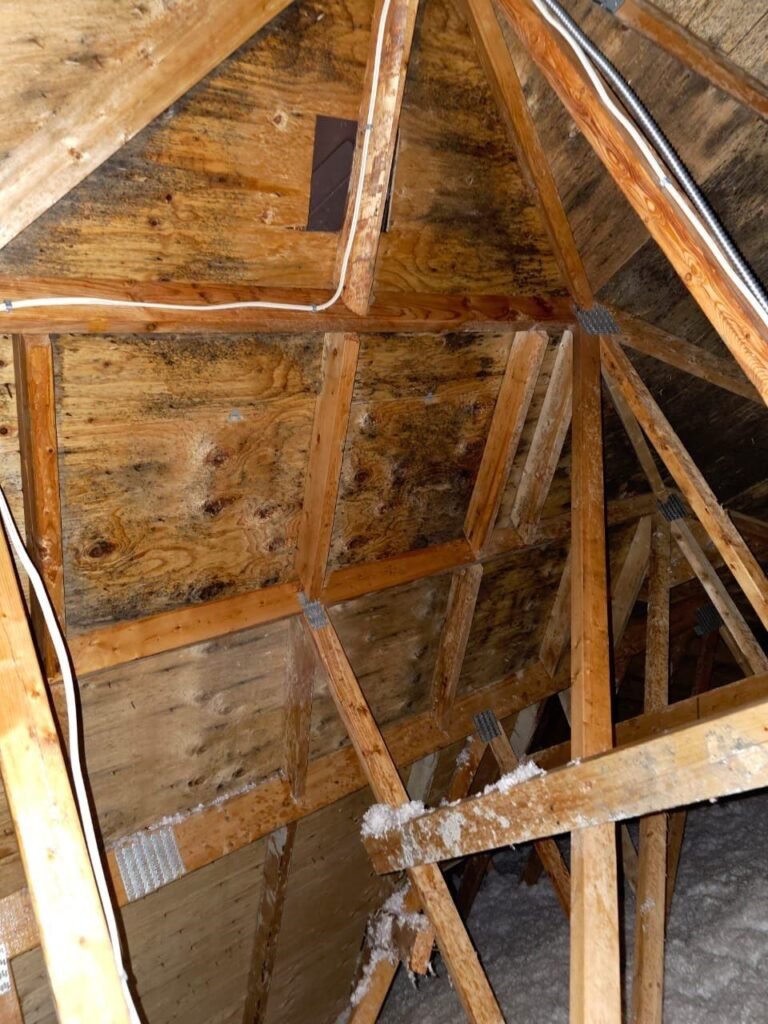
Check Your Attic for Mold Yearly
Attic mold can grow unseen for months before you notice any signs or symptoms. Health Canada has concluded that indoor mold growth may pose a health hazard. People affected experience eye and throat irritation, coughing, and respiratory issues. Even more concerning, mold will begin to grow within 48 hours in areas with excessive moisture. Annual attic mold inspections help you catch problems early. They can also help you avoid costly removal later. If you wonder how to spot mold in your attic, learn the signs. Mold in attics often grows silently because of hidden moisture issues. Many homeowners don’t realize they have attic mold until it begins affecting insulation, air quality, and structural components. This piece will explain why you should check your attic for mold each year. It will cover what causes attic mold. You will learn the signs of attic mold to watch for. It will also show you how to check your attic for mold yourself. Finally, it will share attic mold prevention strategies that work. Why you should check your attic for mold every year Annual attic inspections help you spot mold before it becomes a financial and health burden. Wait too long and a manageable issue changes into extensive damage that affects your wallet, wellbeing, and property value. Prevents costly structural damage Attic mold weakens wooden components in your home over time. Rafters, roof sheathing, and support beams absorb moisture and can start breaking down. This can happen after long exposure to mold growth. If left untreated, mold in attic areas can spread deeper into structural materials, leading to more extensive damage. Mold can also affect insulation, especially in attic insulation, reducing its effectiveness and overall R-value. This makes your heating and cooling systems work harder. It can raise energy use and reduce comfort across your home. Early detection and proper attic mold removal help prevent long-term structural issues.Protects indoor air quality and health Mold spores don’t stay confined to your attic. They travel through air movement pathways and ventilation systems into your living spaces. Homes with visible attic mold often show elevated mold spore levels indoors. Exposure can trigger a range of health concerns, including: Eye, nose, and throat irritation Coughing and wheezing Skin rashes and dermatitis Headaches and fatigue Aggravated asthma symptoms Children, elderly individuals, and those with weakened immune systems face greater risks. Certain mold species, especially Stachybotrys chartarum (black mold in attics), can produce mycotoxins. With long exposure, these toxins may cause serious breathing and nervous system effects. Maintains home value Attic mold can significantly impact your property’s value and marketability. Buyers are often hesitant to buy homes with mold history. Disclosure laws require sellers to report any known mold issues. Attic mold can lower appraisals and increase time on the market. It can also lead to more negotiation pressure. Addressing mold early with professional remediation and removal protects your investment. It also keeps your home attractive to potential buyers.Catches problems before they spread Early detection stops mold from expanding to adjacent areas through walls, ducts, and other cavities. Once mold takes hold, it spreads fast when moisture stays hidden. Yearly checks help you find and fix moisture sources before colonies grow and release mycotoxins into your home’s air. Address the moisture source first to prevent recurrence. This represents the most important and often least expensive step in attic mold prevention. What causes attic mold Moisture problems create mold problems. Understanding what causes mold is key to preventing it before colonies establish themselves. Homes across the GTA often face attic mold in Toronto. Seasonal humidity, poor ventilation, and changing temperatures are common causes. This leads to moisture buildup and often results in mold in insulation attic areas. Roof leaks and water intrusion Water seepage through compromised roofing creates localized mold growth near leak points. Flashing around chimneys, vents, and plumbing stacks deteriorates over time and allows moisture penetration. Roof valleys where two planes meet are especially susceptible to leaks. Missing or damaged shingles also permit water entry after storms. Even small amounts of water create ideal conditions for mold on wood surfaces and insulation. Poor ventilation and blocked vents Blocked or insufficient ventilation is the most common cause of attic mold. Attics need passive airflow where outside air enters through soffit vents, warms up, and escapes through ridge or can vents at the top. The ventilation cycle stops once soffits get blocked with insulation. Stagnant, humid air then condenses along cold wood sheathing in winter and causes wet conditions and subsequent mold growth. Building codes require one square foot of venting per 100 square feet of attic space. Condensation from temperature differences Warm indoor air rises into cold attic spaces. It condenses on roof surfaces. This happens most often during winter at the time temperature differences are greatest. Cold surfaces attract water vapor and create droplets on roof decking, nails, and framing. Repeated condensation cycles feed mold growth night after night. Improperly vented bathroom fans Bathroom fans must vent outdoors, not into attics. Fans that discharge into attic spaces pump concentrated humid air from showers and baths onto cold surfaces. This moisture accumulation substantially accelerates mold development. Missing or disconnected ductwork creates the same problem. Insufficient or damaged insulation Inadequate insulation allows warm, moist air to escape into attics more readily. Gaps, compressed areas, or missing coverage increase air movement between living spaces and attics. This escaping heat causes condensation on cold roof sheathing. Proper insulation coverage slows conditioned air loss and reduces moisture migration. Signs of mold in attic Warning signs help you identify mold before it escalates into a bigger problem. Attic mold often grows hidden behind insulation or along roof decking, but several telltale indicators announce its presence. Musty or mildew odors Dark spots or discoloration on wood Water stains and moisture damage Condensation on surfaces Allergy symptoms after attic visits These are key indicators when learning how to tell if you have mold in your attic. How to check attic for mold Start your inspection at