

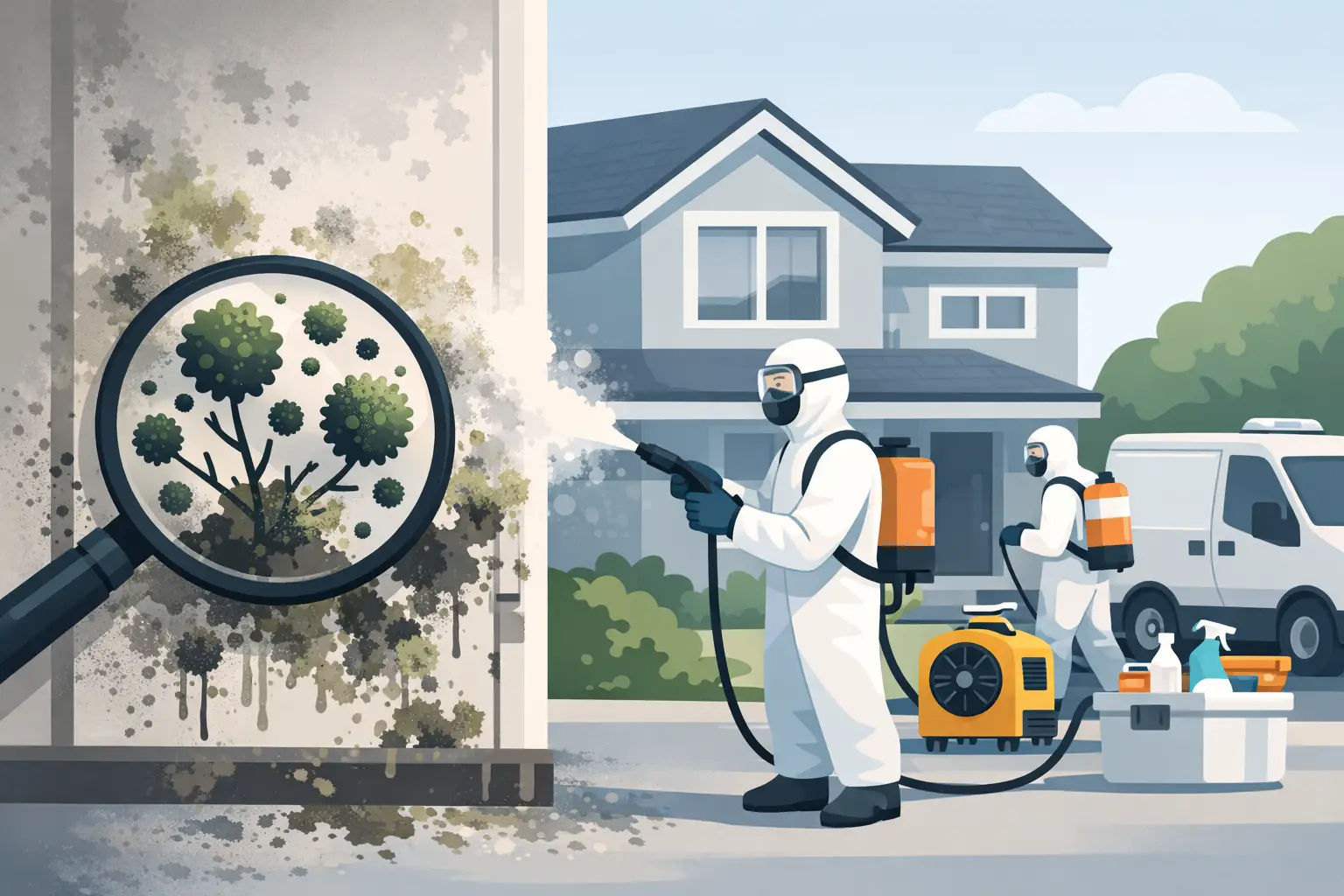
A small patch behind a basement shelf can turn into a much bigger problem than most property owners expect. When moisture sits unnoticed in drywall, insulation, wood framing, or under flooring, mold keeps spreading long after the original leak or flood seems gone. That is why mold removal Oakville homes require should never be treated as a cosmetic cleanup job.
Mold is a moisture problem first and a building problem second. If the source is not found and corrected, wiping the surface or painting over the stain only buys time. In many cases, it also lets contamination move deeper into the structure, where repairs become more disruptive and more expensive.
Why mold in homes escalates quickly
Mold does not need a major flood to grow. A slow pipe leak, a damp basement corner, attic condensation, poor bathroom ventilation, or water entering through foundation cracks can be enough. In Oakville homes, seasonal humidity shifts, finished basements, and tightly sealed interiors can all make hidden moisture harder to spot until odours or staining appear.
Once growth starts, mold releases spores into the air. Those spores can spread through the affected room and into nearby areas through air movement, HVAC systems, and everyday activity. What looks like an isolated patch in one closet may be connected to a larger issue behind the wall.
This is where timing matters. The longer the contamination sits, the greater the chance of damage to drywall, wood, insulation, and soft contents. For property owners, that means higher restoration costs, more material removal, and a greater chance that occupants will notice air quality issues.
Signs mold removal Oakville homes often need
Not every mold problem announces itself with black spotting on drywall. Some of the most serious cases stay hidden until the smell becomes obvious or building materials begin to soften.
A persistent musty odour is one of the most common warning signs. If that smell gets stronger after rain, during humid weather, or when the HVAC system runs, moisture may still be active somewhere in the property. Discolouration on ceilings, bubbling paint, warped baseboards, peeling wallpaper, and damp carpeting can also point to concealed growth.
In basements, watch for staining near exterior walls, around sump systems, under laminate flooring, and behind stored belongings. In attics, mold often forms where ventilation is poor or where insulation problems create condensation. In bathrooms and laundry rooms, repeated steam exposure and limited airflow often feed surface and hidden growth.
It also depends on the age and layout of the property. Older homes may have long-standing moisture entry points, while newer builds can still develop mold from poor ventilation, window condensation, or plumbing failures. Condo owners may see mold near fan coil units, windows, or after leaks from adjacent units.
Why DIY mold cleanup often falls short
Many property owners try bleach, sprays, or household cleaners first. That can remove staining from some non-porous surfaces, but it does not solve a deeper contamination issue in porous materials like drywall, insulation, wood, carpet underlay, or ceiling texture.
There is also a containment problem. Disturbing mold without proper controls can send spores into clean areas of the property. A simple scrub-and-bag approach may spread contamination through hallways, vents, or adjoining rooms. The result is a home that looks cleaner while air quality gets worse.
The right response depends on the extent of growth, the materials affected, and whether the moisture source is active. Small surface mildew in a well-ventilated bathroom is different from basement mold following a foundation leak or attic mold tied to ventilation failure. Treating both situations the same way is where people lose time.
What professional mold removal should include
Effective remediation is a controlled process, not just a cleaning visit. The first step is identifying where the moisture came from and whether it is still present. Without that, the problem is likely to return.
A proper assessment should identify visible damage, suspect hidden areas, and the category of materials affected. Moisture detection equipment helps trace wet zones behind walls, under flooring, and inside structural cavities. Where needed, testing and air quality checks can help define the scope, especially when contamination is concealed or occupant symptoms have become a concern.
Containment comes next. Affected sections should be isolated to limit spore movement during demolition and cleanup. Negative air pressure, HEPA-filtered equipment, and safe removal procedures matter here. Cutting corners during this phase creates cross-contamination and can turn a local issue into a whole-property cleanup.
Then comes removal of unsalvageable materials, cleaning of salvageable structural surfaces, drying, sanitization, and verification that the area is ready for repair. In many cases, this is where a full-service restoration company has a practical advantage. Once remediation is complete, damaged drywall, trim, insulation, paint, and other finishes can be rebuilt without handing the project off to multiple contractors.
The areas where mold is most often found
Basements lead the list for a reason. Below-grade walls, minor seepage, poor drainage, sump failures, and past flooding make them a common source of hidden growth. Finished basements are particularly vulnerable because insulation, framing, flooring, and drywall can trap moisture out of sight.
Attics are another frequent problem area. Warm interior air rising into a poorly ventilated attic can create condensation on roof sheathing and framing. Homeowners sometimes mistake this for a roof leak when the real issue is ventilation imbalance or insulation gaps.
Bathrooms, kitchens, laundry areas, and utility rooms also deserve attention. These spaces generate regular humidity and often contain plumbing connections that can fail slowly. A tiny drip under a sink cabinet or behind a washing machine can feed mold for months before anyone notices.
Commercial and multi-unit properties have their own risks. Shared walls, roof penetrations, mechanical rooms, and tenant reporting delays can all allow moisture to spread before management sees the full extent of the issue.
Health concerns and occupancy decisions
Not every mold exposure affects people the same way. Some occupants may notice little more than an odour, while others experience irritation, coughing, headaches, or worsening allergy and asthma symptoms. Children, older adults, and people with respiratory conditions are often more sensitive.
That does not mean every mold issue requires vacating the property, but it does mean decisions should be based on scope and location. If contamination is widespread, if HVAC systems are involved, or if vulnerable occupants are present, a faster and more controlled response is the safer path.
For landlords and property managers, there is also a duty-of-care issue. Delaying remediation after visible signs or tenant complaints can increase repair costs and create avoidable risk around indoor air quality and habitability.
When speed matters most
Mold growth after water damage can begin quickly, especially in enclosed areas with poor airflow. That is why response time matters after flooding, burst pipes, sewer backups, appliance leaks, or roof water entry. The first goal is stopping the moisture source. The second is drying the structure before secondary damage spreads.
If a property already has visible growth, speed still matters because the contamination does not stay fixed in one place. The sooner the area is assessed, contained, and remediated, the better the chance of limiting demolition and preserving nearby materials.
For owners dealing with an active leak or recent flooding, it makes sense to use a restoration team that can handle extraction, drying, mold remediation, and repairs under one scope. That reduces delays between trades and helps keep the recovery process moving. CPR24 Restoration approaches mold work this way because moisture control and remediation cannot be separated if the goal is a lasting result.
How to reduce the chances of mold returning
Prevention is rarely about one product or one quick fix. It comes down to moisture control. Keep indoor humidity in a reasonable range, repair leaks promptly, maintain basement drainage systems, and make sure bathrooms, kitchens, and laundry areas vent properly.
If your property has had a previous flood or leak, pay attention to what was done afterward. Drying that stops too early can leave moisture trapped behind walls or under floors. That hidden moisture is one of the most common reasons mold returns after a repair that looked complete on the surface.
Regular inspections also help. Check under sinks, around windows, near foundation walls, in attic spaces, and around mechanical equipment. If a space smells musty, feels damp, or shows repeated staining, treat it as a moisture warning, not just a cleaning issue.
The right mindset is simple. Mold is not just a stain to remove. It is evidence that the building has been holding water where it should not. The faster that is addressed, the better the outcome for the structure, the indoor environment, and everyone living or working inside it.