

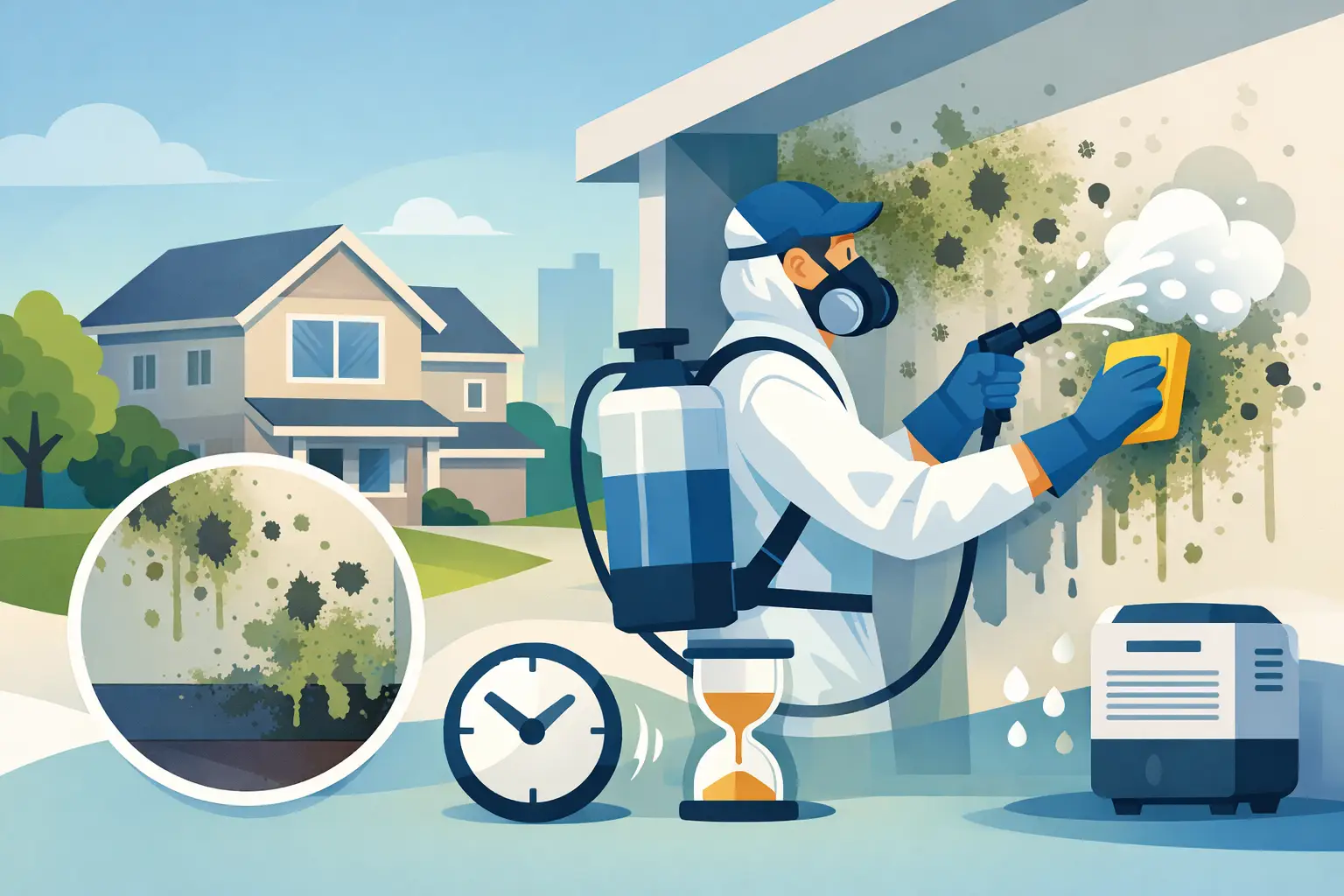
A musty basement after a spring thaw, dark spotting behind a bathroom vanity, or damp drywall following a plumbing leak should not be treated as a cosmetic issue. Mold removal Mississauga homes require is about controlling moisture first, then safely removing contaminated materials before growth spreads into wall cavities, flooring, insulation, and HVAC pathways. Waiting can turn a contained repair into a larger restoration project.
Mississauga properties face familiar moisture pressures: wet basements, seasonal humidity, roof leaks, condensation around windows, appliance failures, and water that migrates from one condo unit to another. Mold can begin growing within 24 to 48 hours when the right moisture and organic material are present. A fast, methodical response protects the property and the people using it.
When Mold Needs Professional Attention
Surface mildew on a small, non-porous area may sometimes be cleaned when the source of moisture has been fully corrected. That does not apply to widespread growth, recurring staining, water-damaged drywall, wet insulation, sewage-contaminated water, or mould that appears after a flood or hidden leak. In those cases, cleaning the visible patch alone does not resolve the problem.
Professional assessment is especially valuable when the affected area is larger than a small isolated spot, when there is a persistent odour without an obvious source, or when occupants report irritation that improves when they leave the building. The goal is not to guess at the extent of contamination. It is to identify where moisture travelled, what materials were affected, and what must be removed or dried to stop regrowth.
Homeowners and property managers should take immediate action if they notice any of the following:
- A musty or earthy odour in a basement, crawlspace, attic, closet, or utility room
- Bubbling paint, swollen baseboards, peeling wallpaper, or warped laminate flooring
- Black, green, grey, or white spotting on drywall, framing, caulking, or stored belongings
- Condensation that repeatedly forms on windows, pipes, or exterior-facing walls
- A recent flood, sewer backup, burst pipe, roof leak, or appliance overflow
Colour alone does not identify the type of mould or the level of risk. The practical concern is whether the material is actively growing, whether it has become airborne or hidden, and whether the moisture source is still active.
Mold Removal in Mississauga Homes Starts With Moisture Control
Mould is a symptom of a water problem. If a technician removes visible growth but a foundation leak, plumbing drip, ventilation failure, or condensation issue remains, the mould can return. That is why a proper remediation plan begins with inspection and moisture detection rather than immediate demolition.
Technicians inspect visible areas and use moisture meters, thermal imaging, and humidity readings to trace hidden dampness. A thermal camera can help identify temperature differences associated with wet building materials, but it does not replace direct moisture testing. Results must be interpreted alongside the property’s history, the location of water sources, and the materials involved.
The likely source can vary by area of the home. Basement mould often relates to seepage, failed drainage, high humidity, or past flooding. Attic mould may point to insufficient ventilation, air leakage from the living space, or bathroom fans venting improperly. Bathroom and kitchen mould can come from leaks behind finishes, poor exhaust, or repeated condensation. In condos, moisture may originate in an adjacent unit or a shared building component, which requires prompt documentation and communication with property management.
What a Proper Remediation Process Looks Like
Effective remediation is controlled work, not a quick spray-and-wipe service. The exact scope depends on the size of the affected area, the type of materials involved, and whether contamination is visible or concealed.
Containment protects unaffected rooms
Before disturbed materials are removed, the work area is isolated. This may include sealing openings with containment barriers and using negative air equipment with HEPA filtration. Containment matters because demolition, scraping, and moving damaged materials can release spores and dust into adjacent living spaces.
Occupants may need to avoid the affected area while work is underway. For larger projects, technicians may recommend temporary changes to how the space is used, particularly where bedrooms, HVAC returns, or occupied commercial areas are close to the work zone.
Damaged porous materials may need removal
Drywall, insulation, carpet underpad, ceiling tiles, particleboard, and other porous materials can retain moisture and support growth. If contamination is established within these materials, removal is often safer and more reliable than attempting to clean the surface.
This is one of the key trade-offs homeowners face. Removing a section of drywall can feel disruptive, but leaving compromised material behind may allow hidden mould to continue growing. Non-porous or semi-porous surfaces such as certain framing, concrete, metal, and solid wood may be cleaned when they are structurally sound and can be dried completely. The right decision depends on condition, contamination level, and the ability to verify dryness.
HEPA cleaning and controlled drying finish the job
After removal and cleaning, affected areas are HEPA vacuumed and detailed to reduce remaining dust and spores. Commercial-grade dehumidifiers and air movers are used strategically to dry materials without simply pushing humid air into other rooms. Moisture readings should confirm that the area has reached an acceptable dry standard before rebuilding begins.
Where the situation calls for it, post-remediation assessment or air quality testing can provide additional confirmation. Testing is not necessary for every small, straightforward job, and it should not delay urgent drying or containment. It can be useful where contamination was extensive, where occupants have heightened concerns, or where a condo board, insurer, or commercial tenant requires documentation.
Do Not Cover Up the Evidence
Painting over a stained wall, applying bleach to recurring spots, or running a household fan can make an issue look better temporarily while moisture remains inside the structure. Bleach is also not a dependable solution for porous materials such as drywall, wood, or carpet. It may lighten staining without reaching growth embedded below the surface.
Avoid opening walls or removing mouldy materials without containment if the affected area is significant. Disturbing hidden contamination can spread debris through the home. If water damage occurred recently, avoid using standard household vacuums on wet materials, especially after a sewage backup. Contaminated water requires specialized cleaning and disposal procedures.
Instead, stop the water source if it is safe to do so, protect dry belongings, and document the damage with photos. Do not delay emergency drying while waiting to see whether surfaces dry on their own. Water can migrate beneath flooring and behind baseboards long before there is obvious staining.
Prevention After Mold Remediation
The final repair should address the conditions that allowed mould to grow. In a basement, that may mean correcting drainage, sealing a foundation entry point, improving dehumidification, or replacing water-damaged finishes with suitable materials. In an attic, it may involve ventilation improvements and air sealing. In bathrooms and laundry areas, reliable exhaust ventilation and prompt leak repairs are often the difference between a one-time incident and a recurring problem.
Keep indoor humidity under control, especially during humid summer periods. Use bathroom fans during showers and for a period afterward, ensure dryer vents discharge outdoors, and leave space between stored items and cold basement walls. Inspect under sinks, around appliances, and near windows regularly. Small leaks are less costly to correct before they saturate framing and finishes.
For rental and commercial properties, documented inspections and fast maintenance reporting help protect tenants, reduce business disruption, and create a clearer record if an insurance claim becomes necessary. The earlier moisture is identified, the more options there are to dry and restore rather than replace.
Fast Action Limits Damage
Mould concerns are rarely solved by treating what is visible. The real work is finding the water source, containing the affected area, removing unsalvageable material, drying the structure, and completing repairs without leaving hidden moisture behind. CPR24 Restoration provides 24/7 emergency response across Mississauga and the GTA, with IICRC-certified technicians equipped to manage remediation and reconstruction as one coordinated process.
If a leak, flood, or musty odour has raised concerns in your property, act while the issue is still contained. A timely inspection can turn an uncertain mould problem into a clear restoration plan.