

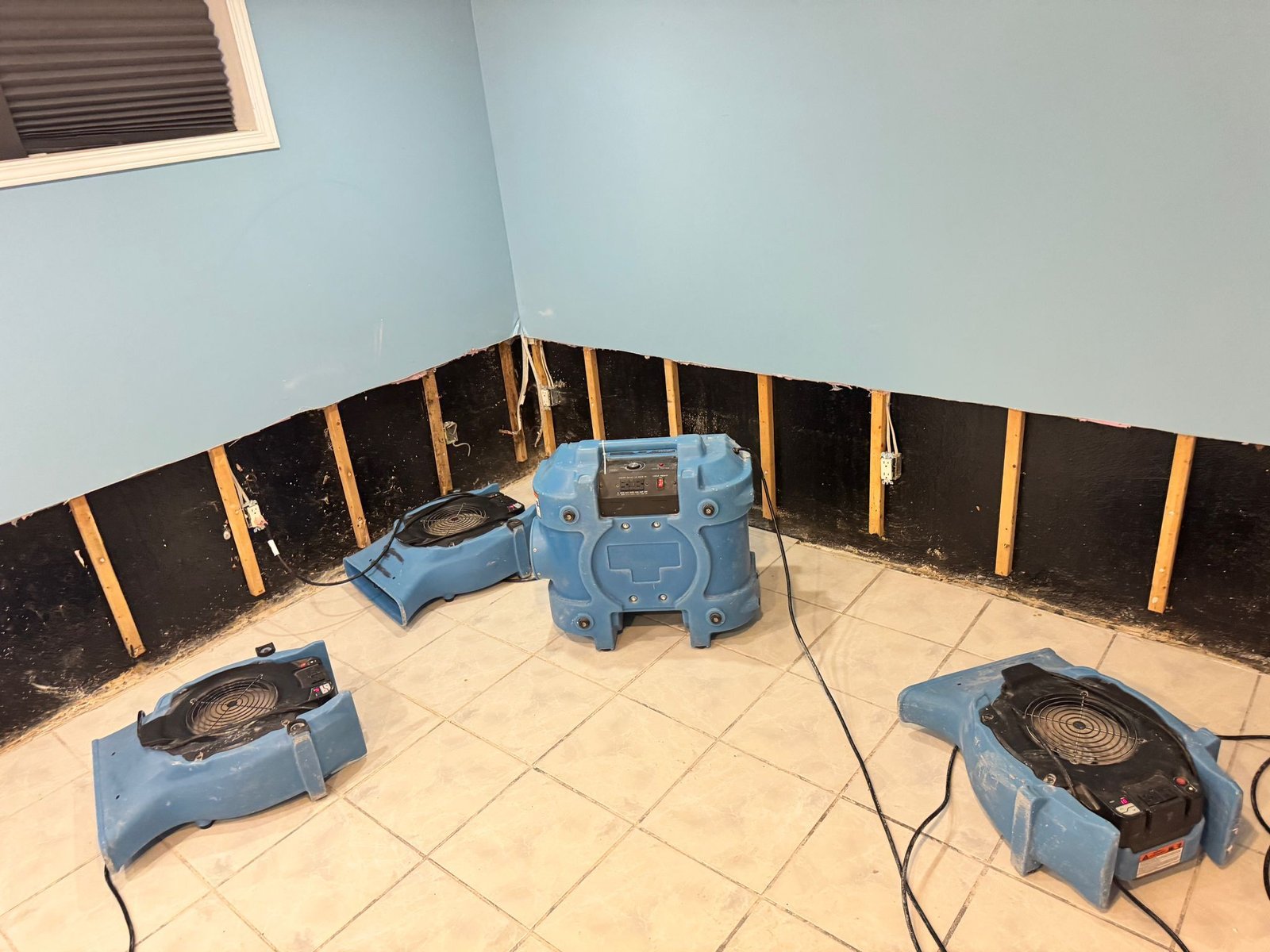
Floodwater does not need to remain visible for long to create a mold problem. Moisture can move beneath flooring, behind baseboards, into insulation, and through drywall long after the standing water is gone. Knowing how to prevent mold after flooding means treating the first 24 to 48 hours as a controlled drying operation, not simply a cleanup job.
For Toronto and GTA property owners, the risk is especially high after basement floods, sewer backups, burst pipes, and severe rain events. The faster wet materials are assessed, extracted, cleaned, and dried to safe moisture levels, the more likely the property can be restored without widespread mold remediation or unnecessary reconstruction.
Start with safety before entering the flooded area
Do not enter a flooded basement or commercial unit until you know it is safe. Shut off electrical power to the affected area if it can be done without stepping into water. If electrical panels, outlets, appliances, gas equipment, or wiring may be affected, wait for qualified help.
The source and type of water also matter. Clean water from a newly burst supply line may allow for a more straightforward drying process. Water from a sewer backup, overflowing toilet, river overflow, or unknown outdoor source can contain bacteria, viruses, chemicals, and other contaminants. In those cases, porous materials such as carpet, insulation, upholstered furniture, and damaged drywall may not be safely recoverable.
Wear waterproof boots, gloves, and appropriate respiratory protection when handling wet materials. Keep children, tenants, customers, and pets away from the affected area until the hazard is controlled.
Remove water immediately, but do not stop there
Fast extraction is the first defence against mold. Use a wet vacuum, pump, or professional extraction equipment to remove standing water as quickly as possible. Move wet furniture, boxes, area rugs, and belongings out of the affected room so moisture is not trapped beneath them.
However, a floor that looks dry is not necessarily dry. Concrete, subfloors, framing, drywall, carpet padding, and insulation can retain moisture out of sight. This is why household fans alone are often not enough after a significant flood. They can circulate air, but they do not confirm whether the building materials have reached an acceptable moisture content.
If the flood affected more than a small, contained area, professional moisture mapping is the safer approach. Restoration technicians use moisture meters and thermal imaging to identify wet pockets behind finished surfaces and beneath flooring. This step helps prevent a hidden mold issue from developing weeks after the event.
Handle the first day with purpose
Once it is safe to do so, focus on four immediate actions:
- Stop the source of water, or arrange emergency plumbing repairs if the source is active.
- Extract standing water and remove saturated contents from affected rooms.
- Separate wet materials from dry areas to prevent moisture migration.
- Begin controlled drying with dehumidification and air movement equipment.
Take photographs and videos before discarding damaged materials, particularly if you plan to file an insurance claim. Document water lines on walls, affected rooms, damaged contents, and the suspected cause of the flood. Documentation supports the claim, but it should never delay emergency mitigation.
How to prevent mold after flooding with proper drying
Mold can begin growing on damp materials within 24 to 48 hours under the right conditions. The objective is not to make the room feel less humid. The objective is to dry structural materials thoroughly enough that mold cannot use them as a moisture source.
Open windows only when outdoor air is drier than the indoor environment. During humid GTA weather, opening windows may introduce more moisture and slow drying. Instead, use commercial-grade dehumidifiers to pull water vapour from the air and high-velocity air movers to evaporate moisture from wet surfaces. The exact equipment setup depends on the affected materials, room size, temperature, and outdoor conditions.
Basements require particular attention because they are naturally cooler and often have limited ventilation. A damp concrete wall can keep humidity elevated even after carpets and visible water have been removed. Monitor humidity using a hygrometer and aim to keep indoor relative humidity below 50 percent during recovery and as an ongoing prevention measure.
Drying should be verified, not assumed. Compare moisture readings in affected materials to readings from known dry, unaffected areas of the property. This establishes whether framing, subfloors, and walls are actually returning to normal conditions.
Remove materials that cannot be dried or sanitized
Some materials can be cleaned and dried effectively. Others hold water too deeply or become unsafe after contaminated flooding. The decision depends on the water category, the duration of exposure, and the material itself.
Non-porous items such as metal, glass, hard plastic, and some solid wood furniture may be cleaned, disinfected where appropriate, and dried. Carpeting and carpet padding are far more difficult to recover, especially after sewer water or prolonged saturation. Wet drywall can wick moisture upward well beyond the visible flood line, while insulation behind it can retain moisture and support hidden mold growth.
Do not cover wet walls or floors with new finishes. Painting over staining, installing new baseboards, or laying flooring before moisture is resolved only conceals the problem. If drywall, insulation, engineered flooring, or cabinetry has been compromised, controlled removal may be necessary to expose the structure and allow complete drying.
With contaminated water, professional assessment is strongly recommended before attempting cleanup. Improper handling can spread contaminants to unaffected rooms and leave unsafe materials in place.
Clean surfaces without spreading spores or contamination
After extraction and removal of unsalvageable materials, hard surfaces need cleaning before final drying and repairs. Use the cleaning and disinfecting process appropriate to the water source and material. For sewage or other contaminated floodwater, this work requires specialized containment, personal protective equipment, and disposal procedures.
Avoid using bleach as a catch-all solution. Bleach may not penetrate porous materials, can create fumes, and does not solve the underlying moisture problem. Mold prevention depends first on removing water and drying materials. Surface cleaning is necessary, but it cannot compensate for wet drywall cavities, insulation, or subflooring.
Do not dry-brush suspected mold or use a standard household vacuum on it. Both actions can disturb spores and spread them through the property. If you see visible growth, detect a persistent musty odour, or find staining returning after cleaning, arrange a professional inspection.
Watch for hidden moisture after the initial cleanup
The days following a flood are when many avoidable mold issues take hold. Check the affected area daily for condensation, damp odours, warped materials, staining, bubbling paint, loose baseboards, or humidity that will not drop. Inspect adjacent rooms as well, because moisture can travel under flooring and behind shared walls.
Pay close attention to enclosed spaces: utility rooms, closets, storage areas, wall cavities, crawlspaces, and areas beneath stairs. Do not move belongings back into the space until drying is verified. Cardboard boxes, fabric items, and stored paper products can absorb residual humidity and develop mold even when the floor appears dry.
A musty smell is not proof of mold by itself, but it is a useful warning sign. The odour may indicate damp organic material, hidden water damage, or microbial growth that deserves further investigation. Early assessment is less disruptive than waiting for staining or widespread growth to appear.
When to call a flood and mold restoration professional
Call for professional help immediately if the water is contaminated, the affected area is large, materials have been wet for more than 24 hours, or water has reached walls, ceilings, insulation, hardwood, or HVAC components. The same applies when occupants have respiratory sensitivities, the property is a multi-unit building, or business operations cannot safely pause.
An IICRC-certified restoration team can assess the water category, extract water, establish containment where needed, deploy professional drying equipment, monitor moisture levels, sanitize affected surfaces, and complete repairs after the area is dry. This integrated approach reduces the chance that a quick cleanup becomes a recurring mold problem.
CPR24 Restoration provides 24/7 emergency flood cleanup and mold remediation support across Toronto and the GTA, with on-site response available within 45 minutes. Fast action protects more than finishes and furnishings – it helps preserve indoor air quality, structural materials, and the safe use of your property.
After a flood, trust the evidence rather than appearances. Keep drying until moisture readings, humidity levels, and material conditions show the space is truly dry, then rebuild with confidence.