
A sewage backup is not a standard water-loss event. When wastewater comes up through a basement drain, toilet, sink, or floor drain, it can carry bacteria, viruses, chemicals, and solid waste into finished areas of the property. This guide to sewage backup restoration explains what to do in the first critical hours, what professional cleanup should involve, and how to protect your property from a repeat incident.
For homeowners, condo owners, property managers, and business operators, the priority is simple: keep people away from the affected area, stop the source if possible, and bring in qualified restoration help before contamination spreads into walls, flooring, contents, and HVAC systems.
Treat Sewage Backup Water as Contaminated
Sewage backup water is generally treated as Category 3 water, often called black water. Unlike a clean-water leak from a supply line, this type of loss requires controlled removal, disinfection, and careful decisions about what can be saved.
Do not walk through standing sewage without proper protective equipment. Keep children, pets, tenants, and employees out of the area. If sewage has reached electrical outlets, appliances, a furnace room, or electrical panels, avoid touching anything and arrange for the appropriate qualified professional to assess the hazard.
A backup can be caused by a blocked municipal sewer, a clogged lateral line, tree-root intrusion, a failed backwater valve, heavy rain, or a drain obstruction within the building. The cause matters because it affects both the repair plan and the documentation needed for an insurance claim. Still, the immediate cleanup response should not wait while the cause is being debated.
What to Do in the First Hour
Time affects the scope of damage. Wastewater can wick into drywall, insulation, baseboards, carpet backing, subflooring, and stored contents. The longer materials remain wet and contaminated, the greater the likelihood of material removal, odour issues, and microbial growth.
First, stop using plumbing fixtures. Running a dishwasher, flushing a toilet, or using a washing machine can add more water to an already overloaded drainage system. If the backup appears to be coming from a single fixture, avoid using that fixture and nearby drains until a plumber has assessed the line.
Next, photograph and video the affected areas before moving contents, if it is safe to do so. Capture the source of the backup, water levels, damaged finishes, and affected belongings. Keep receipts for emergency services and make a written note of when the loss was discovered.
Move only uncontaminated valuables that can be reached without entering the affected area. Do not attempt to rescue porous items that have been soaked in sewage, such as cardboard boxes, mattresses, upholstered furniture, paper records, or children’s soft toys. These materials are often not safely restorable once contaminated.
Then contact your insurer and a qualified emergency restoration company. A 24/7 response is particularly valuable in Toronto and the GTA, where a basement backup can spread quickly through finished lower levels, storage rooms, commercial suites, or multi-unit properties.
What Professional Sewage Backup Restoration Should Include
A proper sewage cleanup is more than extracting visible water and spraying disinfectant. It is a controlled restoration process designed to remove contaminants, dry the structure, and return the space to a safe condition.
Inspection and Containment
Technicians begin by identifying affected rooms, materials, migration paths, and potential hazards. Moisture meters and thermal imaging may be used to identify water that has travelled behind walls or under flooring. The team establishes containment where needed to prevent cross-contamination into clean areas.
For a commercial property, containment may also support business continuity by isolating the affected suite, storage area, washroom, or mechanical room while safe operations continue elsewhere. The exact approach depends on the property layout, the extent of the backup, and whether contamination has entered shared systems.
Extraction and Removal of Unsalvageable Materials
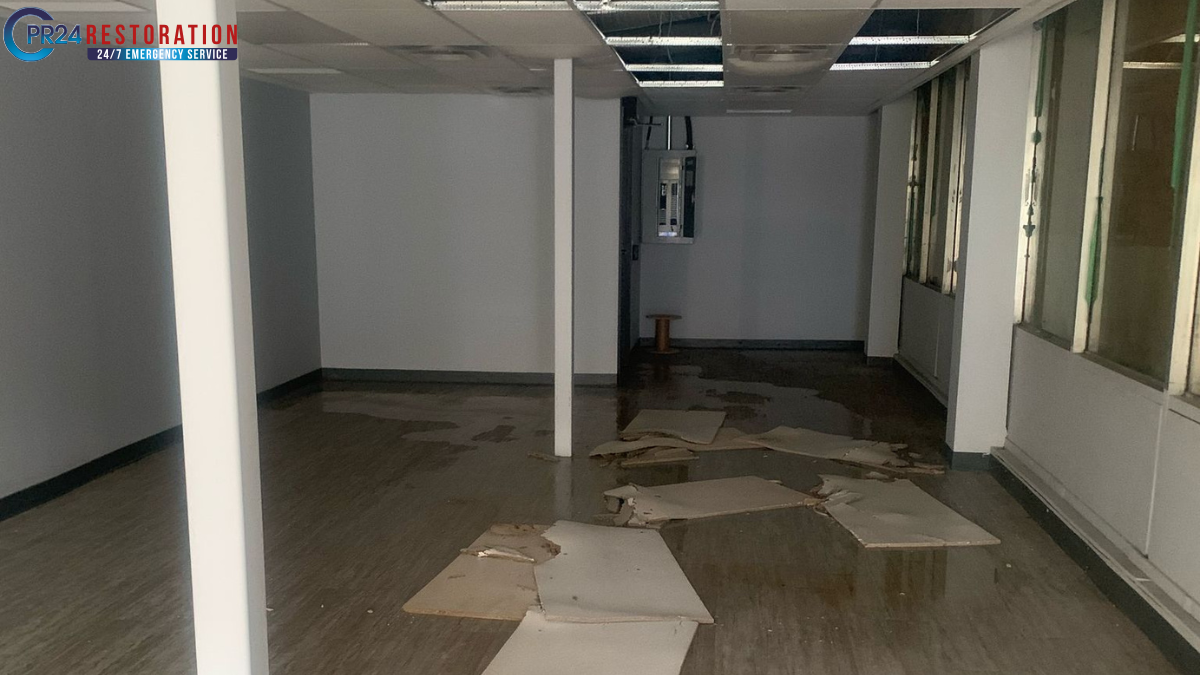
Standing wastewater and sewage solids must be removed using appropriate extraction equipment. Technicians then assess porous building materials and contents. Carpet, carpet padding, insulation, particleboard furnishings, and contaminated drywall often require disposal because they cannot be reliably cleaned throughout their full depth.
There are exceptions. Non-porous and semi-porous items, such as metal, glass, some plastics, and certain sealed hard surfaces, may be cleaned and disinfected when their condition permits. The right decision depends on the material, duration of exposure, level of contamination, and whether odours or moisture have penetrated hidden areas.
Removing damaged materials can feel disruptive, particularly in a finished basement or tenant-occupied space. However, leaving contaminated drywall, flooring, or insulation in place to reduce immediate costs can create a much larger problem later.
Cleaning, Sanitizing, and Drying
After removal, exposed structural materials are cleaned using appropriate methods and antimicrobial products. This is followed by controlled drying with commercial air movers, dehumidifiers, and air filtration equipment where required. Drying is not based on guesswork. Moisture readings should be monitored until materials reach acceptable drying targets.
Odour control is also part of the process, but odour treatment should never substitute for source removal. If a sewage smell remains, it may indicate contamination or moisture in an overlooked cavity, drain, subfloor, or building material.
Repairs and Reconstruction
Once the affected area is clean and dry, reconstruction can begin. This may include replacing insulation and drywall, rebuilding baseboards, installing flooring, repainting, or completing basement repairs. A full-service restoration provider can coordinate this work in sequence, reducing the handoffs that often slow down recovery.
CPR24 Restoration provides this end-to-end approach for sewage backup emergencies, from emergency extraction and sanitation through drying and repair. The goal is not simply to make the room look clean. It is to address the contamination and moisture conditions behind the visible damage.
Common Mistakes That Increase the Damage
The most common mistake is treating sewage like ordinary floodwater. Household mops, shop vacuums, and fans can spread contaminants or aerosolize particles rather than resolve the problem. A consumer wet vacuum should not be used for sewage extraction and then returned to regular household use.
Another mistake is removing drywall or flooring without containment and protection. Disturbing contaminated materials can transfer debris into unaffected rooms. Professional crews use controlled work practices and personal protective equipment because cleanup itself can create exposure risks.
Property owners also sometimes turn on the furnace or central air to dry the space. If contamination is near HVAC equipment or return-air pathways, this can circulate odours and particles through the building. Keep the system off in the affected zone until it has been assessed.
Finally, do not dispose of damaged materials before documenting them. Insurers may need photographs, inventories, and evidence of the cause and scope of loss. Restoration professionals can help organize damage documentation, but early photos from the property owner are still useful.
Insurance, Condos, and Commercial Properties
Sewer backup coverage is not always included automatically in a standard policy. Review your policy before an emergency occurs and ask specifically about sewer backup, overland water, deductible amounts, and coverage limits for finished basements and contents.
In a condo, determine whether the source and damage involve the unit, common elements, or another suite. The condominium corporation, property manager, and insurer may all need prompt notification. Do not assume that a leak or backup originating outside the unit automatically means another party will manage every part of the cleanup.
For commercial properties, document operational impacts as well as physical damage. Record affected inventory, equipment, tenant areas, closures, and any steps taken to protect occupants. The restoration plan may need to account for access control, after-hours work, and phased repairs to limit downtime.
What CPR24 Restoration Sees During Sewage Backup Calls
At CPR24 Restoration, we respond to sewage backups throughout Toronto and the GTA in basements, condos, commercial properties, and multi-unit buildings. One issue we frequently encounter is contamination extending farther than the visible sewage. Wastewater can travel underneath flooring, wick into drywall and baseboards, and remain trapped inside wall cavities or beneath finished surfaces. Our technicians assess these hidden areas using professional moisture-detection equipment before determining the appropriate removal and drying scope. We also document affected materials, equipment placement, moisture conditions, and restoration work when required for insurance claims. Our approach focuses on removing contaminated materials, cleaning affected surfaces, controlling moisture, and verifying drying before reconstruction begins.
Preventing Another Sewer Backup
Once cleanup is underway, investigate why the backup occurred. A drain camera inspection can identify blockages, root intrusion, damaged pipe sections, or recurring restrictions. Depending on the cause, preventative measures may include drain cleaning, plumbing repairs, sump-pump maintenance, or installation and servicing of a backwater valve.
Keep floor drains accessible and avoid storing boxes or finished materials directly over them. Do not pour grease, wipes, hygiene products, or other non-flushable materials into drains or toilets. During major rainfall, check lower-level drains and mechanical rooms periodically, especially if the property has a history of backups.
A sewage emergency is stressful because the damage is visible, disruptive, and potentially hazardous. Fast action protects more than drywall and flooring. It protects the people who live, work, or manage the space, and gives the property its best chance of a clean, controlled recovery.