
A musty odour in a tenant suite, staining above ceiling tiles, or recurring condensation around HVAC equipment can become a business interruption problem quickly. This guide to commercial mold remediation explains how property managers and commercial operators should respond: control moisture, protect occupants, contain the affected area, and verify that the space is ready to return to service.
Mold is rarely just a surface-cleaning issue. It is evidence that moisture has remained available long enough for growth to establish itself in drywall, insulation, ceiling systems, carpeting, wood framing, furnishings, or mechanical spaces. The visible patch may be small while the source and concealed damage are much larger.
Why commercial mold needs a controlled response
Commercial properties create complications that are less common in a single-family home. Affected areas may share air handling with offices, retail units, clinics, classrooms, storage rooms, or common corridors. Building owners also have obligations to tenants, employees, visitors, insurers, and maintenance teams.
The wrong response can spread spores and dust through the building. Pulling out wet drywall without containment, running the wrong fan, or painting over staining may turn a localized issue into a wider cleanup. It can also leave the original moisture source unresolved, allowing mold to return behind newly repaired finishes.
Response urgency depends on the situation. A small, isolated area caused by a corrected plumbing leak may require limited remediation. Significant growth, sewage contamination, a long-term roof leak, repeated flooding, or suspected contamination inside walls and HVAC components calls for a more comprehensive plan. When occupants report respiratory irritation or the affected space serves vulnerable people, use added caution and involve qualified restoration professionals promptly.
Guide to commercial mold remediation: the first decisions
The first objective is not to scrub the visible growth. It is to stop conditions from worsening.
If water is still entering the building, shut off the source where safe to do so. This could mean isolating a burst pipe, placing temporary protection below a roof leak, stopping a drain backup, or arranging emergency extraction after flooding. Do not assume that a dry-looking floor means the structure is dry. Water can travel under flooring, into wall cavities, through ceiling assemblies, and along service penetrations.
Next, restrict access to the affected zone. Move occupants away from obvious growth, wet porous materials, or areas with strong odours. Avoid disturbing suspect materials until the area can be assessed. For a commercial operation, this may mean rerouting staff, temporarily closing a washroom or unit, or establishing a safe alternate work area rather than shutting down an entire facility.
Document what you see before cleanup begins. Take photos of staining, damaged finishes, water paths, and affected contents. Record when the issue was discovered, any known water event, and actions taken. These records support insurance reporting, maintenance decisions, tenant communication, and the remediation scope.
Assess the source, extent, and materials involved
A professional assessment should identify three things: where moisture came from, how far it travelled, and which materials can be saved. Moisture meters, thermal imaging, humidity readings, visual inspection, and selective opening of building materials help determine the real extent of damage.
In a commercial setting, the assessment should look beyond the immediate room. Inspect adjacent suites, floors below, ceilings above, exterior walls, plumbing chases, mechanical rooms, and HVAC pathways where relevant. A leak originating in one unit may affect multiple occupancies before it becomes visible.
Material type matters. Non-porous surfaces such as metal, glass, and some plastics can often be cleaned if they are structurally sound. Semi-porous materials may be recoverable depending on the contamination level and whether they can be fully cleaned and dried. Porous materials such as wet insulation, damaged ceiling tiles, mouldy carpet padding, and heavily affected drywall frequently need removal because growth can extend below the surface.
Testing is not always the first or only answer. Visible mold and clear moisture damage already justify corrective action. Air or surface sampling can be useful when contamination is hidden, occupant concerns persist, a baseline is needed, or independent clearance verification is appropriate. Results need to be interpreted in the context of the building and inspection findings, not treated as a standalone pass-or-fail number.
Build containment before removal starts
Containment protects the rest of the property while affected materials are removed. The scope may call for a small isolated work area or a fully separated zone with sealed barriers, controlled entry, and negative air equipment that directs filtered air appropriately.
Technicians should use suitable personal protective equipment and follow controlled work practices. Contents may need to be relocated, protected, cleaned, or disposed of based on their condition. In an office, this can include furniture, files, electronics, inventory, and tenant belongings. In retail or food-related environments, contamination control and safe handling of stock require particular attention.
HVAC operation deserves careful review. If return vents or supply systems could draw air from the work zone, the system may need to be isolated or adjusted during remediation. This decision depends on the system design and affected area. Shutting down every system without a plan can create humidity issues elsewhere, while leaving the wrong system operating can distribute contaminants.
Remove contamination and correct the moisture problem
Effective remediation combines physical removal, detailed cleaning, drying, and source repair. A remediation crew removes unsalvageable affected materials under containment, then HEPA-vacuums and cleans remaining structural surfaces. The goal is to remove contamination, not simply cover it with stain-blocking paint or antimicrobial products.
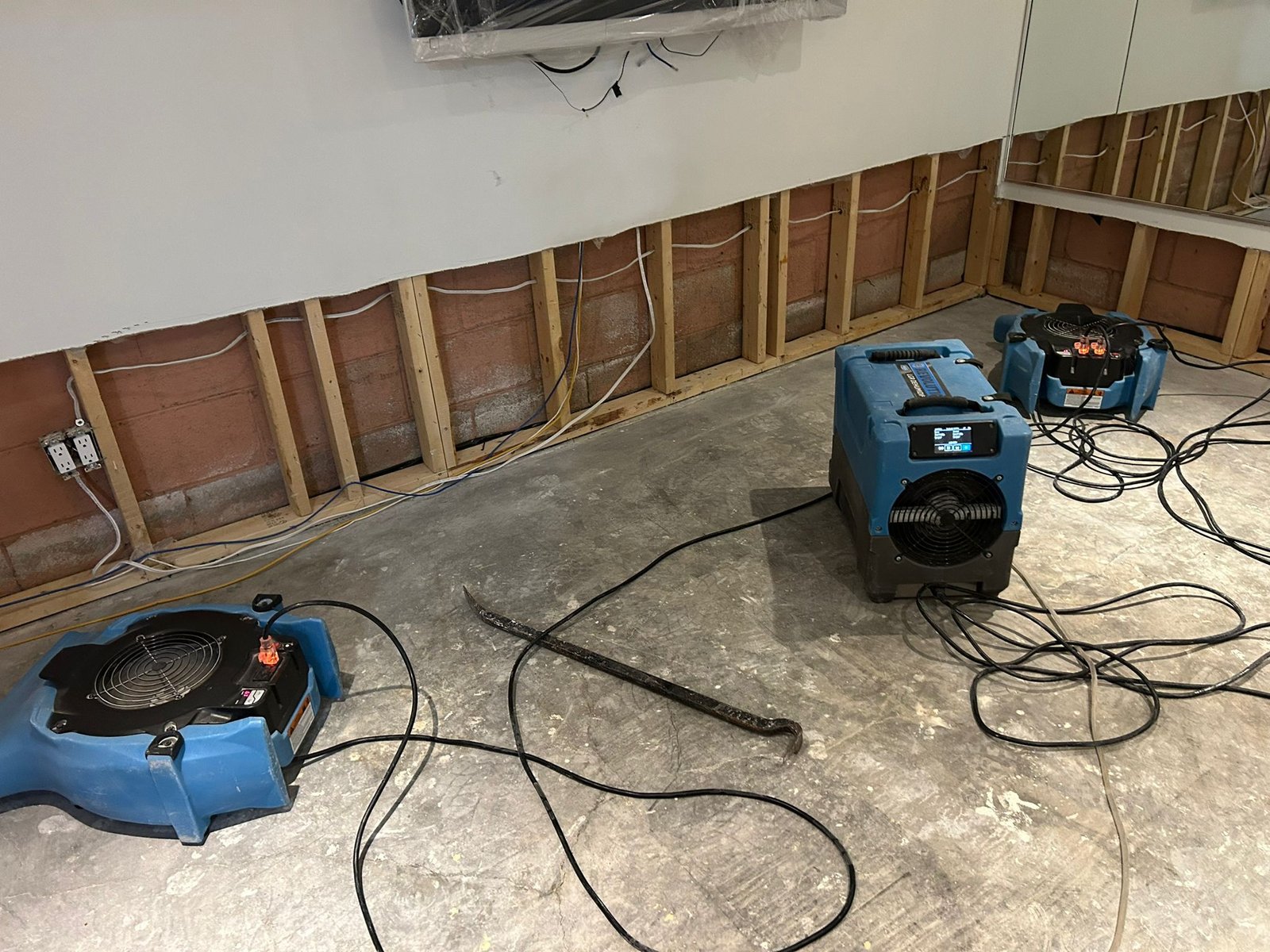
Drying is equally critical. Commercial dehumidifiers, air movers, and monitoring equipment are selected based on the affected materials, available power, building layout, and humidity conditions. Equipment must be positioned deliberately. More airflow is not automatically better if it moves dust from an uncontrolled area or dries one surface while moisture remains trapped behind it.
The underlying failure must be corrected before reconstruction. Depending on the cause, that may involve plumbing repair, roof repair, window or façade work, drainage correction, waterproofing, HVAC servicing, or improving ventilation in high-humidity areas. Without this step, new drywall and paint can conceal a problem that will return months later.
How CPR24 Restoration Handles Commercial Mould Remediation
At CPR24 Restoration, we provide commercial mould remediation throughout Toronto and the GTA for offices, retail spaces, rental properties, condominium buildings, and other commercial facilities. Our team follows IICRC remediation practices and evaluates both visible mould and the moisture conditions contributing to the problem. Depending on the project, our scope may include 6-mil poly containment, negative air, HEPA air filtration, removal of affected materials, HEPA vacuuming, antimicrobial treatment, structural drying, and moisture monitoring. We also provide detailed photo documentation, reports, and estimates when required for property managers and insurance claims. Once remediation is complete, CPR24 can coordinate reconstruction separately to restore removed drywall, ceilings, flooring, insulation, trim, and other finishes.
Protect operations, tenants, and business continuity
Commercial remediation should be planned around the building’s operating needs where possible. A property manager may need phased work outside business hours, protected access routes, temporary partitions, or scheduled tenant entry to retrieve essential items. These choices involve trade-offs. Faster access can be valuable, but it cannot come at the cost of inadequate containment or unsafe conditions.
Clear communication helps reduce disruption. Tell affected occupants what area is restricted, what practical steps they should take, how long the immediate work is expected to last, and who will provide updates. Avoid making health conclusions that are outside the scope of the assessment. Focus on the actions being taken to control the environment and restore the space safely.
For insurance-supported losses, maintain invoices, drying records, photos, assessment notes, and a detailed list of removed materials. Early documentation can reduce delays when adjusters, condominium corporations, landlords, and tenants need to understand responsibility and repair scope.
Need Commercial Mould Remediation in Toronto or the GTA?
If you discover visible mould, recurring moisture, musty odours, or water damage in a commercial property, early investigation can help prevent the affected area from spreading and causing greater disruption. CPR24 Restoration provides commercial mould inspection, containment, remediation, structural drying, and reconstruction services throughout Toronto and the GTA. We work with property managers, building owners, businesses, landlords, and insurance professionals to document the damage and establish an appropriate remediation scope. For urgent situations, our team is available 24/7 to assess water damage and mould concerns and help determine the appropriate next steps for the property.