

A damp basement rarely stays a small problem. Water can travel behind finished walls, under flooring, and through foundation cracks long before it becomes a visible puddle. Professional waterproofing services identify where moisture is entering, correct the source, and protect the property from structural deterioration, mould growth, and repeated flood cleanup.
For homeowners, condo owners, and property managers, the right solution depends on how water is reaching the building. A musty smell after rain, white mineral deposits on concrete, peeling paint, wet carpet, or a sump pump that runs constantly are all warning signs worth acting on. Waiting for the next storm can turn a manageable repair into an emergency restoration project.
What Waterproofing Services Actually Address
Waterproofing is not simply applying a coating to a basement wall. Effective work starts with a clear diagnosis of the water source, the condition of the foundation, drainage around the property, and the extent of existing moisture damage.
Water may enter through foundation cracks, deteriorated window wells, failed weeping tiles, gaps around utility penetrations, overflowing eavestroughs, poor grading, or sewer-related issues. In older Toronto and GTA homes, aging foundations and drainage systems can make basements especially vulnerable during heavy rain, rapid snowmelt, or periods of saturated soil.
A qualified restoration and waterproofing team looks beyond the obvious stain or crack. Moisture readings, visual inspection, and, where required, targeted investigation behind finished materials help determine whether the issue is active water intrusion, condensation, plumbing leakage, or a combination of problems. Treating the wrong cause can waste money and leave hidden damage in place.
Interior vs. Exterior Waterproofing: Which Is Right?
The best approach depends on access, budget, the foundation condition, and the pattern of water entry. Both interior and exterior methods can be effective when selected for the right situation.
Exterior waterproofing
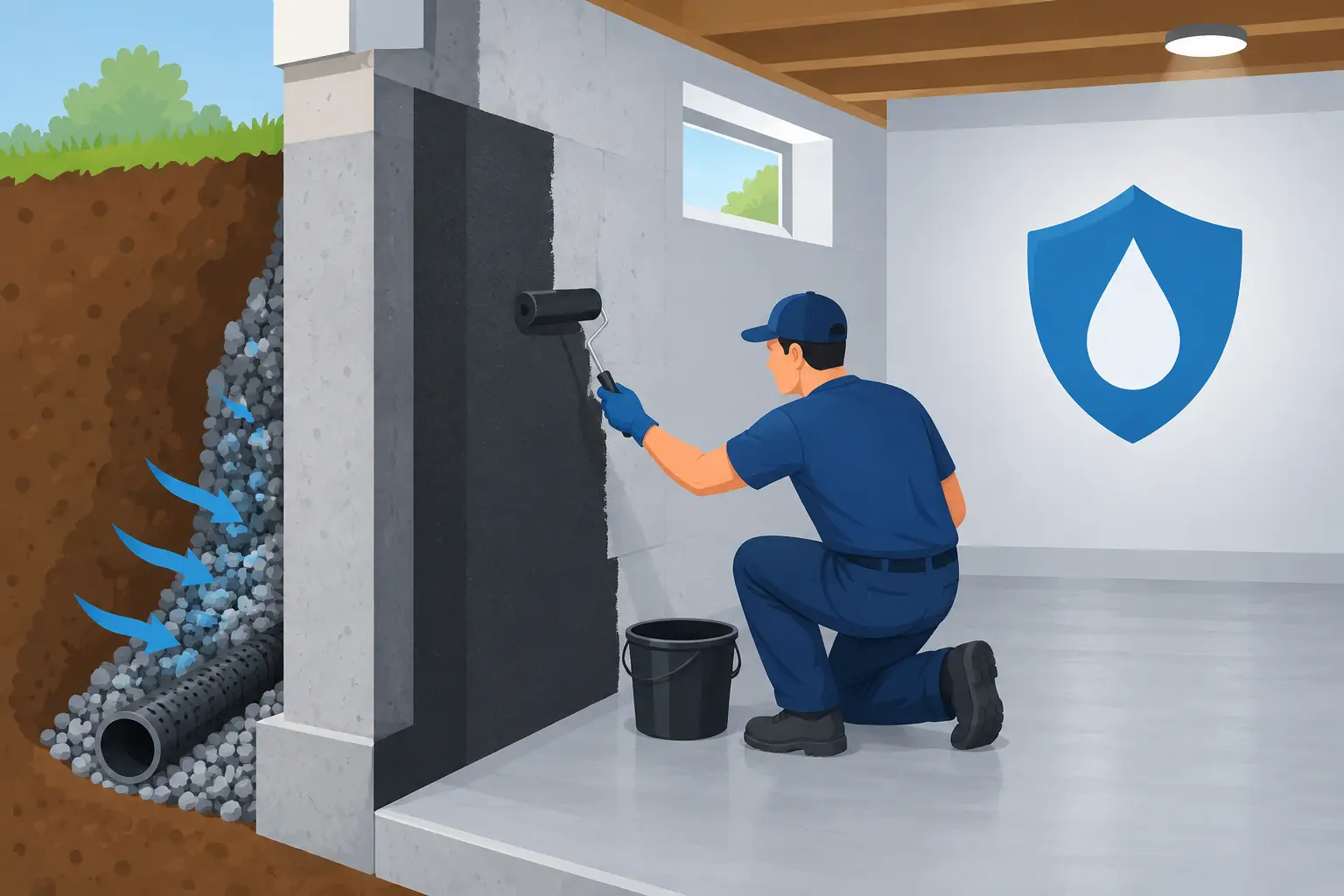
Exterior waterproofing addresses water before it reaches the foundation wall. The process typically involves excavating around the affected area, exposing the foundation, repairing cracks or damaged surfaces, applying a waterproof membrane, and improving drainage with proper weeping tile or drainage board.
This approach is often recommended when there is significant foundation deterioration, persistent water pressure against exterior walls, or failed drainage around the home. It is a more involved project because excavation can affect landscaping, walkways, decks, and access around the building. However, it can provide long-term protection by managing water at its source.
Interior waterproofing
Interior waterproofing manages water that reaches the foundation by directing it safely into an interior drainage system and sump pump. It can be a practical option where exterior access is limited, where excavation would disrupt major site features, or where the foundation wall itself remains structurally sound.
Interior systems are not a shortcut when they are properly designed and installed. They can relieve hydrostatic pressure and control recurring seepage effectively. The trade-off is that water is managed after it reaches the foundation rather than being stopped outside it. A reliable sump pump, correctly sized drainage, and a backup power plan matter greatly in this type of system.
What an Interior Waterproofing System May Include
Depending on the foundation and source of water entry, an interior waterproofing system may involve removing a section of the concrete floor along the affected foundation walls, excavating a drainage trench, installing perforated weeping tile and drainage stone, and directing collected water toward a sump pit and pump. A waterproof drainage membrane can also be installed along the interior foundation wall to direct incoming moisture into the drainage system.
Once the waterproofing system is installed and tested, the concrete floor is patched and the basement can proceed to reconstruction. For finished basements, this may include framing, insulation, vapour barrier, drywall, painting, flooring, baseboards, and other finishes removed during the waterproofing work.
Foundation Cracks Need More Than a Surface Patch
Not every crack means a foundation is failing, but every active crack deserves assessment. Hairline cracks can allow water through under pressure, while wider horizontal, stair-step, or expanding cracks may point to movement that requires more detailed evaluation.
For isolated cracks, injection repair may be appropriate. Polyurethane injections are commonly used for actively leaking cracks because the material can expand and seal against moisture. Epoxy may be selected where structural bonding is the primary concern. The correct product and method depend on the crack type, whether it is wet, and whether movement is expected to continue.
Covering a crack with paint, caulk, or a thin cement patch may improve the appearance temporarily, but it rarely addresses water pressure or deeper deterioration. If water has already affected insulation, framing, drywall, or flooring, those materials should also be inspected. Sealing the entry point without drying and repairing the damaged area can create conditions for concealed mould growth.
Drainage Around the Property Matters
Many basement leaks begin above ground. Water should move away from the building, not collect beside the foundation. A waterproofing plan should consider grading, downspout discharge, eavestrough condition, window wells, and hard surfaces that direct runoff toward the home.
Downspouts that empty directly beside the foundation can overwhelm soil and drainage systems during a storm. Similarly, a sloped driveway, sunken walkway, or blocked catch basin can send large volumes of water toward a lower-level entrance. These issues are sometimes less costly to correct than foundation excavation, but they should not be treated as a substitute for repair where the foundation is already leaking.
Sump pumps also need routine attention. Test the pump periodically, confirm that the discharge line is clear and directed away from the structure, and consider a battery backup where power outages occur during storms. A failed sump pump can quickly lead to a flooded basement, especially in properties that rely on interior drainage systems.
When Waterproofing Becomes an Emergency Restoration Issue
If water has entered the basement, speed matters. Standing water, soaked drywall, wet insulation, and saturated flooring can create secondary damage within hours. Clean water from a foundation leak may still become a mould concern if materials remain wet, while sewage backups and contaminated floodwater require specialized cleanup and sanitization.
The first priority is to stop active water where safely possible and protect electrical hazards. Do not enter standing water near electrical panels, appliances, or exposed wiring. Move valuables from affected areas only if it is safe to do so, and document visible damage for insurance purposes.
Professional restoration should include water extraction, moisture detection, structural drying, removal of unsalvageable materials, cleaning, and verification that the area is dry before rebuilding begins. For contaminated water, the scope must also include proper containment and disinfection. Waterproofing completed after cleanup should be coordinated with repairs so that new drywall, flooring, and finishes are not installed over unresolved moisture.
CPR24 Restoration provides this full-service approach for property owners who need emergency water damage recovery and repairs alongside targeted waterproofing work. That continuity matters when a basement needs more than a single repair – it needs drying, mould prevention, and reconstruction completed in the right order.
How CPR24 Restoration Approaches Basement Waterproofing
At CPR24 Restoration, we assess basement water intrusion throughout Toronto and the GTA in both finished and unfinished spaces. Before recommending waterproofing, our team looks at where moisture is entering, the condition of the foundation, drainage around the property, and whether water has already affected drywall, insulation, framing, or flooring. Depending on the property, the solution may involve foundation crack repair, interior drainage, a waterproof membrane, weeping tile, a sump pump system, or coordination with exterior drainage improvements. When water damage has already occurred, CPR24 can also provide extraction, structural drying, mould remediation, and reconstruction so the moisture problem is addressed before new finishes are installed.
Need Basement Waterproofing in Toronto or the GTA?
If your basement develops water stains, damp walls, recurring seepage, musty odours, foundation cracks, or flooding during heavy rain, identifying the source early can help prevent more extensive water damage. CPR24 Restoration provides basement waterproofing, water damage restoration, mould remediation, and reconstruction services throughout Toronto and the GTA.
Our team can assess moisture conditions, investigate potential water-entry points, and recommend an appropriate waterproofing approach based on the property. Where water damage has already occurred, CPR24 can also handle extraction, structural drying, removal of affected materials, and reconstruction after the moisture source has been addressed.
For properties experiencing active basement flooding in Toronto, CPR24 Restoration is available 24/7 for emergency water damage response.