
A leak from the suite above can soak your ceiling in minutes, but the question of who handles condo water damage is rarely answered by looking at where the water appears. Responsibility may depend on the source of the leak, whether the affected area is a common element or part of a unit, and the wording in the condominium corporation’s declaration and insurance policy.
The immediate priority is not assigning blame. It is stopping the water, documenting the loss, and beginning professional drying before moisture reaches drywall cavities, flooring, insulation, and neighbouring suites. In a Toronto or GTA condominium, delays can turn a manageable plumbing failure into a multi-unit restoration project.
Who Handles Condo Water Damage First?
In an active water emergency, several parties have a role, but they do not all perform the same job. The unit owner or tenant should report the issue immediately to building management or security, take reasonable steps to protect personal property, and contact their insurer. The property manager or condo corporation typically coordinates access to common building systems and may arrange emergency mitigation where common elements or multiple units are involved.
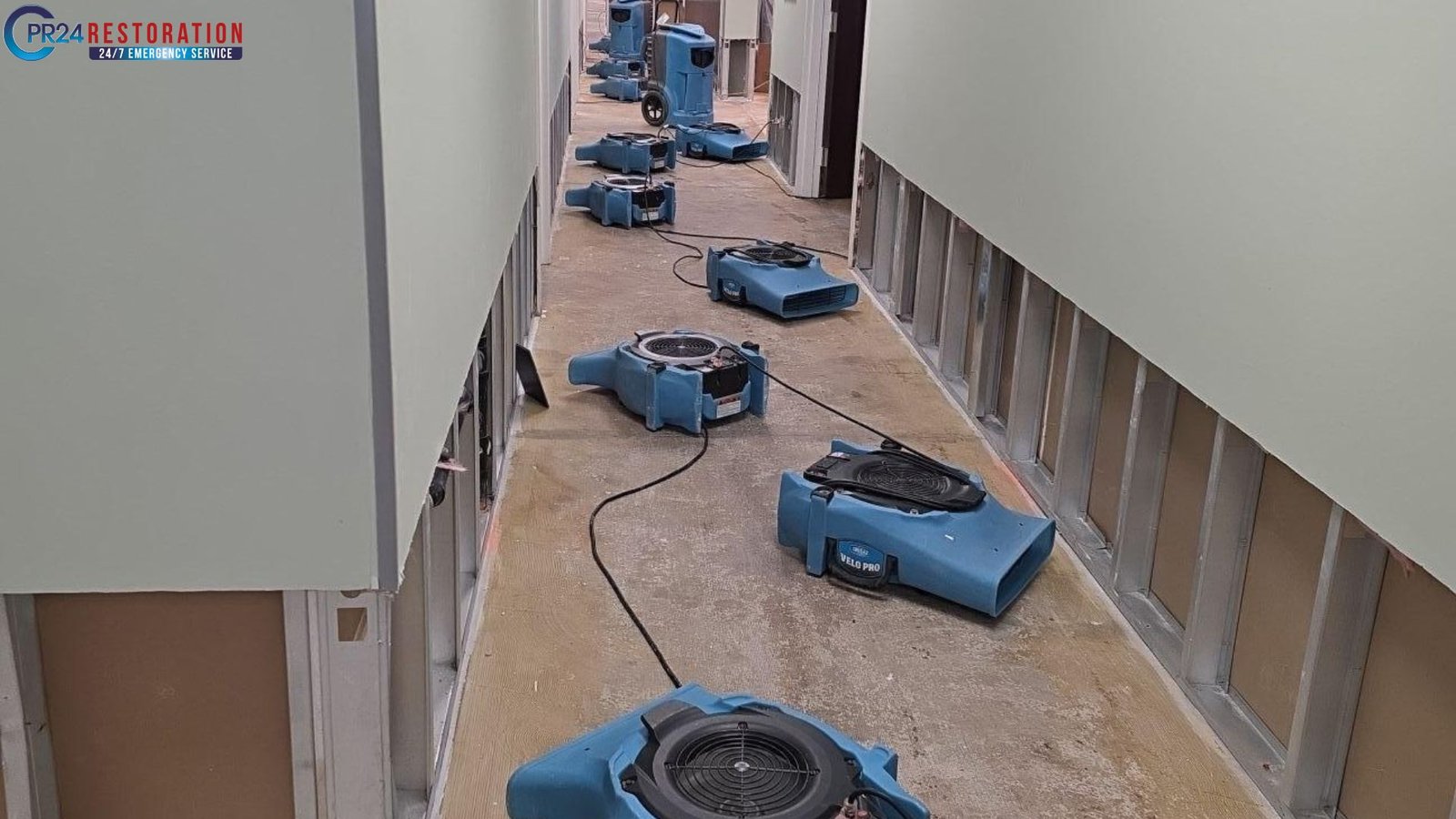
A qualified water damage restoration company handles the on-site emergency work: locating visible moisture, extracting water, setting up drying equipment, monitoring moisture levels, sanitizing affected materials, and identifying conditions that require removal or reconstruction. If water is still flowing, a licensed plumber may also be needed to isolate and repair the failed fixture, pipe, valve, or appliance connection.
No one should wait for an insurer to approve the initial emergency response before addressing active water and standing moisture. Reasonable mitigation is necessary to limit further damage. Keep photos, videos, invoices, communications, and a record of when the damage was discovered and reported.
Responsibility Depends on the Source and the Space
Condo water damage claims often become confusing because water does not respect legal boundaries. A failed dishwasher hose in one unit may damage that owner’s kitchen, the suite below, a hallway ceiling, and electrical components located in common areas. The visible damage may be in one place while the cause is several floors away.
The condo corporation and common elements
The condo corporation is generally responsible for maintaining and insuring common elements. Depending on the building’s declaration, this can include shared plumbing risers, main drains, roofs, exterior walls, corridors, mechanical rooms, and building-wide systems. If a burst common pipe causes water damage, the corporation’s insurer may address damage covered under its policy.
However, the precise boundary is not always obvious. Some items that appear to be inside a unit, such as portions of plumbing or HVAC equipment, may be classified as common elements or exclusive-use common elements. The condominium declaration, bylaws, and rules are the documents that matter. Property management can provide direction, but owners should also review these documents and speak with their insurer or legal advisor when responsibility is disputed.
The unit owner and improvements inside the suite
A unit owner is commonly responsible for personal belongings, upgrades, and improvements within their unit. This can include upgraded flooring, custom cabinetry, countertops, appliances, fixtures, and finished basement-style storage areas where applicable. A corporation’s standard unit definition may only cover the original builder-grade components, not later renovations.
For example, if water damages a kitchen that was upgraded after purchase, the corporation’s policy may only respond up to the standard unit specification. The owner’s condo insurance may be needed for the difference. This is why unit owners should carry coverage for improvements and betterments, personal contents, additional living expenses, and liability.
The owner of the unit where the leak began
The owner of the source unit is not automatically personally liable just because water originated there. Liability usually depends on negligence, maintenance obligations, and the cause of the loss. A sudden, unforeseeable failure in a washing machine supply line is different from a leak that was repeatedly reported and ignored.
Even when a neighbouring owner may be responsible, do not delay cleanup while the parties debate fault. Insurers can investigate liability later. Water trapped beneath flooring or behind walls can support mould growth within days if drying is not properly managed.
What Property Management Should Do
Property management is the operational hub during a condo water loss. They should help secure access to affected areas, notify the board when required, review the building’s emergency procedures, arrange building-approved contractors if applicable, and communicate with affected residents.
They may also need to shut down water to a unit or stack, coordinate a plumber, protect elevators and hallways during restoration work, and obtain incident reports. For larger incidents, management must balance fast mitigation with building access, resident safety, and documentation for the condominium corporation’s insurance claim.
Residents should provide management with clear facts: when the issue was discovered, what they observed, whether water is active, which rooms are affected, and whether anyone has already entered the suite or moved items. Avoid making assumptions about the source. A ceiling stain below a bathroom does not prove that the toilet above is the cause.
What a Restoration Team Handles After the Leak Stops
Water extraction is only the first stage. Professional restoration work begins with an assessment of the water category, the affected materials, and the extent of hidden migration. Clean water from a supply line may be handled differently from water involving a sewer backup, toilet overflow, or contaminated drain.
An IICRC-certified restoration team uses moisture meters, thermal imaging where appropriate, controlled air movement, dehumidification, and drying records to confirm whether materials can be dried or need to be removed. This matters in condos because water can travel through ceiling assemblies, wall cavities, under engineered flooring, and along shared service penetrations.
Where contamination is present, affected materials may require removal, cleaning, and sanitization under controlled conditions. If the loss involves a sewer backup or contaminated water, the affected area may require controlled removal, cleaning, sanitization, and drying rather than standard water extraction alone. Occupants should avoid contact with contaminated water and keep children and pets away from the affected area.
Once drying targets are reached, reconstruction may include drywall replacement, plaster repair, flooring work, painting, baseboard replacement, and repairs to damaged finishes. A full-service provider such as CPR24 Restoration can manage the emergency mitigation and the post-damage restoration work, reducing handoffs at a time when building coordination is already difficult.
How CPR24 Restoration Handles Condo Water Damage
At CPR24 Restoration, we respond to condo water damage throughout Toronto and the GTA, including leaks from neighbouring units, burst supply lines, appliance failures, sewer backups, and water travelling between floors. Our technicians use moisture meters and thermal imaging where appropriate to identify water behind drywall, beneath flooring, and inside ceiling assemblies. Depending on the loss, our IICRC-certified restoration team can provide water extraction, controlled demolition, commercial drying equipment, moisture monitoring, sanitization, and reconstruction. We also document affected rooms, materials, moisture conditions, and restoration work to assist property managers, unit owners, and insurance adjusters with the claim and repair process.
Insurance, Deductibles, and Chargebacks
Condo water damage can involve multiple insurance policies. The condominium corporation typically maintains a master insurance policy, while unit owners generally maintain their own condominium insurance. Which policy responds, what property is covered, and what costs remain with an owner can depend on the cause of the loss, the condominium’s standard unit definition, the corporation’s governing documents, applicable deductibles, exclusions, and individual policy terms.
Deductible responsibility can become a significant issue after a water loss. Depending on the circumstances and applicable condominium documents and legislation, a corporation may seek to recover certain costs from a unit owner. Owners should review their condominium declaration and insurance coverage and obtain guidance from their insurer or legal professional when responsibility is disputed.
For the restoration process, keep the emergency mitigation separate from the final insurance determination. Active water, contaminated materials, and structural moisture should be addressed promptly while insurers and other parties determine coverage and responsibility.
Need Help With Condo Water Damage in Toronto or the GTA?
If water is entering your condo from another unit, a burst pipe, appliance failure, plumbing fixture, or building system, report the loss to property management immediately and address active water as quickly as conditions safely allow. CPR24 Restoration provides 24/7 condo water damage restoration throughout Toronto and the GTA for unit owners, property managers, condominium corporations, and commercial property managers.
Our IICRC-certified technicians can assess moisture migration, extract water, install professional drying equipment, remove affected materials where required, monitor moisture levels, and coordinate reconstruction once drying is complete. CPR24 Restoration can also provide photographs, moisture documentation, estimates, and restoration records to help the parties involved understand the affected areas and required scope of work.
Frequently Asked Questions About Condo Water Damage
Who pays for water damage from the condo above?
Responsibility depends on the source of the water, the condominium’s governing documents, the standard unit definition, applicable insurance policies, and the circumstances of the loss. Water originating from another unit does not automatically determine which party or insurer will pay every restoration cost.
Should I call property management or my insurance company first?
For an active leak, notify property management or building security immediately so the source can be investigated and building access or water shutoffs can be coordinated. Unit owners should also notify their own insurer promptly and document the damage.
Who dries the condo after a water leak?
A professional water damage restoration company can extract standing water, inspect for hidden moisture, install drying equipment, monitor moisture conditions, remove damaged materials where necessary, and complete or coordinate repairs after drying.
What happens if water from my condo damages the unit below?
Notify property management and your insurer promptly and document what occurred. Responsibility for the resulting damage depends on the cause of the loss, applicable condominium documents, insurance policies, and other circumstances. Avoid accepting or assigning liability before the incident has been properly assessed.