
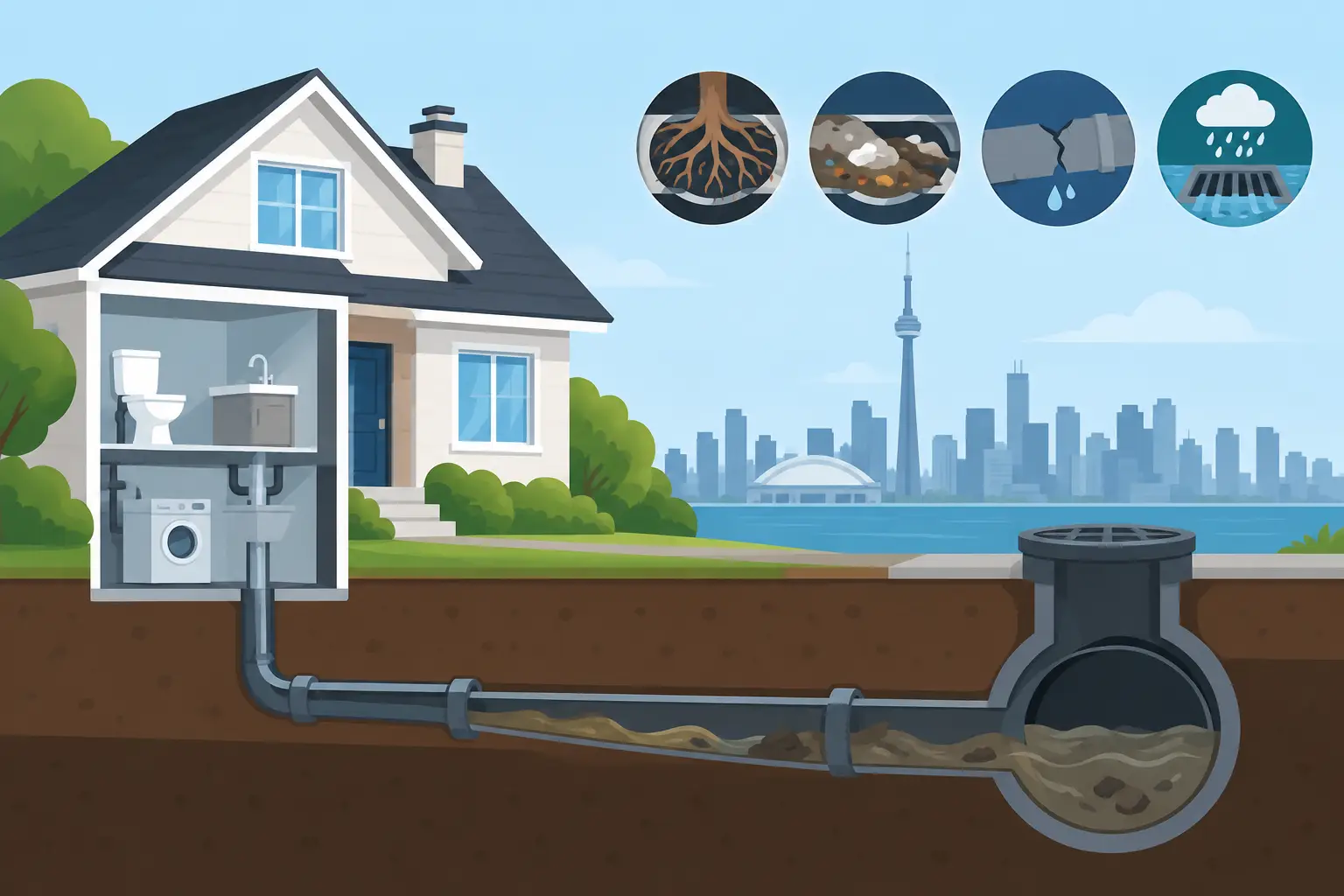
A basement floor drain that gurgles when the washing machine empties is not a minor plumbing quirk. Neither is a toilet that bubbles, a shower that drains slowly only during heavy rain, or a foul sewage odour near a lower-level bathroom. These are often early warnings of a drainage problem that can become a contaminated flood without much notice.
Understanding the top causes of sewer backups can help Toronto and GTA property owners recognize warning signs and take action before sewage reaches finished flooring, drywall, storage areas, electrical components, or tenant spaces.
Why a Sewer Backup Requires Fast Action
Sewage water is not ordinary floodwater. It may contain bacteria, viruses, waste, and other contaminants that make affected materials unsafe to handle or keep. Porous items such as carpeting, insulation, upholstered furniture, cardboard, and some drywall may need to be removed rather than dried. Even after visible water is extracted, contamination and moisture can remain behind walls, beneath flooring, and inside cavities.
The first priority is safety. Keep people and pets away from the affected area, avoid using toilets, showers, sinks, dishwashers, and laundry equipment, and do not run a wet vacuum over sewage. If water is near outlets, appliances, or electrical panels, stay clear until it is safe to assess. A professional cleanup team can extract contaminated water, remove unsalvageable materials, clean and disinfect structural surfaces, dry the area, and complete repairs where required.
Top Causes Sewer Backups Property Owners Should Know
Tree roots in sewer lines
Mature trees are a common feature across established Toronto neighbourhoods, and their roots naturally seek moisture. Small cracks, loose joints, and aging pipe connections can release enough moisture to attract roots. Once roots enter the line, they grow and form a dense blockage that catches toilet paper, grease, and other debris.
Root intrusion often causes recurring slow drains before a complete backup happens. Snaking may restore flow temporarily, but it may not resolve the damaged pipe or prevent roots from returning. A camera inspection is usually the best way to confirm the location and extent of the intrusion. Depending on the condition of the line, the solution may range from root removal and repair to pipe lining or replacement.
Grease, wipes, and non-flushable products
Many sewer backups start with what goes down household drains. Cooking grease may look liquid when it is poured into a sink, but it cools, sticks to pipe walls, and traps food particles. Over time, the pipe diameter narrows until normal wastewater flow is restricted.
Bathroom products create a similar problem. Wipes labelled flushable do not break down like toilet paper, and neither do paper towels, facial tissue, cotton pads, dental floss, sanitary products, or diapers. These items can lodge in bends, catch on roots, or combine with grease to form a stubborn obstruction. The safest rule is simple: flush only human waste and toilet paper. Collect cooled cooking grease in a container and dispose of it in the garbage.
Aging, cracked, or collapsed sewer pipes
Older properties may have sewer laterals made from clay, cast iron, or other materials that deteriorate over time. Soil movement, corrosion, shifting foundations, poor connections, and repeated root pressure can crack or offset a pipe. In more severe cases, a section may collapse and stop wastewater from reaching the municipal sewer.
This issue is not always obvious from inside the building. Drains may work normally for a period, then fail when water use increases. Repeated blockages at the same property, sewage odours outdoors, unusually green patches of grass, or a drain that backs up after every heavy use are reasons to investigate the line rather than continue treating symptoms. Camera scoping provides evidence for a targeted repair and can be valuable for insurance or maintenance records.
Heavy rainfall and overloaded municipal sewers
Intense rainfall can overwhelm municipal sewer infrastructure, particularly when stormwater enters systems faster than it can be carried away. In some areas, older combined sewer arrangements and low-lying basements increase the risk. Water may push backward through floor drains, toilets, laundry drains, or other low plumbing fixtures.
A municipal surcharge can occur even when the property’s own drains are clear. However, a partially blocked private sewer line makes the consequences worse because it offers less capacity when demand on the system rises. Backwater valves, properly maintained sump pumps, downspout disconnections where applicable, and basement waterproofing can reduce certain flood risks. They are not identical solutions, so an inspection should determine which protection fits the property.
Failed backwater valves and sump pumps
A backwater valve is designed to close when wastewater reverses direction, helping prevent sewer water from entering a building. But the device needs inspection and maintenance. Debris can stop it from sealing, a damaged flap can fail to close, and an inaccessible valve is unlikely to receive the attention it needs.
Sump pumps serve a different purpose: they move groundwater away from the foundation. A failed pump does not directly create every sewer backup, but it can contribute to a flooded basement during storms and complicate an already serious water event. Test the pump regularly, keep the pit clear, verify that the discharge route is functioning, and consider battery backup where power outages are a concern.
Improper plumbing connections or renovations
Renovations can introduce drainage problems when fixtures are added without adequate pipe sizing, venting, slope, or permits. A basement bathroom, laundry room, bar sink, or secondary suite may place additional demand on an older drainage system. Incorrectly connected downspouts, foundation drains, or appliances can also send water where it does not belong.
The warning signs often appear after a renovation or when multiple fixtures run at once. For example, a toilet may bubble when a nearby shower drains, or the laundry standpipe may overflow during a wash cycle. A licensed plumbing assessment can identify whether the problem is a local branch drain, a main building drain, or the sewer lateral outside.
Warning Signs Before a Full Backup
A sewer backup rarely arrives without any signal, but the signals are easy to dismiss when they appear one at a time. Pay attention when several lower-level fixtures drain slowly, when water rises in a tub after flushing a toilet, or when a floor drain gurgles. Sewage smells, dark water around a basement drain, and backups that occur during rain are also urgent indicators.
One clogged sink does not necessarily mean the main sewer is blocked. The pattern matters. If multiple fixtures are affected, especially those at the lowest level of the building, stop using water and arrange an inspection promptly. Waiting for the drain to clear on its own can turn a manageable blockage into a larger cleanup and reconstruction project.
What to Do When Sewage Enters Your Property
Do not attempt to push sewage back through the drain with chemical cleaners. Strong chemicals can damage pipes, create fumes, and make the work more hazardous for everyone who enters the space. Avoid walking through the water if possible, and move only uncontaminated valuables from dry areas.
Document the visible damage with photos or video before cleanup begins, provided it is safe to do so. Notify your insurer early, since coverage and documentation requirements vary by policy. Then contact a qualified emergency restoration provider and a licensed plumber as needed to address both sides of the problem: the immediate contamination and the failed drainage condition.
If a blockage, failed sewer line, heavy rainfall, or drainage problem results in sewage entering your property, CPR24 Restoration provides 24/7 sewer backup cleanup throughout Toronto and the GTA. Our team can extract contaminated water, establish containment, remove affected porous materials, clean and disinfect exposed surfaces, install professional drying equipment, and monitor moisture conditions before reconstruction begins. We can also document affected areas and materials for insurance purposes. A plumber may still be required to clear or repair the sewer line, while CPR24 Restoration addresses the resulting basement flooding and property damage.
What CPR24 Restoration Commonly Finds After Sewer Backups
At CPR24 Restoration, we respond to sewer backups throughout Toronto and the GTA in finished basements, homes, rental units, condominiums, and commercial properties. In many losses, the visible sewage is only part of the affected area. Contaminated water can travel underneath flooring, behind baseboards, into drywall and insulation, and through adjoining rooms. Our technicians use professional moisture-detection equipment to determine how far the water has travelled before establishing the remediation scope. Depending on site conditions, our work may include sewage extraction, containment, removal of contaminated materials, HEPA air filtration, antimicrobial treatment, structural drying, and moisture monitoring. Our IICRC-certified restoration team can also provide photos, reports, estimates, and documentation for insurance claims.
Prevention Depends on the Actual Risk
There is no single prevention measure that suits every home, condo, or commercial building. A newer property with a functioning backwater valve may benefit most from routine maintenance and careful drain use. An older home with clay piping and mature trees may need camera inspections and a long-term sewer-line plan. A building that floods only during major storms may require an assessment of drainage, grading, waterproofing, and municipal surcharge protection.
Treat recurring drain problems as evidence, not inconvenience. A timely inspection is far less disruptive than cleaning sewage from a finished basement, tenant unit, retail space, or mechanical room.
Frequently Asked Questions About Sewer Backups
What is the most common cause of a sewer backup?
Sewer backups can result from several conditions, including clogged drains, grease and debris buildup, tree-root intrusion, damaged sewer laterals, and overloaded sewer systems during heavy rainfall. The cause should be confirmed through a plumbing assessment rather than assumed from the location of the backup.
Why does my basement drain back up when it rains?
Heavy rainfall can increase pressure on municipal sewer and drainage systems. Properties may also have contributing issues such as partially blocked sewer laterals, drainage problems, failed backwater valves, or groundwater intrusion. An inspection can help determine where the water is coming from.
Does a backwater valve prevent all sewer backups?
No. A properly installed and maintained backwater valve can help protect a property from certain sewer surcharge events, but it does not eliminate every possible cause of basement flooding or drainage failure.
Who should I call after a sewer backup?
A licensed plumber can diagnose and repair the drainage or sewer-line problem. If sewage has entered the property, a professional restoration company can handle contaminated water extraction, removal of affected materials, cleaning, disinfection, structural drying, and subsequent repairs.