

A wet basement can shift from a cleanup problem to a building-damage problem in hours. The best ways to dry a wet basement depend on the source, water category, affected materials, and how long moisture has been present. A small clean-water leak calls for a different response than a sewer backup or a flood that has soaked drywall, insulation, flooring, and framing.
The priority is not simply making the floor look dry. Effective drying means removing standing water, controlling humidity, finding moisture behind finished surfaces, and preventing mould from gaining a foothold. Act quickly, but do not put yourself at risk to save materials that may already be contaminated.
Start with safety before entering the basement
Do not enter a flooded basement if water may have reached electrical outlets, appliances, extension cords, or the electrical panel. If it is safe to do so, shut off power to the affected area from a dry location. When there is any doubt, contact a licensed electrician or emergency restoration professional before going downstairs.
Also consider the source of the water. Water from a clean supply line is generally less hazardous than water from a washing machine overflow. Water from a sewer backup, toilet overflow, sump failure involving groundwater, or outdoor flooding should be treated as contaminated. Do not use a household vacuum, handle soaked belongings without protective equipment, or allow children and pets into the area.
If the water is rising, spreading quickly, or coming from a burst pipe, stop the source where possible. Shut off the main water supply for a plumbing failure, then call for emergency help. For sewage or external floodwater, containment and professional cleanup are usually the safest route from the start.
Remove standing water without spreading the damage
Standing water keeps feeding moisture into concrete, wood framing, drywall, carpet backing, and insulation. Start extraction as soon as it is safe. A wet/dry vacuum can help with a small amount of clean water, while a sump pump may be appropriate for deeper clear-water flooding. Empty the vacuum outside and away from the foundation so water does not return to the basement.
For more than a minor incident, professional extraction equipment is faster and more effective. Restoration crews use high-capacity pumps and truck-mounted or portable extractors designed to remove water from floors, carpets, and padding. Faster extraction reduces the chance that moisture migrates into walls and under flooring.
Move furniture, storage bins, rugs, and loose belongings out of the wet area. Place aluminium foil or wood blocks under furniture legs that cannot be moved immediately. Do not pile wet items in another room. They need air circulation and inspection, not a darker storage corner where mould can develop.
Know what should be discarded
Some materials cannot be reliably cleaned and dried after contaminated water exposure. Carpet padding, loose insulation, cardboard boxes, particleboard furniture, mattresses, upholstered furniture, and many paper goods often need to be removed. Drywall that has absorbed contaminated water typically requires a controlled cut-out above the water line.
With clean water, certain materials may be salvageable if drying begins immediately. The decision depends on moisture readings, the material type, and whether water travelled behind walls or beneath flooring. A surface can feel dry while its backing, subfloor, or framing remains wet.
Use air movement and dehumidification together
Opening windows and running a fan may help during dry weather, but it is not a complete drying plan. Toronto and GTA summers can be humid, and outdoor air may add moisture rather than remove it. In winter, sudden ventilation can create condensation issues on cold surfaces. The right approach depends on indoor conditions, outdoor humidity, and the extent of the water damage.
For a small, clean-water spill, use fans to move air across wet surfaces and run a dehumidifier continuously with doors and windows closed. Empty the reservoir often or set up a drain hose where appropriate. Keep air circulating through the basement, including near damp walls and under furniture.
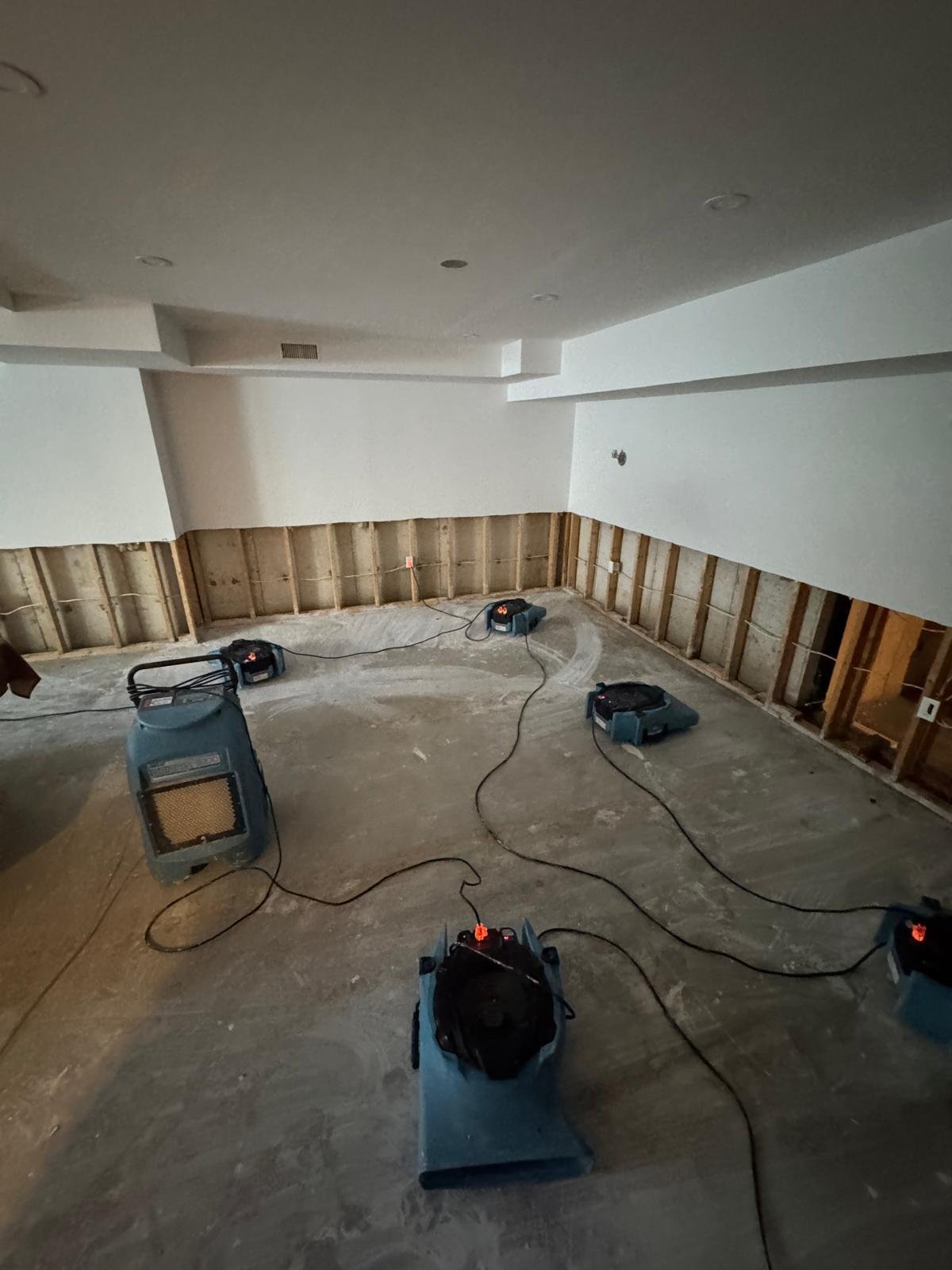
For a flooded basement, professional drying uses a controlled system of commercial air movers and low-grain refrigerant dehumidifiers. Air movers evaporate moisture from materials, while dehumidifiers remove that moisture from the air. Using fans without enough dehumidification can simply move humid air around the room and slow the process.
Avoid blasting heat into a wet basement. Excessive heat can warp wood, damage finishes, and cause materials to dry unevenly. Controlled temperature, airflow, and humidity are more effective than trying to dry everything as fast as possible with space heaters.
Check behind walls, under floors, and inside cavities
The hardest part of basement drying is often the moisture you cannot see. Water may wick upward through drywall, travel below laminate or vinyl flooring, saturate carpet backing, or remain inside insulation and wall cavities. If the basement has a finished ceiling, water from an upstairs leak can also become trapped above it.
Look for swollen baseboards, bubbling paint, buckled flooring, staining, musty odours, and soft drywall. These are warning signs, not a complete inspection. Moisture meters, thermal imaging, and hygrometers help identify hidden water and confirm whether the drying process is actually working.
Drywall and insulation should not be left in place simply because they appear normal. If readings show elevated moisture, targeted removal may be necessary to expose framing and prevent concealed mould growth. This is especially important after water has been present for more than 24 to 48 hours.
Clean and sanitize based on the water source
After clean-water intrusion, hard non-porous surfaces can usually be cleaned with detergent and water once extraction is complete. Dry them thoroughly afterward. Do not rely on fragrance sprays or household disinfectant alone to solve a moisture problem. Sanitizing is only one part of restoration.
Sewage, floodwater, and other contaminated water require a higher level of precaution. Porous materials may need to be removed, affected surfaces cleaned with appropriate antimicrobial products, and the area dried under containment where needed. Improper sewage cleanup can expose occupants to bacteria and other contaminants long after the visible water is gone.
Take photos and videos before disposing of damaged materials if you intend to make an insurance claim. Document the source of the loss, water level, damaged contents, and any emergency mitigation work. Keep receipts for pumps, dehumidifiers, temporary accommodations, and professional services.
When the best way to dry a wet basement is professional restoration
Call a restoration team immediately when there is sewage, more than a small amount of water, visible mould, soaked drywall or insulation, wet flooring over a large area, or any concern about electrical safety. The same applies when water has been sitting for a day or more, when a commercial property needs to reopen quickly, or when the source is unclear.
An IICRC-certified restoration crew can inspect the affected area, classify the water damage, extract water, remove unsalvageable materials, set up calibrated drying equipment, monitor moisture levels, and complete repairs once the structure is dry. That full process matters because rebuilding before drying is verified can trap moisture inside the property.
For homeowners and property managers across Toronto and the GTA, CPR24 Restoration provides 24/7 emergency response and can arrive on-site within 45 minutes for urgent water damage situations. The goal is to stop the loss, protect what can be saved, and return the basement to a safe, dry condition without unnecessary delay.
A basement is dry only when the moisture readings confirm it, not when the puddles disappear. Address the water source, dry the building materials completely, and treat every musty smell or hidden damp spot as a reason to investigate before it becomes a larger repair.
What CPR24 Restoration sees in wet basements across the GTA
At CPR24 Restoration, we respond to wet basement and basement flooding calls throughout Toronto and the GTA every week. In our experience, one of the biggest mistakes homeowners make is assuming the basement is dry once the visible water is removed. We regularly find elevated moisture behind drywall, underneath laminate and vinyl flooring, inside insulation, and along basement framing after the surface appears dry. Our restoration technicians use professional moisture meters, thermal imaging equipment, commercial dehumidifiers, and air movers to locate and dry hidden moisture. Every basement water damage situation is different, which is why we assess the affected materials and moisture conditions before recommending removal, drying, or restoration.