
Water damage can escalate fast if Holland Landing residents don’t address it within hours. Mold develops faster after water exposure, and structural integrity weakens when moisture lingers unchecked.
We provide emergency water damage restoration and mold removal for Holland Landing properties. Our IICRC-certified professionals handle flood damage in Holland Landing homes and provide full mold remediation for local businesses.
We serve Holland Landing East Gwillimbury, and the surrounding areas, including Newmarket. We follow Ontario’s mold treatment standards to ensure safe and thorough restoration.
This piece walks you through our complete water damage and mold removal process. You’ll learn about emergency response protocols and who benefits most from professional remediation services.
Understanding Water Damage and Mold Growth in Holland Landing
Common causes of water damage in East Gwillimbury
Properties in East Gwillimbury face water intrusion from multiple sources. Plumbing failures are among the most common causes. Burst pipes can result from freezing temperatures, old systems, and shifting pressure. They can release large volumes of water.
Appliance-related incidents create problems that homeowners discover too late. Dishwasher and washing machine supply lines can fail and push water under cabinets. Water can spread to nearby rooms. Moisture can seep into baseboards and subfloors.
Foundation seepage presents concerns for Holland Landing properties. Heavy rainfall, blocked downspouts and poor drainage direct water toward foundations and window wells that penetrate basements. Sewer backups bring dirty water into homes when main lines clog with tree roots or when city systems overflow in severe storms.
Water heater leaks spread across the flooring and into the drywall before detection occurs. Drain backups from clogged lines cause overflows in tubs, showers and basement floor drains. Even minor issues like loose supply lines under sinks create conditions for hidden moisture accumulation behind walls.
How fast mold develops after water exposure
Mold begins growing within 24 to 48 hours after water exposure. Mold spores absorb moisture and swell at a microscopic level in the first 24 hours. Spores send out root-like strands called hyphae.
They can penetrate porous surfaces like drywall, wood, and fabric within 24 to 48 hours.
Visible mold colonies appear around 18 to 21 days after water exposure. Small colonies may appear as fuzzy patches or discolored spots by day three. This is more likely in humid conditions or poor ventilation. Mold releases spores into the air as it grows and spreads to other moisture-exposed surfaces throughout the property.
Health risks associated with mold and water damage
Mold produces allergens, irritants and substances called mycotoxins that might be toxic. Sensitive people who breathe in or touch mold spores can have allergic reactions.
These reactions can cause hay fever-like symptoms. Symptoms include sneezing, a runny nose, red eyes, and skin rashes. These responses can occur right away or develop over time.
Mold exposure irritates eyes, skin, nose, throat and lungs in both allergic and non-allergic people. People with asthma experience attacks and worsening respiratory conditions from mold. Chronic sinusitis, coughing with wheeze and respiratory infections can develop from extended exposure.
People with compromised immune systems face heightened risks. Mold can cause fungal infections in airways if you have immunodeficiency disorders or take immune-suppressing medications. Children, elderly people and pregnant women experience greater vulnerability to mold-related health effects.
Our Water Damage & Holland Landing Mold Removal Process
Emergency response and original assessment
Our technicians arrive on-site within 45 minutes, carrying moisture meters, thermal imaging cameras and hygrometers. We identify the water source immediately, whether it’s a burst pipe, roof leak or foundation seepage.
We classify water damage by category and class using IICRC S500 standards. Category 1 indicates clean water from supply lines. Category 2 involves gray water with contaminants, and Category 3 represents black water from sewage or flooding. Class ratings range from Class 1 with low absorption to Class 4.
Class 4 may require special drying methods for hardwood and plaster.
Water extraction and structural drying
High-capacity pumps remove standing water at rates exceeding 125 gallons per minute. This is a significant deal as it means that we can handle severe flooding. Wet vacuums extract moisture from carpets and upholstery without damaging fibers. We position industrial air movers to promote airflow across wet surfaces and accelerate evaporation rates.
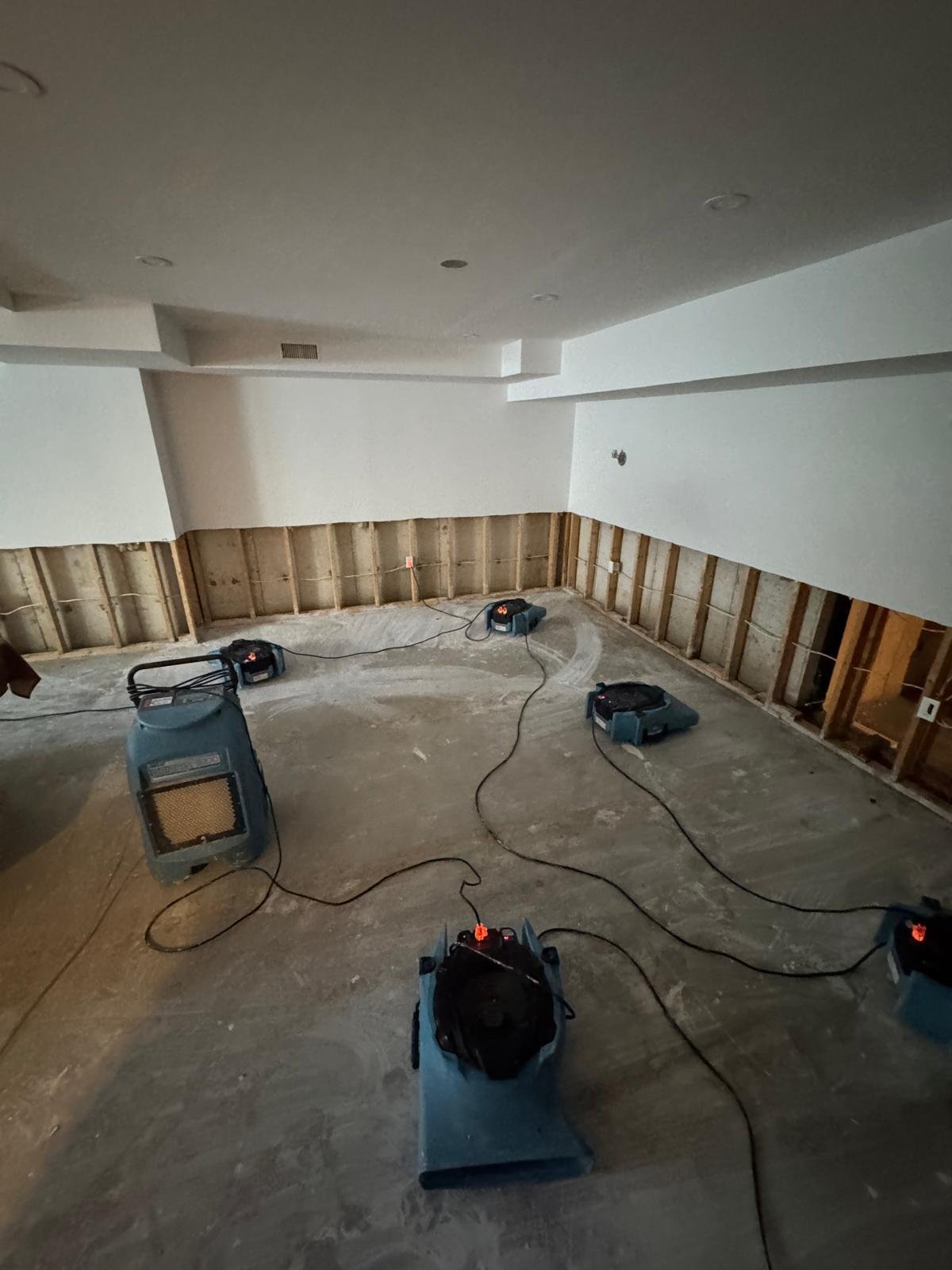
Dehumidifiers run to pull moisture from the air and building materials. Carpet can take 24 hours or more to dry. Moderately wet drywall requires 1-3 days, and hardwood flooring may need 7-10 days.
We monitor moisture levels daily using electronic detection instruments. We adjust equipment placement based on psychrometric readings.
Mold inspection and containment setup
We install HEPA-filtered negative air machines first and pull contaminated air outside through flexible ducting. Physical barriers of 6-mil fire-retardant polyethylene sheeting seal the work area. Workers cover all HVAC vents, doors, and pipe chases with plastic and seal them with tape to prevent spore migration.
Negative pressure keeps the containment area at lower pressure than surrounding spaces. Air flows inward through any gaps. We verify containment effectiveness by checking if polyethylene sheeting billows inward on all surfaces.
Safe mold removal and cleaning
Our team wears N-95 respirators, non-latex gloves and protective goggles during all mold removal work. We remove unsalvageable mold-damaged materials like drywall, insulation, and ceiling tiles. Someone scrubs non-porous surfaces with detergent solutions and dries them.
EPA-approved antimicrobial treatments disinfect affected surfaces, followed by mold-resistant encapsulating products that prevent future growth.
Final restoration and prevention measures
We replace removed materials with mold-resistant alternatives and repair structural components. Dehumidifiers manage humidity levels and keep them between 30% and 50%.
24/7 Emergency Water Damage Service Holland Landing
Rapid response for flood damage Holland Landing
Our emergency teams operate around the clock, every day of the year. We respond to flood damage Holland Landing properties experience within 45 minutes anywhere in the service area.
Truck-mounted extraction systems arrive ready to handle floods. Portable water extractors arrive ready to handle floods.
Emergency generators arrive ready to handle floods.
Infrared technology detects hidden moisture behind walls and under flooring that standard inspections miss. Sewage backups receive priority treatment since contaminated water contains bacteria and viruses capable of causing serious illness. Experts classify water into three categories based on contamination levels, and each category requires different treatment protocols.
What to do right after water damage
Shut off your main water supply if a burst pipe causes flooding. Turn off circuit breakers supplying electricity to wet areas before entering.
Remove standing water using mops and buckets if safe to do so. Place plastic or Styrofoam between furniture legs and wet carpeting to prevent staining. Move valuable items to dry rooms with water-resistant flooring.
Coverage areas including Newmarket and Sharon
We serve all East Gwillimbury, including Holland Landing, Sharon and Queensville. Our service extends throughout Newmarket’s historic downtown, Leslie Valley and Glenway Estates.
Who Needs Water Damage and Mold Remediation Holland Landing Services
Homeowners and residential properties
Residential properties require professional water damage and mold remediation Holland Landing services after burst pipes, basement flooding, appliance failures, and sewage backups. We handle water extraction, structural drying, and complete restoration from beginning to end for homes experiencing moisture intrusion. Families dealing with basement floods or hidden wall leaks need certified technicians who know how water spreads in homes.
Commercial businesses and retail spaces
Commercial water damage disrupts operations and causes revenue loss. It creates safety concerns for customers and employees.
We serve offices, retail spaces, and warehouses requiring fast restoration to minimize downtime.
Business owners cannot afford extended closures. We arrive within 60 minutes during commercial emergencies.
Property managers and landlords
Property managers carry legal responsibilities to maintain safe, habitable environments free from water damage and mold. Landlords must respond to water damage reports and complete repairs on time to prevent mold growth and avoid tenant lawsuits. We help property managers fulfill their obligations by addressing moisture issues and performing remediation that prevents future contamination.
Industrial facilities and public buildings
Industrial operations face unique restoration challenges requiring specialized equipment and techniques. We provide water damage restoration for manufacturing facilities and large-scale commercial operations where downtime affects production schedules. Public buildings and government facilities also benefit from our certified teams trained in handling complex restoration projects.
Contact CPR24 Restoration for Holland Landing Water Damage & Mold Removal Services!
Water damage poses serious risks when left untreated. Mold remediation for Holland Landing properties just needs professional expertise.
We respond within 45 minutes to protect your property from escalating damage and health hazards. Our IICRC-certified team handles everything from water extraction to final restoration. We ensure your home or business returns to safe conditions.
You should contact us right after you find water damage. Every hour counts in preventing mold growth and structural deterioration.
FAQs
Q1. Will mold disappear on its own once the moisture source is eliminated?
No, mold will not completely disappear on its own. While removing moisture causes mold to become dormant or “go to sleep,” the spores never actually die.
Some mold spores can remain inactive for hundreds of years under the right conditions. This is why lowering humidity alone isn’t enough if you already have active mold. You need professional removal to fully fix the contamination.
Q2. What cleaning solutions effectively kill mold caused by water damage?
Use bleach or dish detergent to clean mold in your home. Mix no more than 1 cup of bleach in 1 gallon of water for effective treatment. The cleaning approach depends on the extent of water damage and where the mold is growing.
Always open windows or doors when using cleaning products. This helps fresh air circulate and keeps indoor air safe.
Q3. How quickly does mold start growing after water exposure?
Mold begins developing within 24 to 48 hours after water exposure. During the first 24 hours, mold spores absorb moisture and swell microscopically. Between 24 and 48 hours, they send out root-like structures that penetrate porous surfaces like drywall, wood, and fabric. Visible mold colonies typically appear around 18 to 21 days after the initial water exposure.
Q4. What are the chances of mold returning after professional remediation?
Mold can return within weeks if you don’t properly address the underlying moisture source after remediation. Statistics show that 50% of mold problems result from water damage caused by plumbing leaks or poor ventilation. Homes with poor ventilation are 70% more likely to have mold return after cleanup. Moisture control and good ventilation are key for long-term prevention.
Q5. What health problems can mold and water damage cause?
Mold produces allergens, irritants, and potentially toxic substances that can trigger various health issues. Common symptoms include sneezing, runny nose, red eyes, skin rashes, and irritation of the eyes, skin, nose, throat, and lungs. For people with asthma, mold can trigger attacks and worsen respiratory conditions. Individuals with compromised immune systems, children, elderly people, and pregnant individuals face heightened risks from mold exposure.