

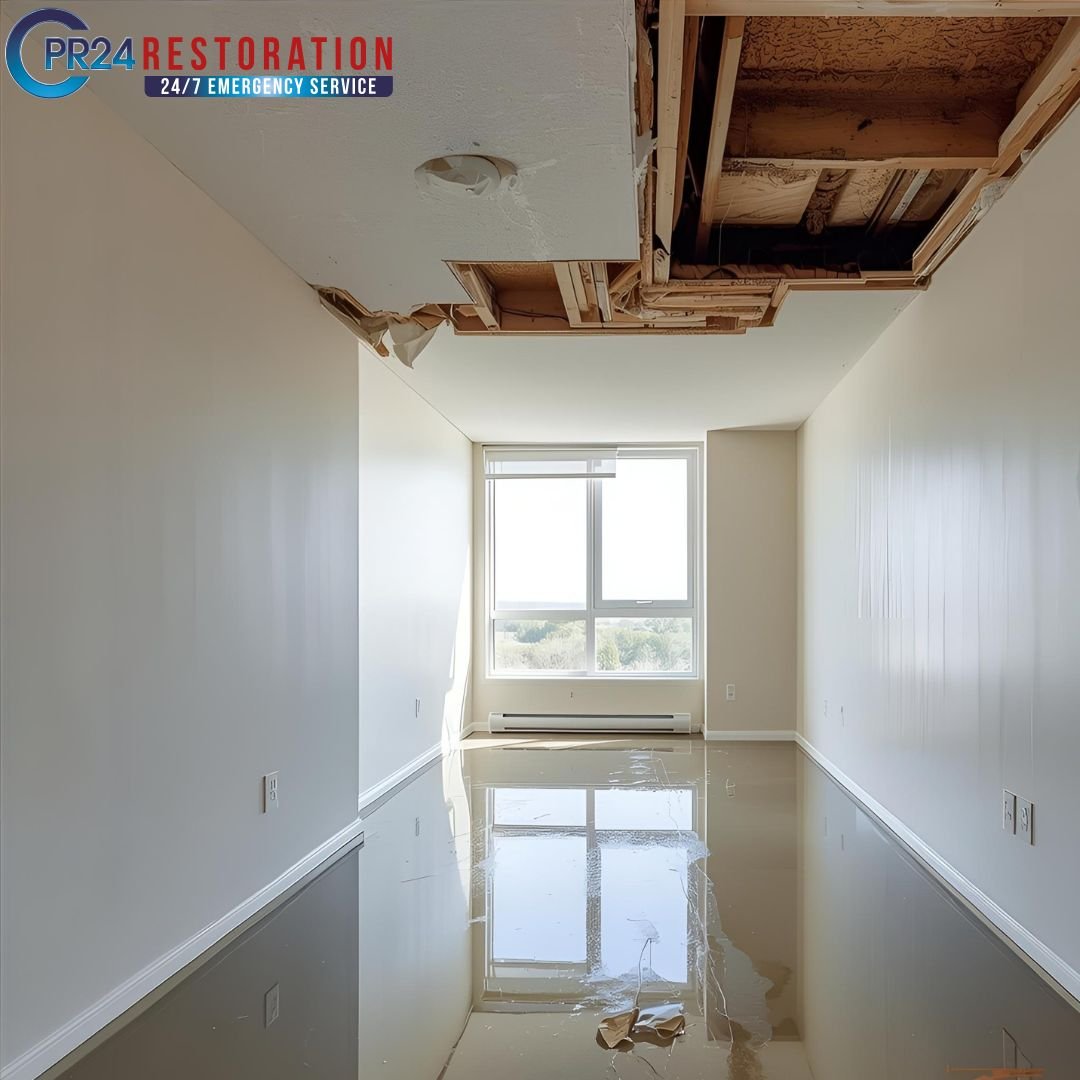
Water damage tops the list of insurance claims by condo owners, according to the Insurance Bureau of Canada. Condo owners can avoid major financial headaches by understanding their responsibilities during water damage incidents.
Condo master insurance policies often carry hefty deductibles. These amounts can reach $50,000 or even $100,000.
The responsibility for water damage isn’t always clear-cut, especially with water leaks from upstairs units in Ontario. Buildings allow water to flow rapidly, which affects multiple units and common areas. This movement makes it harder to determine who bears responsibility.
Toronto condo owners need clear direction about water damage rules. This piece helps you protect your investment by explaining repair responsibilities and insurance coverage details. Canadian property owners lost more than $1 billion to water damage in 2024 alone. This makes understanding your coverage more critical than ever.
Understanding Condo Water Damage Responsibility
Water damage responsibility in Toronto condos boils down to personal versus shared liability. Let’s get into what decides who pays for what in these cases.
What do people consider a standard unit?
The Standard Unit By-law is a vital document that shows what your condo corporation’s insurance covers. This document lists all base-level materials and fixtures that make up the “standard unit.” About 80% of residential condominiums have this by-law.
Claims settlements often face delays without this by-law. Insurance adjusters struggle to find original builder specifications.
The Standard Unit By-law has simple structural parts like walls, ceilings, electrical, and mechanical items. You’ll need to ensure anything beyond these standard elements yourself. This includes things like upgraded flooring or custom cabinets, which we call “improvements” or “betterments”.
Who maintains common elements vs. private units?
The Condominium Act spells out maintenance duties clearly. The condo corporation takes care of common elements, while you look after your unit. Here’s how it works:
- Private Units: Everything inside your unit falls under this – interior floors, ceilings, walls, and fixtures. You’re responsible for maintaining all it.
- Common Elements: These are the shared spaces outside private units. Think exterior walls, roofs, hallways, and amenities. The condo corporation handles these areas.
- Exclusive Use Common Elements: Your balcony or patio might fit here. These areas serve specific units but belong to common property. You often share or clearly define maintenance duties in your documents.
Water leak in condo: who is responsible in Ontario?
The source of water damage usually determines who pays:
- A leaky pipe in your unit means repairs are your responsibility.
- The condo corporation handles repairs when pipes burst in common areas or shared walls.
- You might still need to pay for damages even if you didn’t cause them, assuming there’s no negligence.
The Standard Unit By-law affects payment responsibility a lot. For example, if ceiling water damage in condo from above, your corporation’s insurance may cover it. This is true if the ceiling meets standard unit specifications. Your personal insurance kicks in if you’ve made upgrades.
How Condo Insurance Works in Water Damage Cases
Condo insurance for water damage involves two different policies that protect your investment together. Here’s a simple breakdown of what each one covers.
What does condo insurance cover?
Your personal condo insurance mainly protects everything “walls-in.” According to the Insurance Information Institute, standard condo policies will cover water damage from:
- Burst pipes or sudden plumbing failures
- Leaking appliances and HVAC systems
- Rain is leaking through the roof
- Damage from ice dams
- Water damage from neighbouring units
Your policy covers water-damaged personal belongings. It also covers living expenses while workers complete the repairs. Additionally, it protects you if your unit causes water damage to others. Just remember – this only applies to sudden, accidental damage, not problems from neglect or normal wear and tear.
What does the master policy not cover?
Your condo association’s master policy won’t cover everything. You should know it doesn’t include:
Here is the adjusted text:
– Upgrades you made to your unit
– Personal items in your unit
– Water damage from flooding or groundwater
– Sewer or drain backups (unless you have special coverage)
– Slow leaks or ongoing water problems
Many people think flood damage is part of their standard policy. The truth is, you’ll need separate flood insurance if water comes up from street level.
Water damage condo insurance vs. personal insurance
These two policies split up who pays for what. Your condo fees pay for the master policy that protects the building and shared spaces. Your personal policy takes care of your unit’s interior, belongings, and liability.
Water damage often needs both policies. For example, if a leak from upstairs damages your ceiling, the master policy may fix the structure. Meanwhile, your personal policy will cover your damaged belongings. Take time to review both policies – you want to spot any gaps to ensure you fully protect yourself.
Navigating Deductibles and Special Assessments
Water damage brings complex financial rules about payment responsibilities. You need to know about deductibles and special assessments to protect yourself from unexpected costs.
What is a water damage deductible?
A water damage deductible is money you pay before your insurance company covers the rest of your claim. These deductibles can hit hard – condo master insurance policies sometimes carry deductibles up to CAD 69,668.01 or CAD 139,336.02. Let’s look at a real example: if your unit has CAD 6,966.80 in damages with a CAD 1,393.36 deductible, you would pay CAD 1,393.36 while your insurance company covers the remaining CAD 5,573.44.
When do owners pay the condo corporation’s deductible?
Ontario condo owners have faced tougher liability rules since January 1, 2020. Current rules state that owners must pay the insurance deductible. This applies if damage starts in their unit.
It does not matter what precautions they took. Your carefulness doesn’t matter anymore. The damage’s origin point is all that counts.
Notwithstanding that, this liability has key limits:
- Owners can’t be charged more than CAD 69,668.01
- Damage from normal wear of common property, condo corporation actions, or construction defects doesn’t make owners liable
Smart condo owners make sure their personal insurance includes deductible coverage up to CAD 69,668.01.
Special assessments: when and why they happen
Special assessments are extra one-time fees. They happen when your condo corporation lacks money for unexpected expenses. These charges typically appear when:
- Emergency repairs drain the reserve fund
- Problems surface between reserve fund studies
- Construction ends up costing more than expected
- Your board postpones needed fee increases.
The money involved can be shocking. Arthur Townhomes owners learned this firsthand. Three special assessments hit them over about 18 months, with each owner paying nearly CAD 55,734.41. This money went toward engineering assessments, site protection measures, and replacing infrastructure.
Ontario’s Condominium Act makes these special assessments legally binding. Once your board approves them, every owner must pay their share based on ownership percentage. What to Do When Water Damage Happens
Quick action at the time you find water damage in your Toronto condo makes a vital difference. A proper response will minimize damage and strengthen your position for insurance claims and legal actions.
Steps to take immediately after a leak
The moment you spot a leak, stop the water source first. Call an emergency plumber right away if it’s from your unit, then let your condo manager or front desk know. Unknown sources require immediate contact with building management. A burst pipe might need the fire department’s help since they can locate shut-off valves quickly.
Your next step is to protect your belongings. Move furniture away from water and use towels to stop the spread. Make the affected areas safe by turning off the electricity. A water damage restoration company should remove standing water within 24 hours to stop mold from growing.
Can I sue my upstairs neighbour for water damage?
The answer is yes, in specific situations. You need to show that your neighbour didn’t maintain their unit properly, which directly caused your damages. The courts will get into whether their actions were unreasonable or negligent and resulted in substantial harm.
A 2019 case in British Columbia showed that a neighbour was not responsible for a leaking toilet. They quickly called building management for help. Make sure you document everything if you decide to take this path.
How to document and report damage properly
Start by taking clear photos and videos of all affected areas. List all damaged items with their brand names, model numbers, purchase prices, and when you bought them. Save every receipt for repairs and temporary housing.
The next step is to report everything to your property manager and insurance provider. Give them all the details about where the leak came from, how bad the damage is, and what you did to stop more damage. These complete records are the foundations of successful insurance claims.
Contact CPR24 Restoration for Condo Water Damage Restoration!
Water damage creates major headaches for Toronto condo owners, especially when you have to deal with insurance claims. Learning the rules about who’s responsible can save you thousands in potential condo water damage costs.
Your unit’s boundaries and where common elements begin play a vital role in determining who pays for what. The Standard Unit By-law helps direct you through these situations. It clearly shows what the corporation covers and what falls under your responsibility.
On top of that, it’s vital to have the right insurance coverage. Your personal policy needs to work alongside the master policy. This becomes even more important for deductible coverage that shields you from hefty charges. Whatever the negligence factor, without proper protection, you could face bills of $50,000 or more.
Time matters most when water disasters strike. The faster you act, the less damage you’ll face. Taking pictures and notes of everything gives you a stronger case with insurance companies and legal teams. So, regular maintenance of your plumbing fixtures and appliances helps prevent these problems from happening.
Living in a condo always comes with water damage risks. But you can protect your investment by knowing your duties, having proper insurance, and acting fast when problems occur. This knowledge helps you handle condo ownership with confidence instead of worry.
FAQs – Water Damage Condo Rules
Q1. Who is responsible for condo water damage? Condo water damage who pays?
Responsibility typically depends on the source of the damage. If it originates from within your unit, you’re generally liable. For damage from common areas or shared walls, the condo corporation is usually responsible. However, even without negligence, unit owners may face accountability for damages that originate in their unit.
Q2. What does condo insurance cover in cases of water damage? Does condo insurance cover water damage?
Personal condo insurance typically covers sudden water damage. This includes issues from burst pipes, leaking appliances, and rain coming through the roof. It also typically includes coverage for damaged personal belongings, additional living expenses during repairs, and liability protection if your unit causes damage to others.
Q3. How do water damage deductibles work in condos?
Water damage deductibles are the amount you must pay before insurance covers the remaining claim. In Toronto condos, these can be surprisingly high – sometimes up to $50,000 or $100,000. Since 2020, Ontario condo owners have been automatically responsible for paying the insurance deductible if damage originated in their unit, regardless of fault.
Q4. What should I do immediately after discovering water damage in my condo?
First, try to stop the water source if possible. Notify your condo manager or front desk immediately.
Protect your belongings by moving them away from water, and use towels to contain the spread. Document everything with photos and videos, and create a detailed inventory of damaged items. Contact a water damage restoration company promptly to prevent mold growth.
Q5. Can I sue my upstairs neighbour for water damage to my condo?
Yes, you can sue your upstairs neighbour. However, you must show that they did not maintain their unit. This must directly cause your damages.
Courts will examine whether their actions were unreasonable or negligent and if substantial harm resulted. However, if they take prompt action to address the issue, they may avoid liability.