
Water damage restoration becomes critical once you find flooding in your Toronto property. Mold can start developing within 24 to 48 hours, so every minute counts to protect your home and health.
Water damage spreads quickly. Professional response time is essential to prevent structural damage and pricey complications.
In this piece, we’ll walk you through the immediate safety steps to take and how to document damage for insurance claims. You’ll learn when to call emergency water damage restoration services. We’ll also show how certified water damage restoration toronto teams prevent long-term issues like mold growth.
Ensure Safety Before Taking Any Action
Flooding creates immediate life-threatening hazards that need careful assessment before you attempt any cleanup. Water and electricity together claim lives every year during flood events. Safety protocols are non-negotiable.
Shut Off Electricity in Affected Areas
Never enter standing water if electricity hasn’t been shut off. Electricity travels through water and creates severe shock risks that can prove fatal. Your main electrical panel needs attention right away. The biggest issue is this.
Most Toronto homes have breaker panels in basements. This creates a dangerous situation when basements flood.
Do not wade through water to reach your breaker panel if it sits in the flooded area. Call Toronto Hydro or your local electrical utility to disconnect power at the meter. Most utilities provide emergency disconnection services for flood situations.
If you can reach your breaker panel safely without entering floodwater, shut off all basement circuits first. Then shut off the main breaker.
Hire licensed electricians to inspect all electrical systems before restoration once you remove the water. Submerged electrical equipment requires replacement, not just drying.
Stop the Water Source if Possible
The first step during any water emergency involves stopping the flow. Locate your home’s main water shutoff valve and turn it off right away.
You need to know this valve’s location before an emergency strikes. This proves critical to minimize damage.
You must also shut off water to specific appliances that might be leaking. This helps control the situation.
Protect Yourself from Contamination
Floodwater contamination poses serious health hazards that extend well beyond visible water. Not all floodwater carries equal risks.
Clean water from broken pipes presents minimal contamination concerns. Gray water from washing machines or dishwashers contains some contaminants and requires caution. Black water from sewage backups or soil organisms poses serious health hazards and requires specialized handling.
Toronto’s combined sewer system means storm flooding often brings sewage contamination into basements. This black water contains bacteria, viruses, parasites and toxic substances. These cause illness through skin contact, ingestion, or inhalation of contaminated mist.
Floodwater rarely consists of “just rainwater.” It mixes with sewage, household chemicals, bacteria, debris and mold spores once it enters your property.
Protective equipment is mandatory for anyone entering flood-affected areas:
- Waterproof boots extending above flood levels
- Heavy-duty rubber gloves
- Eye protection
- N95 masks or respirators to protect against mold spores and airborne contaminants
Thoroughly wash any skin that contacts floodwater with soap and clean water. Do not smoke, eat, or touch your face while in flooded areas. Seek immediate medical attention if contaminated floodwater exposes cuts or wounds. Serious infections develop faster.
Assess Whether It’s Safe to Enter
Walk around the perimeter and note electrical wiring, any gas smell, or debris that could fall before you enter. Floodwater exerts tremendous pressure against foundation walls and potentially causes structural damage that compromises your home’s safety.
Warning signs of flood-related structural damage include new or wider foundation cracks. They also include bowed or shifted walls.
Doors and windows may no longer close properly. Separated seams where walls meet ceilings or floors also indicate damage. Evacuate the affected area. Consult structural engineers before you start cleanup if you see any of these conditions.
Do not touch any electrical fixtures, telephones, or switches if a gas odour is present. Any spark may ignite the gas.
Document the Damage for Insurance Claims
Documentation is the foundation of successful insurance claims. Grab your phone and start capturing evidence before moving a single item. Record video as you walk through each affected room and narrate what you see and when the flooding occurred. Wide-angle shots establish the overall scope of damage and prove you haven’t exaggerated the situation.
Take Photos and Videos of All Affected Areas
Photograph entire rooms from doorways first to capture context. These complete shots show insurance adjusters the full extent of flooding. Move closer once you have overall room documentation to capture detailed images of specific damage points.
Photograph water stains on walls and ceilings, bubbling or peeling paint, warped flooring, and damaged drywall. Capture any visible mold growth or discoloration. Multiple angles of the same damage provide adjusters with the complete visual information they need for assessment.
Good lighting makes the difference between useful evidence and rejected claims. Natural light works best. Bright artificial lighting is enough when daylight isn’t available.
Avoid using flash, which creates glare and obscures critical details. Blurry or poorly lit photos won’t support your case. Damage might as well not exist if adjusters can’t see it.
Record Time and Source of Water Damage Toronto
You need to find and document where water entered. This proves whether damage qualifies as sudden and accidental, which insurance covers, versus long-term neglect, which doesn’t.
Photograph the exact entry point, whether it’s a burst pipe, roof leak, window breach, or appliance failure. Capture any visible damage surrounding the source and evidence of what caused the intrusion.
Photograph water meter readings if you can safely access them to prove the volume of water loss. This is helpful for pipe bursts.
Time-stamped photos establish clear timelines of when damage occurred and how it progressed. Enable timestamp features on your camera or note dates and times somewhere visible in pictures. This documentation becomes critical since mold develops within 24 to 48 hours.
List Damaged Items and Property
Create an inventory of every damaged item with detailed descriptions, brand names, purchase dates, and prices. Include current condition and photos.
Dig up receipts whenever possible to validate values. Photograph serial numbers and model information for electronics and appliances. These specifics are a great way to get your claims filed properly.
Organize items into groups such as furniture, electronics, and clothing. Don’t discard anything before your adjuster reviews it.
Photograph the flood damage before disposal if you must throw out items presenting health hazards. Keep samples for adjuster review.
Keep Digital Backups of Documentation
Upload photos to cloud storage services or external drives right away. Phones fail, especially in humid post-flood environments.
Create organized digital folders categorizing images into ‘before,’ ‘during,’ and ‘after’ sequences. This methodical approach helps adjusters understand damage progression and makes referencing specific items easier during the claims process.
Save every receipt from this moment forward. This includes emergency repairs, hotel stays if you can’t occupy your home, meal costs, and storage rentals. Save receipts for cleaning supplies too. Your policy might cover additional living expenses, but no receipt means no reimbursement.
Call Certified Water Damage Restoration Services
You’ve documented the damage. Your next call goes to a certified water damage restoration company, not your insurance provider. Many Toronto homeowners contact insurance first, but that’s a mistake. Restoration experts need to arrive on-site right away to prevent damage escalation.
Why You Should Call Restoration Experts First
The IICRC (Institute of Inspection, Cleaning and Restoration Certification) recommends professional water damage restoration services for anything beyond a small area of wet carpet. Insurance companies expect policyholders to take reasonable steps to reduce damage.
Calling restoration experts demonstrates you’ve acted responsibly. Professional teams document everything with photos and reports during their original assessment. This provides the exact evidence your insurance adjuster needs.
Serious water intrusion occurs, and hiring specialists isn’t optional. Water hides in places you can’t see. Attempting DIY cleanup risks missing hidden moisture that causes costly repairs later.
Certified restoration contractors possess specialized training to identify problems an untrained eye would overlook. They understand water behavior and how it migrates through building materials. They also know the specific drying requirements for different surfaces.
Benefits of 24/7 Emergency Water Damage Restoration Services
Water damage doesn’t wait for business hours. Emergency restoration companies in Toronto operate around the clock. They respond to burst pipes at 3 AM or weekend flooding with the same urgency. Response time determines the extent of final damage, so this availability proves critical.
24/7 services reduce stress during emergencies by providing support right away when you need it most. Professional teams prioritize communication and keep you informed throughout the process. They provide reassurance during a challenging situation.
What Professional Restoration Teams Do On-Site
Restoration specialists begin with a full property inspection. They use moisture meters and thermal imaging cameras to detect hidden water behind walls, under flooring and in ceilings. This technology ensures they don’t miss damp spots invisible to the naked eye.
The assessment determines damage extent, water source and affected materials. These are the foundations for a customized restoration plan.
Water removal follows inspection. Industrial-grade pumps and extraction units remove standing water much faster than household equipment. They often extract hundreds or thousands of gallons.
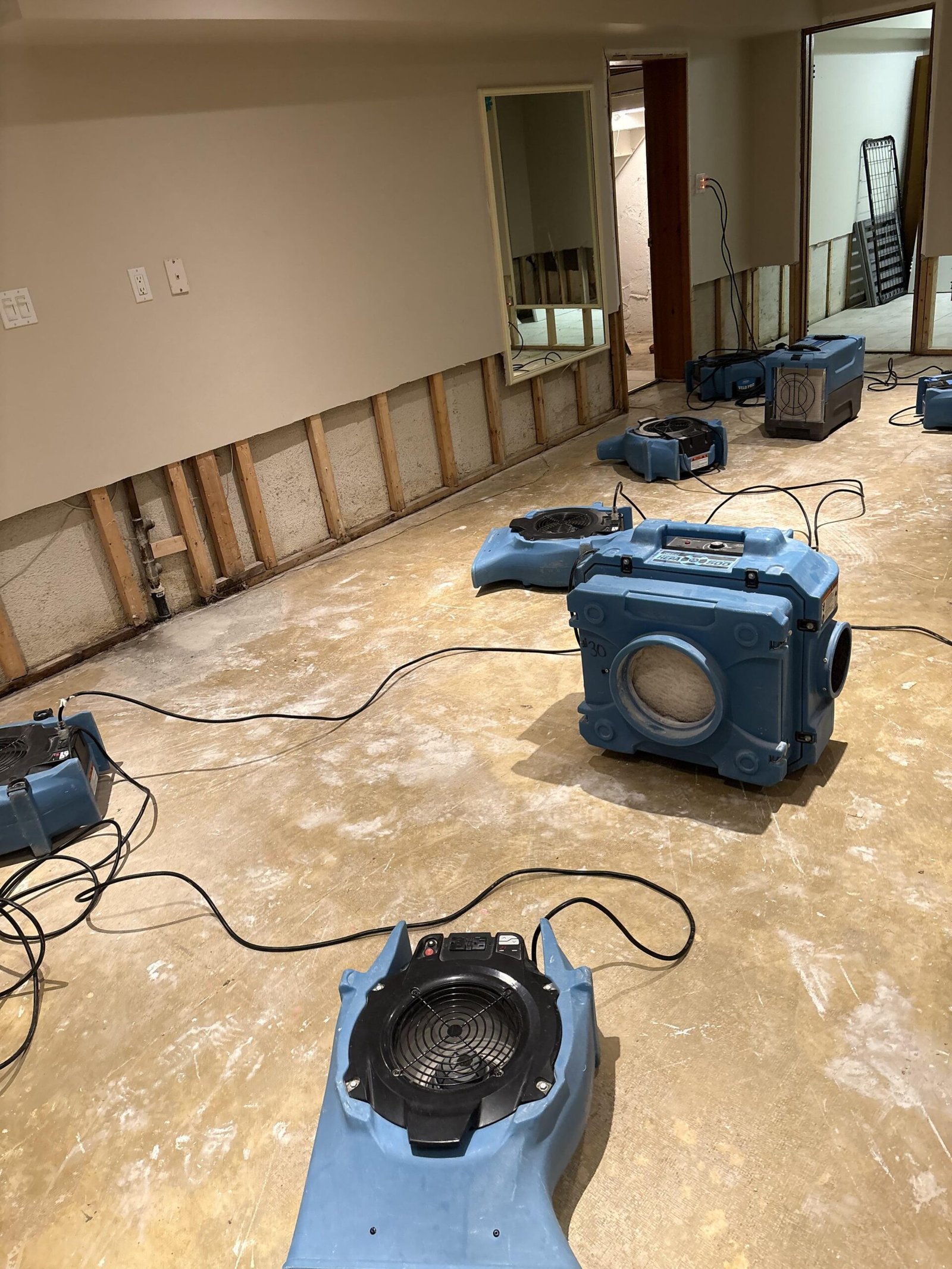
Specialists deploy high-capacity dehumidifiers and air movers after extraction to eliminate moisture trapped deep within building materials. Daily monitoring ensures proper drying progress and allows technicians to adjust equipment placement as needed.
How Fast Response Prevents Structural Damage
Mold can begin developing within 24 to 48 hours after water exposure. Quick action prevents spores from spreading and contaminating indoor air quality.
Water seeps into walls and floors faster than you think and weakens structural integrity over time. Addressing water damage right away reduces the need for extensive repairs. This lowers overall restoration costs as a result.
Contact Your Insurance Company and Start the Claims Process
Once you deploy the restoration team, contact your insurance company to start the claims process. This timing ensures mitigation efforts are underway while you begin navigating the administrative side of recovery.
When to Notify Your Insurance Provider
Call your insurance representative or claims department as soon as the restoration team arrives. Most insurers send adjusters within 24 to 48 hours of receiving notification.
Reporting matters because insurance policies require policyholders to take reasonable steps preventing further damage. Delayed notice can make claims harder. It can also lead to partial denials. This often happens if insurers think more damage could have been avoided.
What Information Insurance Adjusters Need
Have your policy number ready when calling, along with the date and time flooding occurred. Explain what happened and where water entered your property.
Adjusters need clear descriptions of the cause and timeline of the incident. Your photos, videos, and item inventories become critical evidence supporting your claim.
Assemble any proofs of purchase, warranties, and receipts for damaged items if possible. Keep receipts for additional living expenses if you have to leave your home. Your policy might cover these costs, but you must provide documentation to receive reimbursement.
How Water Damage Restoration Companies Help with Claims
Professional restoration teams create thorough, time-stamped documentation that insurance adjusters require. They take photos of affected areas, record moisture readings, note the source and type of water loss, and keep drying logs.
Their detailed scope of work uses standard estimating tools that insurers accept.
It lists labour, materials, equipment, and procedures line by line. Restoration companies use professional documentation to speed approvals and reduce disputes. They turn real damage into measurable quantities and fair pricing. Adjusters can understand and defend this pricing.
Experienced teams coordinate inspections, provide updates, and explain hidden damage discovered during restoration. This removes bottlenecks caused by missing information.
Understanding Your Coverage for Flood Damage Toronto
Most standard homeowner policies exclude overland flooding. Water that enters through foundation cracks or basement windows after heavy rain is often not covered. It is only covered if you bought specific flood protection.
Sudden and accidental damage, such as burst pipes, receives coverage. Gradual leaks or damage from poor maintenance usually doesn’t. Review your policy before the adjuster visits to understand coverage limits, deductibles, and exclusions specific to water damage scenarios.
Prevent Mold Growth and Long-Term Water Damage
Visible water removal solves only half the problem. Porous materials trap moisture and create conditions for rapid deterioration if left unchecked.
Why Mold Can Develop Within 24-48 Hours
Mold needs four things to grow: moisture, food like drywall paper backing, temperatures between 41° and 104°F, and oxygen. Your home’s indoor environment already provides three of these conditions. Water intrusion adds the missing ingredient.
It lets spores germinate.
Spores can start growing on damp surfaces within 24 to 48 hours.
Mold Inspection Toronto After Water Damage
Certified inspectors detect hidden dampness behind walls and under flooring with infrared cameras and moisture meters. Air samples from different rooms measure spore concentrations that remain invisible. Swabs or tape lifts identify specific mold types and severity.
Drying and Dehumidification Requirements
Industrial-grade dehumidifiers pull moisture from air and prevent condensation. Use hygrometers to monitor levels and keep indoor humidity below 60%. Surface dryness deceives homeowners because residual moisture stays trapped deep within materials.
Reconstruction and Repair Services in Toronto
Wet insulation and damaged drywall need replacement with mold-resistant materials that contain moisture inhibitors. Water damage restoration services in Toronto stop the moisture source during cleanup. They also fix leaks and drainage issues that caused the flooding.
Contact CPR24 Restoration for Emergency Water Damage Services in Toronto!
Water damage emergencies just need immediate action, not hesitation. We’ve covered how your safety comes first, followed by documentation and getting professional help. Note that calling certified restoration experts before your insurer accelerates mitigation and strengthens your claim.
The 24 to 48-hour window before mold develops leaves little room for delay. Professional teams possess the equipment and expertise to extract hidden moisture that DIY methods miss. Structural damage stays minimal and recovery costs remain manageable.
Keep this piece handy so you’ll know what steps to take when water intrusion strikes your Toronto property.
FAQs – Toronto Emergency Water Damage
Q1. What are the main steps involved in certified water damage restoration?
Professional restoration follows clear steps. First, experts inspect the water damage with special tools. Second, they remove standing water using industrial pumps and extractors.
Third, they dry and dehumidify affected areas with high-capacity equipment. Fourth, they clean and disinfect all damaged surfaces. Finally, they complete needed repairs and reconstruction to restore your property.
Q2. How quickly should I start the flood cleanup toronto after water damage occurs?
You should begin flood recovery immediately, prioritizing safety first. Start by addressing electrical hazards and stopping the water source. Document all damage with photos and videos, then contact professional restoration services right away.
Time is critical because mold can grow in 24 to 48 hours. Quick action helps prevent more problems and structural damage.
Q3. Does Toronto have programs to help homeowners prevent basement flooding?
Yes, Toronto has implemented a Basement Flooding Protection Program designed to reduce flooding risks. This multi-year initiative improves the city’s sewer system and enhances overland drainage routes. It helps protect properties from water damage during heavy rainfall and storms.
Q4. What type of water damage restoration services are available in Toronto?
Toronto offers full 24/7 emergency restoration services. These services respond to many types of damage, including water leaks and flooding. Professional restoration companies in the Greater Toronto Area respond fast.
They use special equipment to remove water and dry spaces.
They often work with insurance companies to speed up the claims process.
Q5. Should I contact my insurance company or a restoration service first after flooding?
Contact a certified water damage restoration company first, before calling your insurance provider. Restoration experts need to arrive immediately to prevent damage from escalating, and their professional documentation strengthens your insurance claim. Insurance companies expect you to take reasonable steps to limit damage. Calling restoration specialists shows responsible action and gives adjusters the detailed proof they need.