
Project Location: Brampton, Ontario, Canada
Company: CPR24 Restoration
Project Type: Basement Mold Remediation & Water Damage Restoration
Inspection Date: September 25, 2026
Affected Areas: Basement Hallway, Finished Basement Walls, Flooring and Bathroom/Shower Area
Professional Basement Mold Removal Following Water Damage in Brampton
CPR24 Restoration carried out basement mold remediation and water-damaged material removal at a residential property in Brampton, Ontario, following a previous water leak associated with the basement shower area.
The water intrusion had affected surrounding drywall, baseboards and flooring, creating conditions where mold growth and concealed moisture damage were concerns.
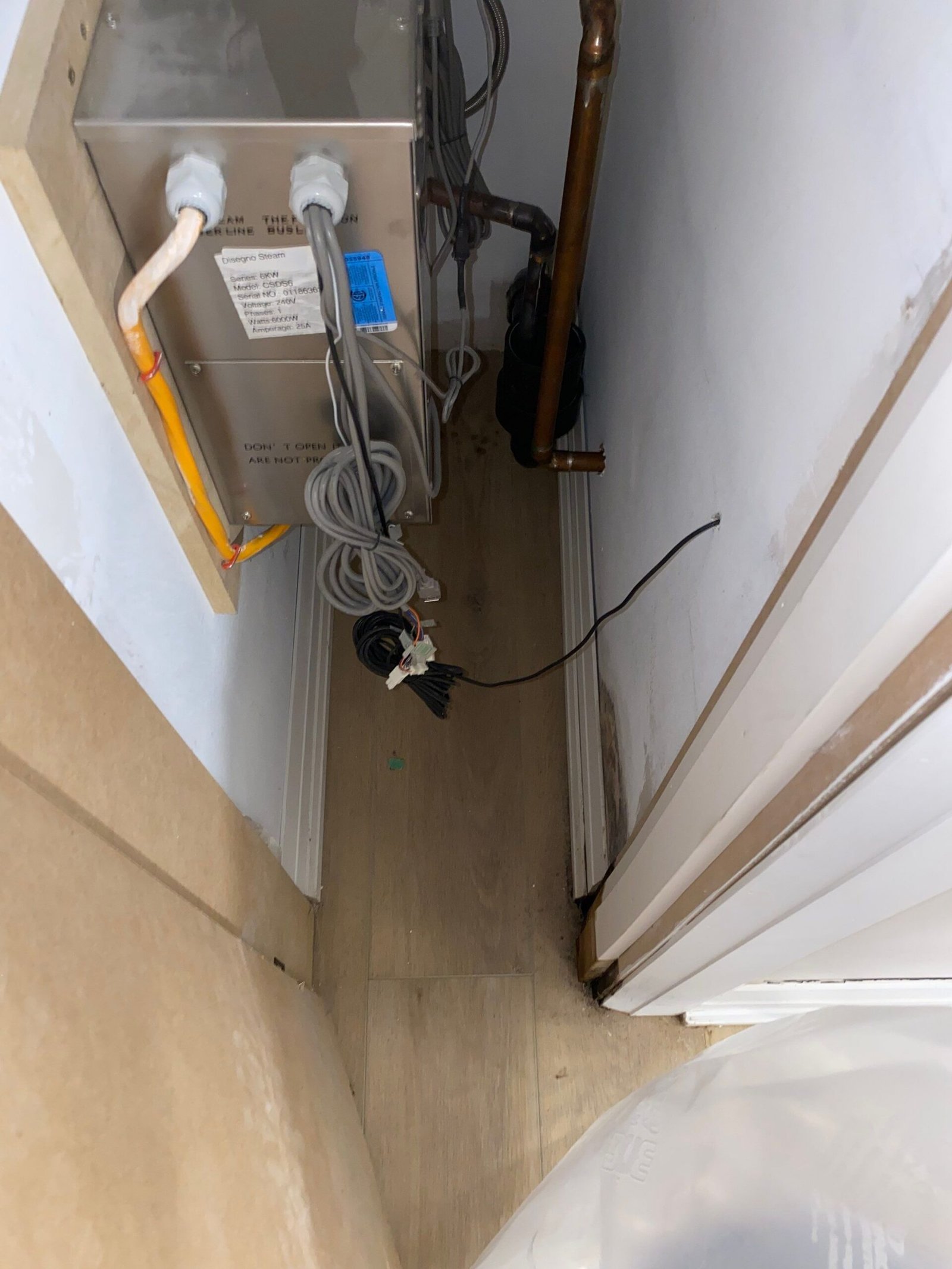
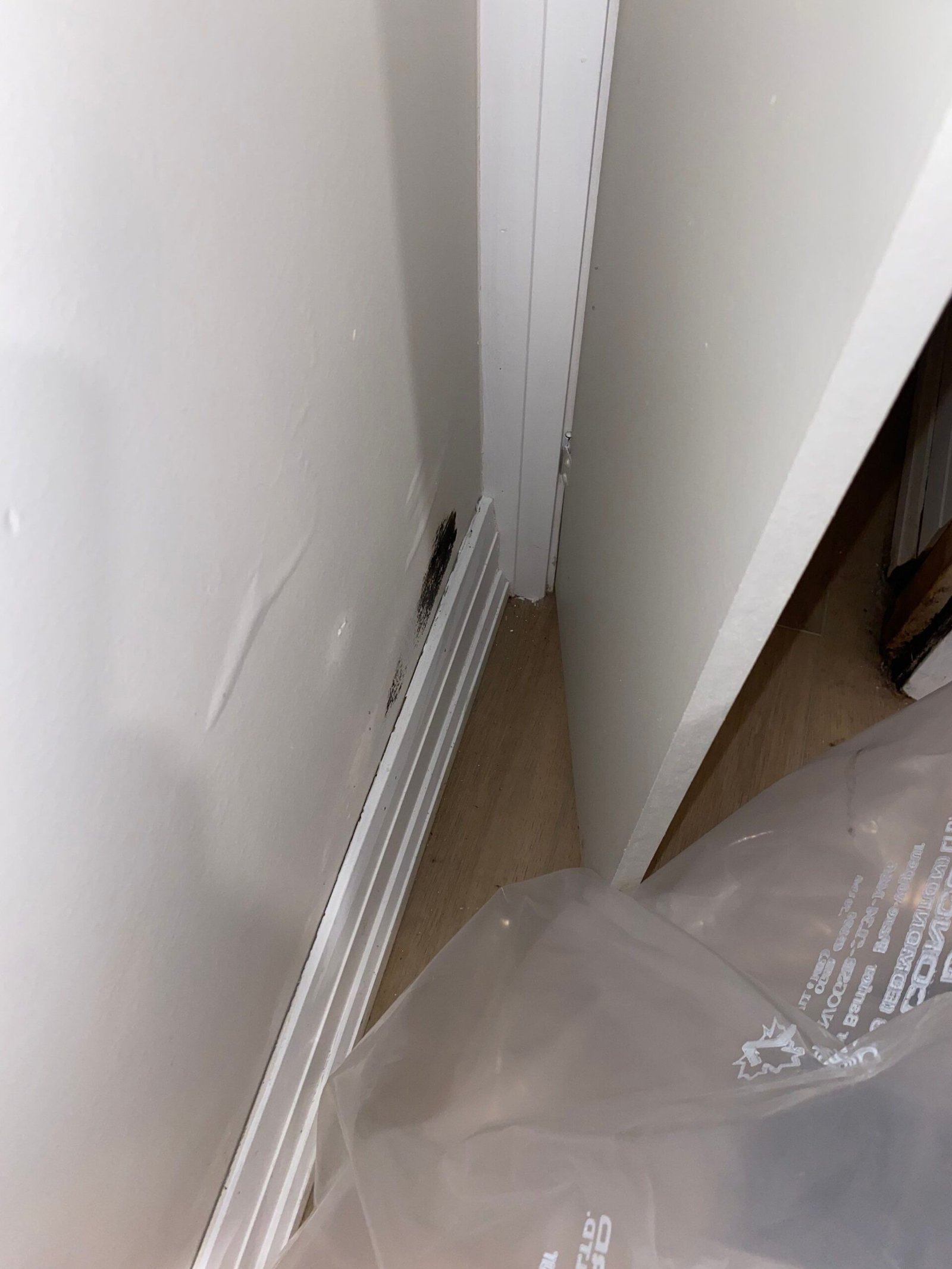
During the inspection, our restoration specialist identified evidence of previous water exposure, visible mold or mold-like conditions, and indications of residual moisture within portions of the basement wall assemblies.
The project involved controlled demolition, protective containment, removal of affected building materials, and the use of professional drying and air-filtration equipment.
This Brampton mold remediation case study documents the initial findings, planned removal boundaries and restoration procedures illustrated by photographs taken during the project.
For homeowners experiencing similar problems, CPR24 Restoration provides professional mold removal in Brampton, including moisture assessments, containment, removal of affected materials and structural drying.
The Problem: Hidden Moisture and Mold After a Basement Shower Leak
The homeowner reported a previous water leak originating from or around the basement shower. Moisture had migrated into nearby basement areas, affecting portions of the finished flooring and drywall.
Although some previously wet materials were no longer actively saturated when the property was inspected, residual moisture concerns and evidence of mold remained.
The inspection identified several important issues:
- Evidence of previous water exposure in basement flooring and wall assemblies.
- Visible mold or conditions consistent with mold growth in affected areas.
- Signs of residual moisture in portions of the basement walls.
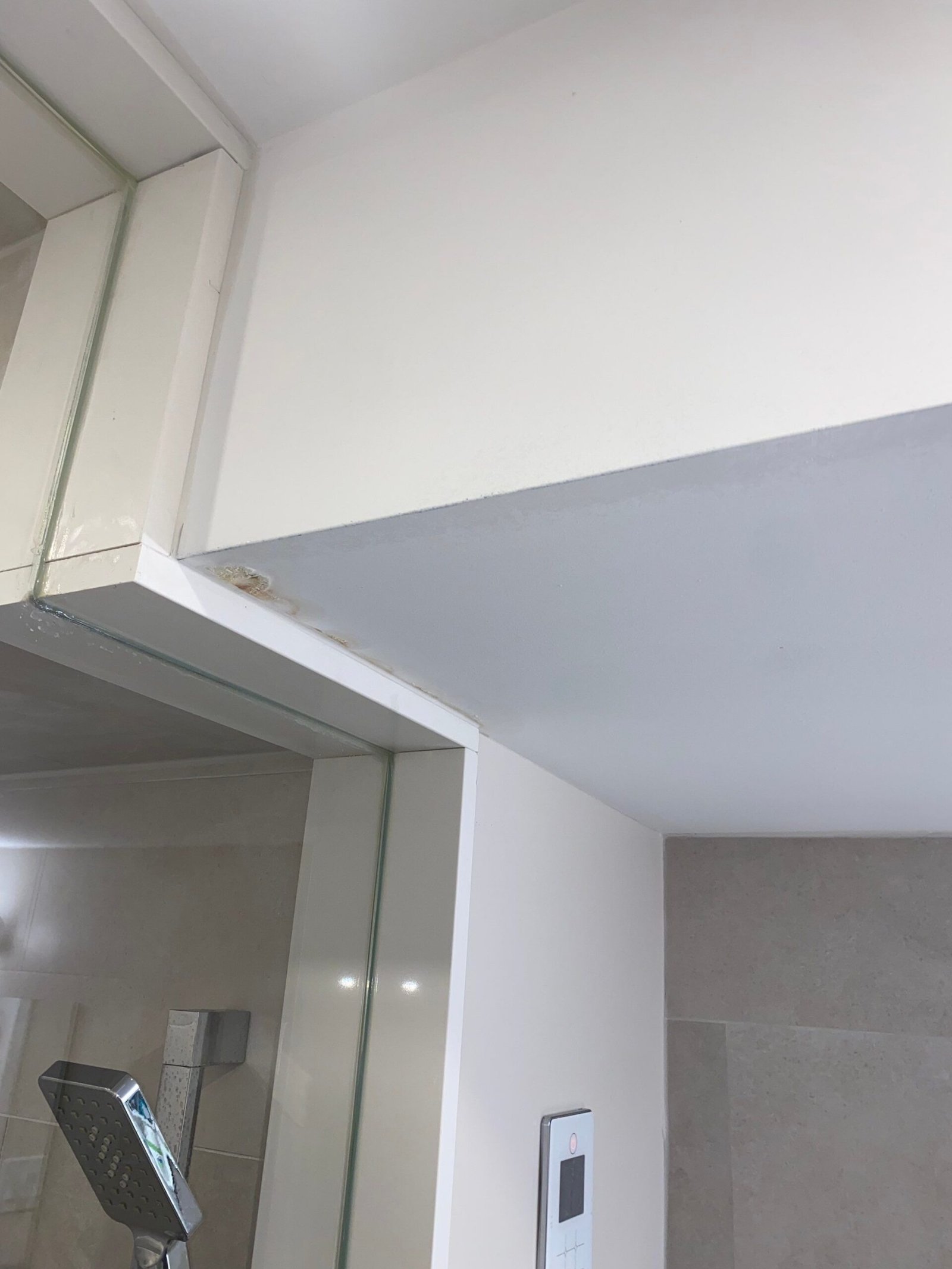
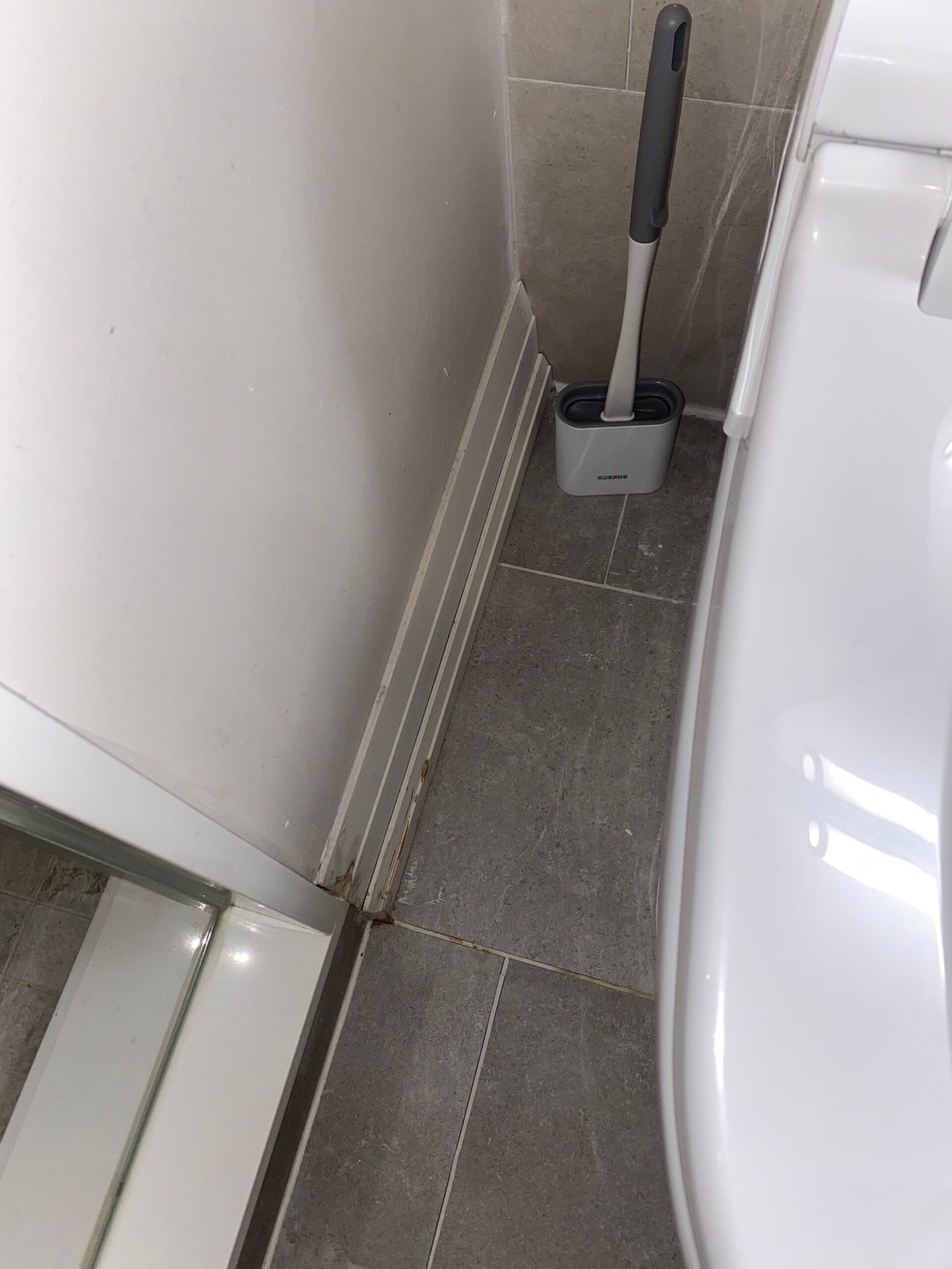
- Staining around the bathroom and shower area.
- Potential concealed moisture damage behind the shower and adjacent hallway wall.
- Building materials requiring controlled removal to allow further investigation and cleaning.
One of the main concerns was the possibility of mold developing inside wall cavities where moisture had remained after the original leak.
Why is this important? Dry-looking flooring or painted drywall does not necessarily mean that all concealed building materials are dry or unaffected. Moisture can remain behind baseboards, within wall cavities or beneath flooring even after visible water has disappeared.
This is why a professional moisture assessment is important after a basement leak.
Our Initial Mold and Moisture Inspection
On September 25, 2026, CPR24 Restoration inspected the affected basement areas to evaluate the reported water damage and mold concerns.
The assessment focused on the basement hallway, surrounding walls, flooring, bathroom and shower assembly.
The inspection identified approximately 150 square feet of flooring for initial removal, together with affected drywall sections requiring further investigation.
The detailed remediation scope subsequently identified a full-height removal area on one basement wall, initial two-foot drywall cuts on two additional walls, and exploratory openings around the bathroom and shower.
Rather than removing every finished surface throughout the basement, the work was planned around the areas of identified damage, with provisions to expand removal if concealed conditions warranted it.
Step 1: Protecting the Property and Establishing Mold Containment
Before disturbing mold-affected building materials, the remediation plan called for controlled containment to separate the affected basement areas from the remainder of the home.
The project scope specified two containment barriers:
- A polyethylene barrier with a zippered access point at the basement work-area entrance.
- A secondary containment barrier at the end of the basement hallway.
The access stairs and adjacent finished surfaces were also designated for protection during demolition and debris removal.
Photographs from the project show protective floor coverings secured with tape along the access route.
Containment is an important part of professional mold remediation because disturbing contaminated drywall, insulation and other building materials can release dust and mold-containing particles into the surrounding environment.
Step 2: Removing Water-Damaged Drywall and Baseboards
The remediation scope identified several affected basement wall sections requiring controlled demolition.
Main Basement Wall
One affected basement wall was designated for full-height drywall removal, covering approximately 40–50 square feet.
This provided access to the underlying framing and concealed wall assembly for further inspection and remediation.
Additional Basement Walls
Two additional affected basement walls were designated for initial drywall removal approximately two feet above floor level.
The removal boundaries were to be extended if additional moisture damage or mold was discovered above the initial openings.
Bathroom and Shower Area
The bathroom required additional investigation because the original moisture concern was associated with the shower.
The scope included opening drywall on two sides adjacent to the shower, as well as full-height removal of the narrow wall section between the toilet and shower.
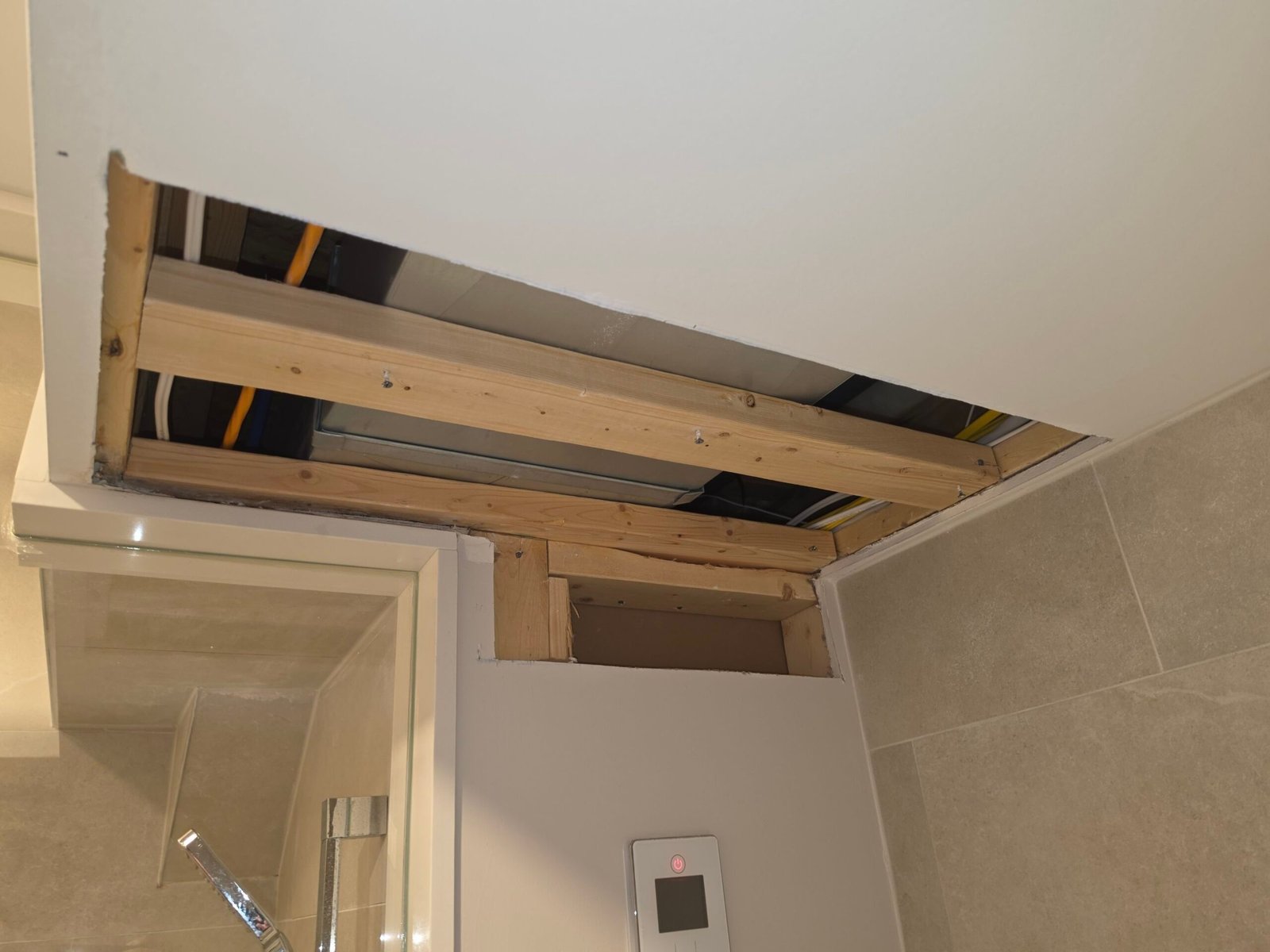
These openings allowed access to concealed building components that could not be evaluated from finished surfaces alone.
Photographs taken during the project show exposed wooden framing, open wall cavities and removed drywall within the affected basement areas.
Step 3: Removing Approximately 150 Square Feet of Affected Flooring
The initial scope identified approximately 150 square feet of basement flooring for controlled removal.
The purpose was to access potentially affected materials beneath the finished flooring and inspect the underlying substrate.
The remediation plan included:
- Removing designated sections of affected flooring.
- Removing affected underlayment where present.
- Inspecting the exposed substrate for moisture and contamination.
- HEPA vacuuming and cleaning exposed surfaces.
- Expanding the removal boundaries if additional concealed damage was identified and authorized.
The project photographs show exposed wood-based subfloor panels following flooring removal.
This approach allowed the affected floor assembly to be evaluated rather than assuming that previously wet materials were suitable to remain in place.
Step 4: Investigating Potential Mold Behind the Basement Shower
A key concern during this Brampton project was the possibility of concealed moisture damage behind the basement shower.
Because the suspected original leak was associated with the shower area, the remediation plan called for opening adjacent drywall to inspect the surrounding framing and wall cavities.
The investigation was designed to determine whether moisture or mold had extended behind the shower assembly.
Importantly, complete shower demolition was not automatically included in the initial scope.
If significant concealed damage was discovered, the additional removal work would require documentation, reassessment and a separate quotation.
This type of exploratory approach can help establish the actual extent of water damage before undertaking more extensive demolition.
Step 5: HEPA Air Filtration and Professional Mold Cleaning
The project included the use of professional HEPA-filtered air filtration equipment to help control airborne particulate during remediation.
The documented remediation scope called for:
- HEPA vacuuming exposed framing and structural surfaces.
- Physical cleaning of salvageable materials where appropriate.
- Removal of affected porous materials that could not be adequately remediated.
- Cleaning exposed flooring substrates and wall cavities.
- Applying appropriate antimicrobial cleaning products where warranted.
- Performing detailed cleaning within the containment area.
HEPA filtration helps manage airborne particles generated during demolition and cleaning. It works alongside containment and source removal rather than replacing the need to remove contaminated materials.
Project photographs show professional restoration equipment positioned in the affected basement areas.
Step 6: Structural Drying and Moisture Control
Following removal of affected building materials, structural drying was an important part of the restoration process.
The photographs document the use of commercial air movers and a dehumidifier within the exposed basement work areas.
The remediation scope called for moisture conditions to be reassessed after demolition and for drying equipment to remain in operation as necessary until acceptable drying conditions were achieved.
Professional structural drying is important because moisture remaining within building materials can contribute to further deterioration and recurring mold problems.
Before reconstruction, the original moisture source should also be identified and corrected to avoid concealing an unresolved leak.
Project Documentation and Remediation Progress
The project photographs document several important stages of the work:
- Protective floor coverings installed along the access route.
- Opened drywall around the shower and adjacent wall assemblies.
- Exposed basement framing after demolition.
- Removal of finished flooring to access the underlying substrate.
- Commercial air movers and dehumidification equipment in use.
- Moisture-related staining and mold-like growth in the bathroom and adjoining areas.
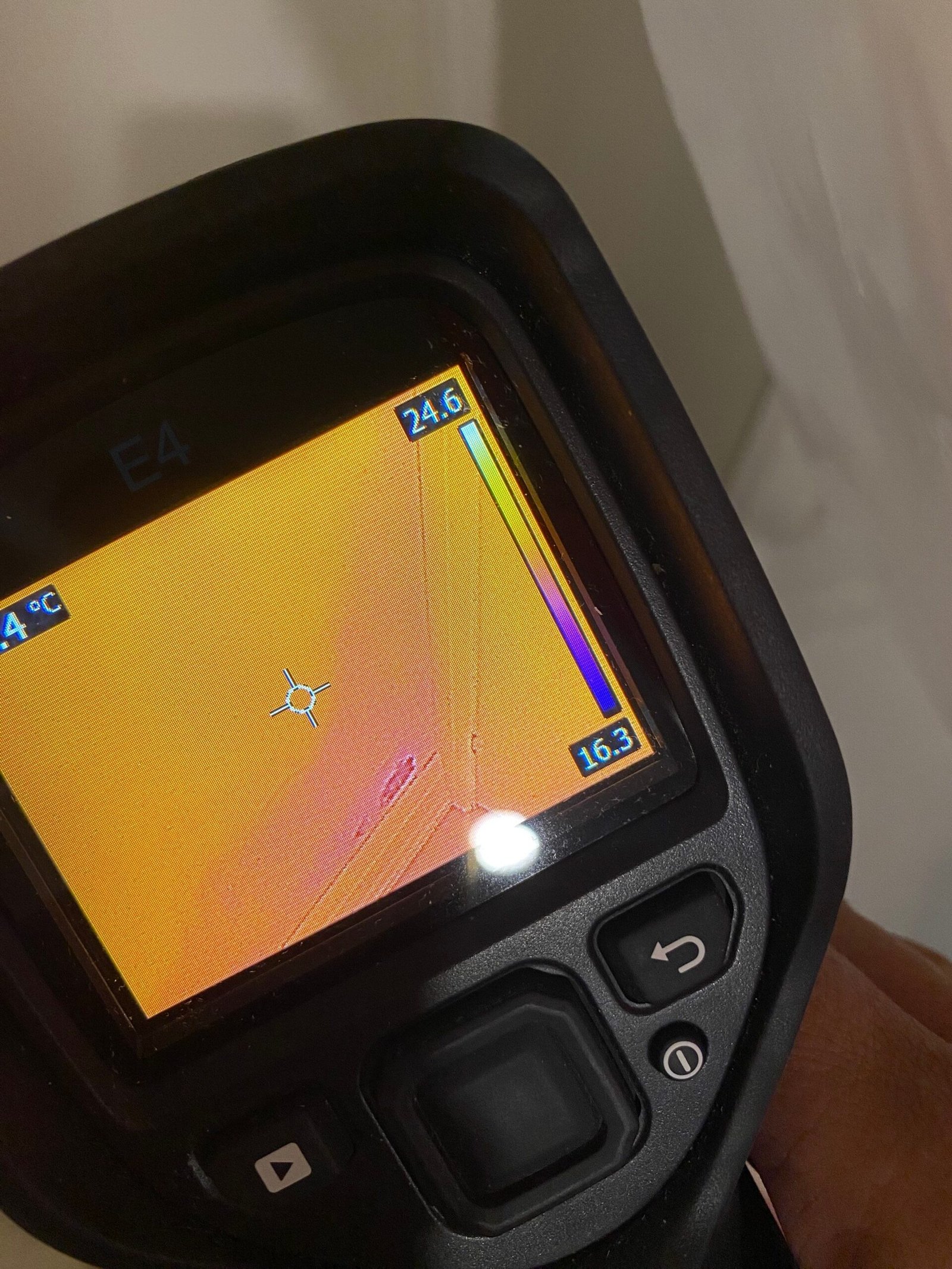
- Thermal imaging used as part of the moisture investigation.
These photographs illustrate why basement mold remediation can require more than surface cleaning.
The visible work included access to concealed materials and the use of professional equipment to address the affected building assemblies.
The available documentation does not include final clearance testing or post-reconstruction photographs, so this case study focuses on the inspection findings, remediation scope and documented work stages.
What Brampton Homeowners Can Learn From This Project
This project demonstrates several important considerations for homeowners dealing with mold after basement water damage.
1. Previously wet materials may still require investigation.
Even when surfaces appear dry, concealed wall cavities and flooring assemblies may contain residual moisture or damage.
2. Mold can develop behind finished walls.
Water migrating from bathrooms, plumbing fixtures or other sources may affect drywall, insulation and framing that cannot be inspected without opening the assembly.
3. Not every affected basement requires complete demolition.
A professional inspection can establish initial removal boundaries based on observed conditions, with adjustments made when concealed materials are exposed.
4. Mold remediation involves more than applying cleaning products.
Controlled removal, containment, HEPA cleaning, air filtration and moisture management are important components of a professional remediation plan.
5. The original moisture source must be addressed.
Removing mold without correcting an ongoing leak or moisture problem can allow conditions favourable to mold growth to return.
Professional Mold Removal and Water Damage Restoration in Brampton
CPR24 Restoration provides mold inspection, basement mold remediation, water damage restoration and structural drying services throughout Brampton and surrounding communities.
Our services include moisture investigations, controlled removal of affected drywall and flooring, HEPA cleaning, containment, structural drying and reconstruction estimates where required.
We assist homeowners dealing with basement leaks, bathroom moisture damage, mold behind drywall and water-damaged building materials.
Learn more about our Brampton mold removal services or explore our water damage and restoration services in Brampton.
Concerned about mold or water damage in your Brampton basement?
Contact CPR24 Restoration to arrange a professional inspection and receive a detailed assessment of the affected areas.
Call (416) 551-8287
Email: info@cpr24restoration.ca
Website: https://cpr24restoration.ca
Frequently Asked Questions About Basement Mold Removal in Brampton
Can mold grow behind basement drywall after a water leak?
Yes. Moisture can enter wall cavities following plumbing leaks, flooding or other water intrusion. Mold may develop on moisture-affected drywall, insulation or framing, even when the finished wall surface appears relatively normal.
Does water-damaged drywall always need to be removed?
Not always. Removal depends on the water source, material condition, contamination, moisture exposure and whether the material can be adequately dried and restored. Mold-contaminated porous drywall often requires controlled removal.
Why are HEPA air scrubbers used during mold remediation?
HEPA air scrubbers help capture airborne particles during demolition and cleaning. They are used alongside containment and other remediation controls to help limit the movement of particulate into unaffected areas.
Can mold remain after basement flooring appears dry?
Yes. The surface may dry while moisture damage or contamination remains beneath flooring, underlayment or adjacent wall assemblies. Inspection of concealed materials may be necessary.
How much does a mold inspection cost in Brampton?
CPR24 Restoration offers mold and moisture inspections for $250 plus HST. The inspection includes moisture assessment, thermal imaging where applicable, photo documentation, a written report and an estimate for recommended remediation. The $250 inspection fee is credited toward remediation when the customer proceeds with CPR24 Restoration.
Should a shower be removed if mold is found nearby?
Not necessarily. The surrounding wall assemblies should first be assessed to determine the extent of concealed damage. Shower removal may be necessary if significant contamination or deterioration is discovered within the assembly, but the decision should be based on the actual findings.
Does homeowners insurance cover basement mold removal in Brampton?
Coverage depends on the policy, the cause of water damage, exclusions and the circumstances of the loss. Homeowners should review their policy and speak with their insurer to determine whether remediation expenses are covered.