
CPR24 Restoration carried out basement mold removal in North York after mold was exposed along the lower walls and on the back of removed drywall. The project photographs document containment with a zippered entrance, removal of affected wall materials, exposed framing and insulation, and spray treatment during mold remediation. This case shows why mold cleanup needs to address what is behind a finished wall, as well as what is visible from the room.
What the Basement Walls Revealed
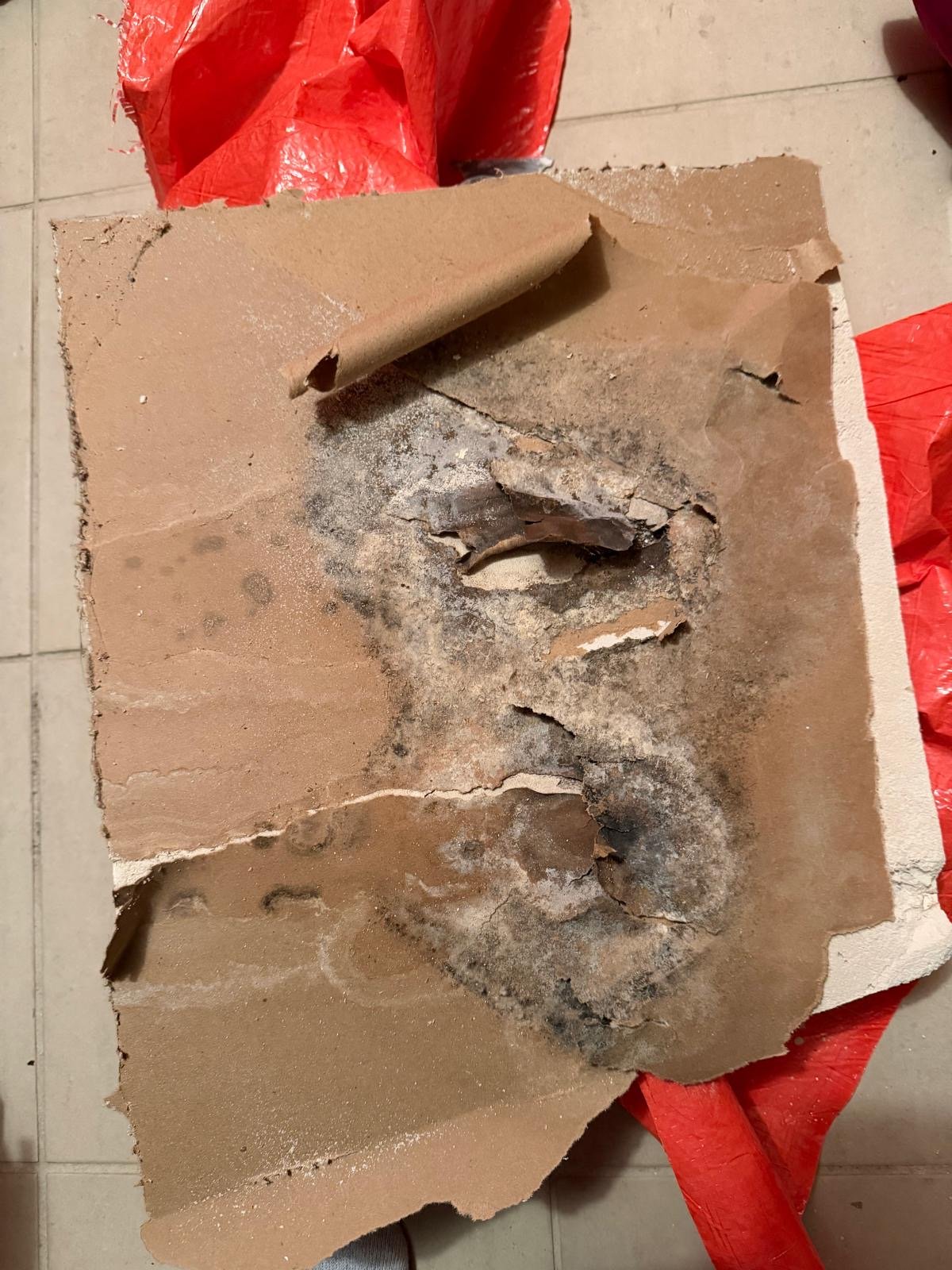
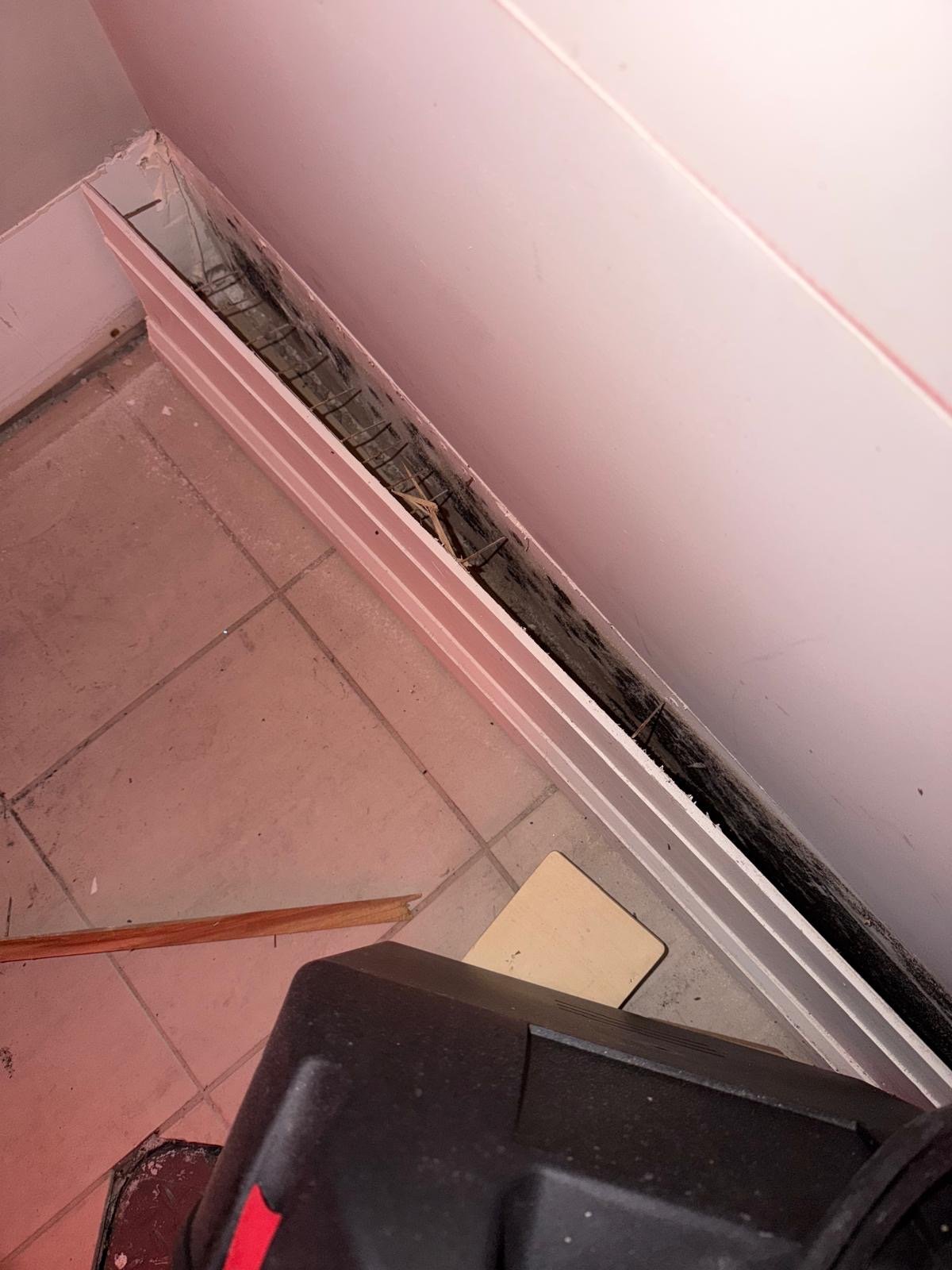
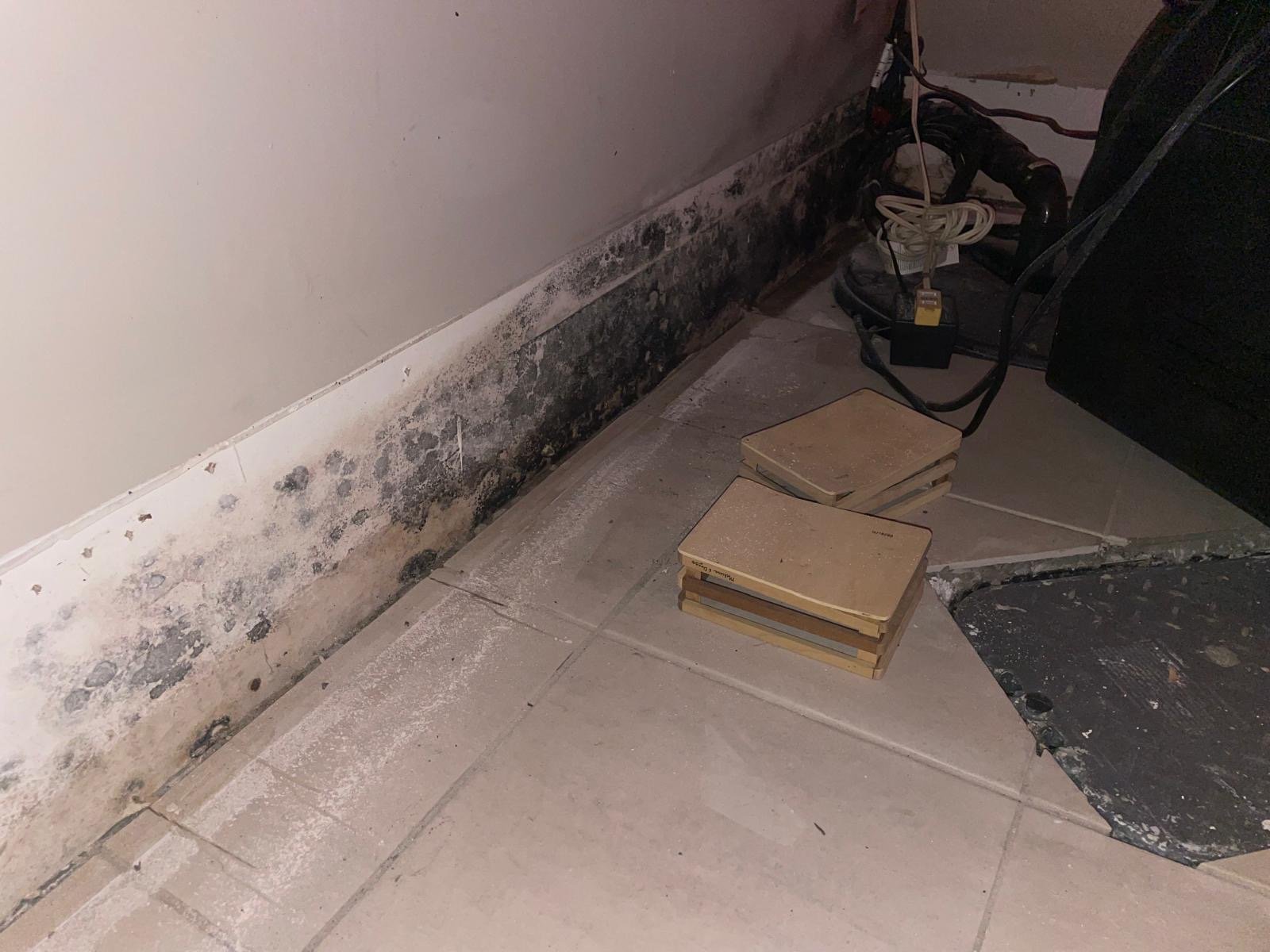
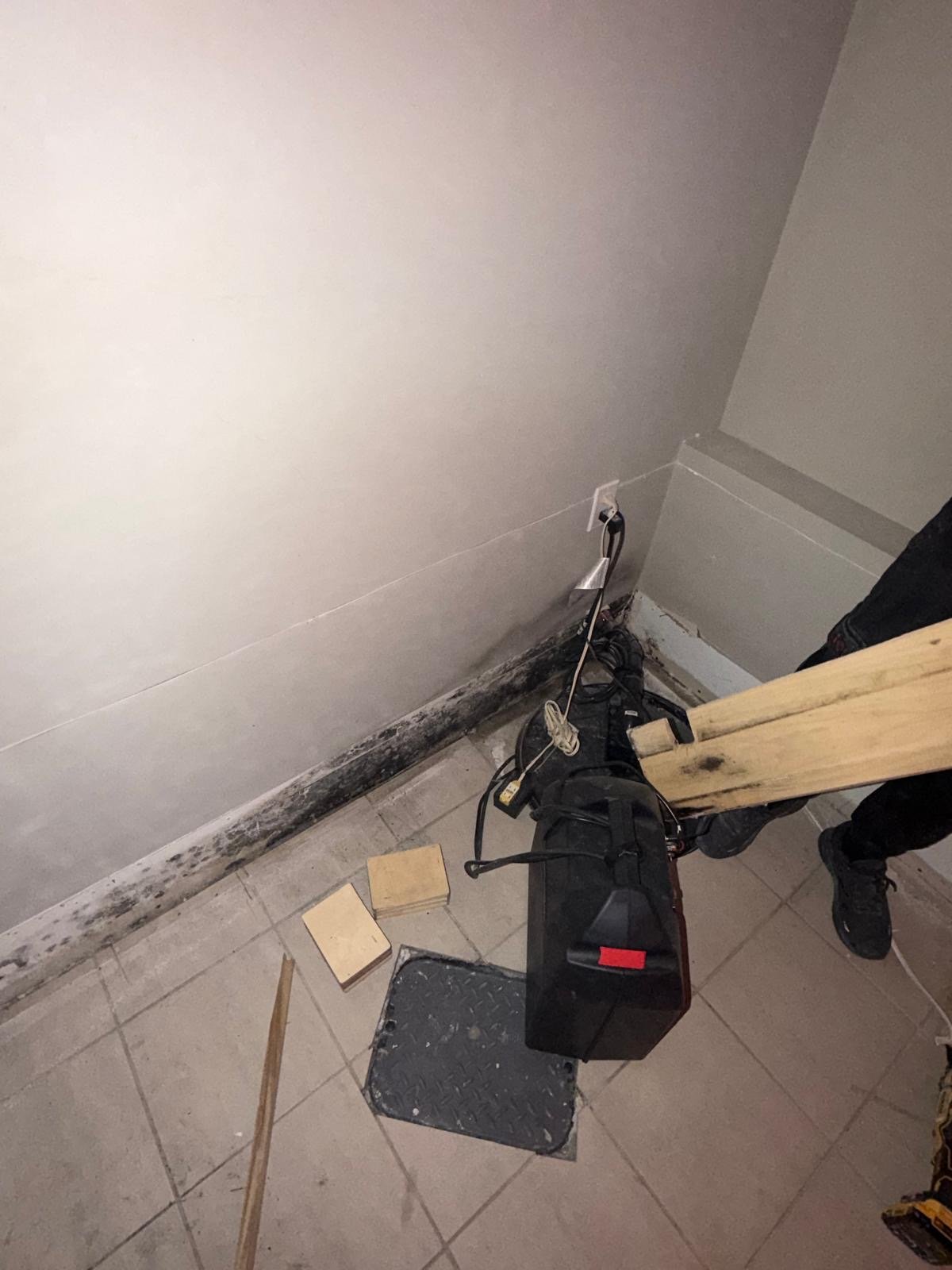
One of the clearest photographs shows a long band of dark growth close to floor level. The wall above it looks comparatively intact, while the lower section tells a different story. Another photograph shows growth on the paper backing of a removed piece of drywall.
These details matter because a painted wall does not reveal the condition of its concealed surfaces. Mold can develop behind trim and within wall assemblies where moisture is available. Cleaning the exposed paint alone would not address growth on the back of the drywall.
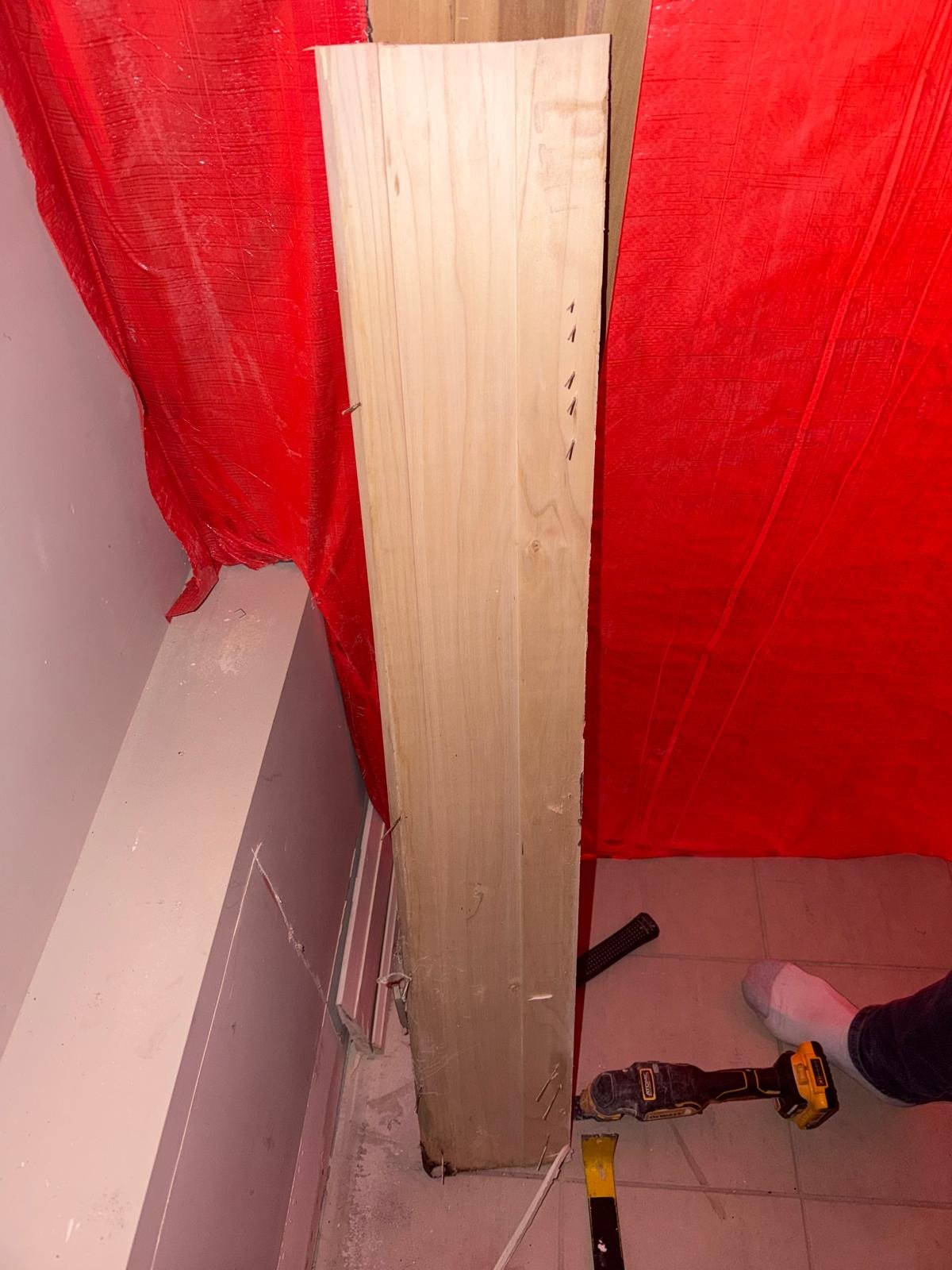
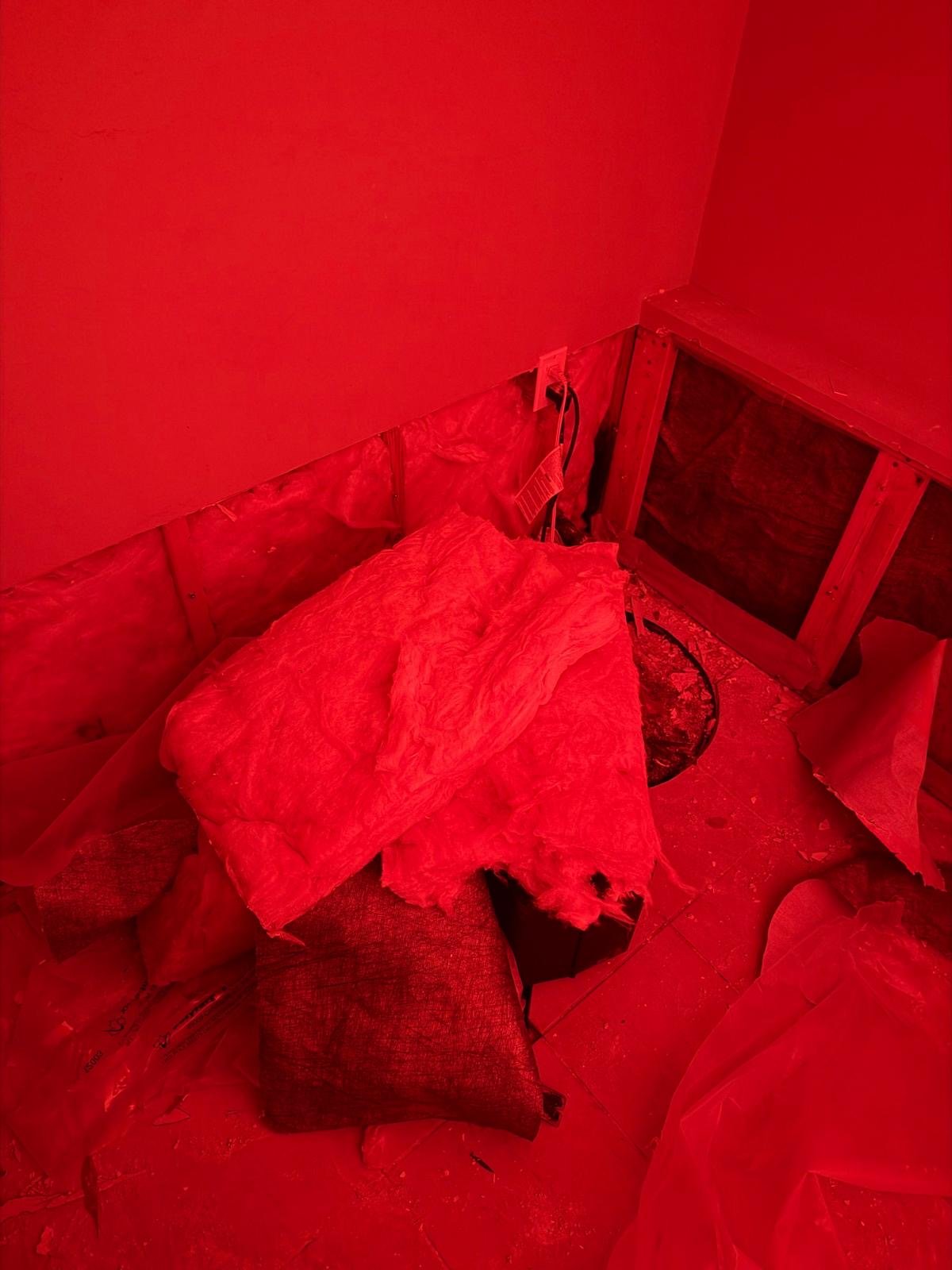
The photos also show an opened wall section with wood framing, insulation and plastic within the wall assembly. Removing the affected finish provided access to areas that could not be reached through ordinary surface cleaning.
The dark colour does not identify the mold species. A photograph cannot establish whether growth is Stachybotrys or another type of mold, so this project is described as basement mold remediation rather than a confirmed toxic black mold case.
Separating the Work Area with Containment
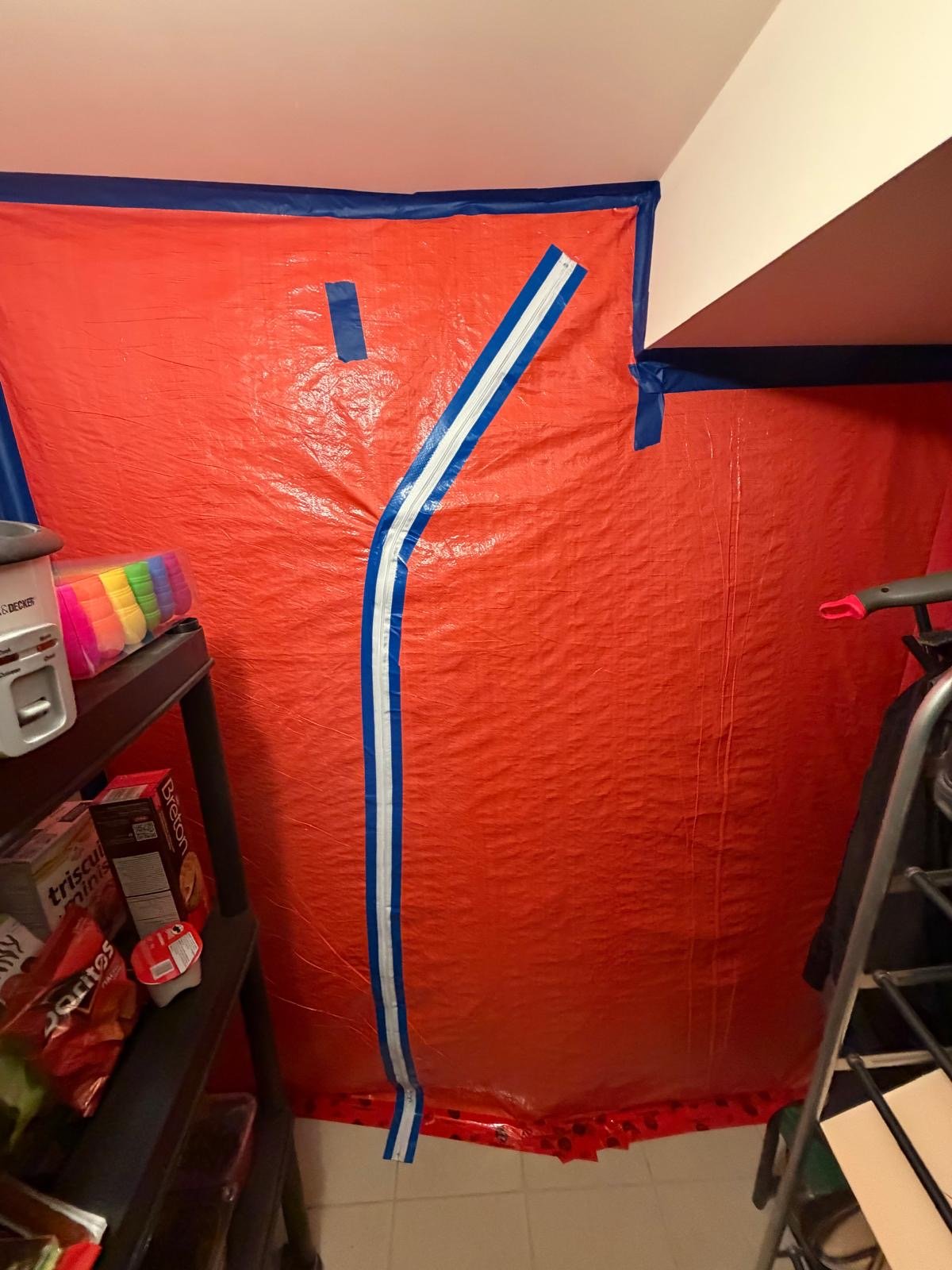
CPR24 Restoration installed a temporary barrier around the basement work area. The photographs show red sheeting secured along its edges with blue tape and a zipper providing access through the barrier.
Containment is an important part of basement mold removal services because cutting and handling affected drywall can release dust, spores and fragments. The barrier helps limit their movement into adjoining basement spaces and separates the demolition area from nearby belongings.
The zippered opening gives technicians a designated entry and exit point. Keeping that opening closed when it is not in use helps maintain the separation between the work zone and the surrounding space.
Containment is one part of a remediation plan. Depending on the scope, air filtration and controlled airflow may also be needed. The barrier photographs illustrate physical separation; they do not, by themselves, demonstrate negative pressure or the filtration rating of equipment on site.
Removing Affected Drywall and Opening the Wall Cavities
The team removed sections of lower-wall drywall to access the affected assembly. The photographs show the work at several stages: growth exposed near floor level, removed drywall with contamination on its reverse side, and an opened wall cavity with insulation removed.
This approach addresses material that cannot be adequately cleaned while it remains enclosed. Drywall has a porous paper facing, and mold on its concealed side is a different problem from a mark on a washable surface.
Removal also allows the remaining assembly to be inspected before it is covered again. The appropriate cut height depends on the extent of damage and site findings; there is no single height that fits every basement mold project.
Other photos show a detached wood board with protruding fasteners, tools, debris and equipment within the work area. These are progress photographs of demolition and treatment, rather than final photographs of a cleaned, reconstructed basement.
Benefect Treatment During Remediation
A treatment photograph shows a CPR24 Restoration technician applying a solution with a hand sprayer near the opened lower wall. CPR24 uses Benefect disinfectant during its remediation work.
Benefect treatment forms part of the process; it does not replace removal of affected materials or physical cleaning. Spraying a contaminated wall and covering it again would leave the underlying material problem unresolved.
The exact application method, suitable surfaces and contact time depend on the particular Benefect product and its label. The brand name alone should not be used to claim a specific kill rate or a permanent protective coating.
For this North York project, the photographs provide a useful sequence: isolate the work area, expose concealed growth, remove affected wall materials and carry out treatment. They make the scope easier to understand than a finished-wall photograph alone.
Addressing Moisture Before Rebuilding
Lasting mold remediation depends on moisture control. A basement wall can become damp for several reasons, including a plumbing leak, water entry through the building envelope or condensation. The location of the growth near the floor is a clue for inspection, but it does not prove which source caused this project.
Before replacement drywall and trim are installed, the moisture source should be addressed and the remaining materials assessed for suitable dryness. Disinfectant cannot prevent new growth if the wall becomes wet again.
CPR24 Restoration reports that, to date, no client has reported mold returning in an area the company remediated. This reflects customer feedback received by the company, rather than a guarantee that future leaks or damp conditions cannot cause new mold growth.
What This North York Case Demonstrates
The photographed work documents containment, access to concealed contamination, removal of affected lower-wall materials and treatment during remediation. Its most useful lesson is that basement mold may extend beyond the surface a homeowner initially sees.
The photos document work in progress. Final moisture readings, clearance testing and completed repairs are separate records and should be used to establish the final condition of the basement.
For homeowners noticing mold behind baseboards, staining along basement walls or suspected growth behind drywall, CPR24 Restoration provides mold inspection and remediation services in North York. Contact the team to arrange an assessment and discuss the appropriate scope for the property.